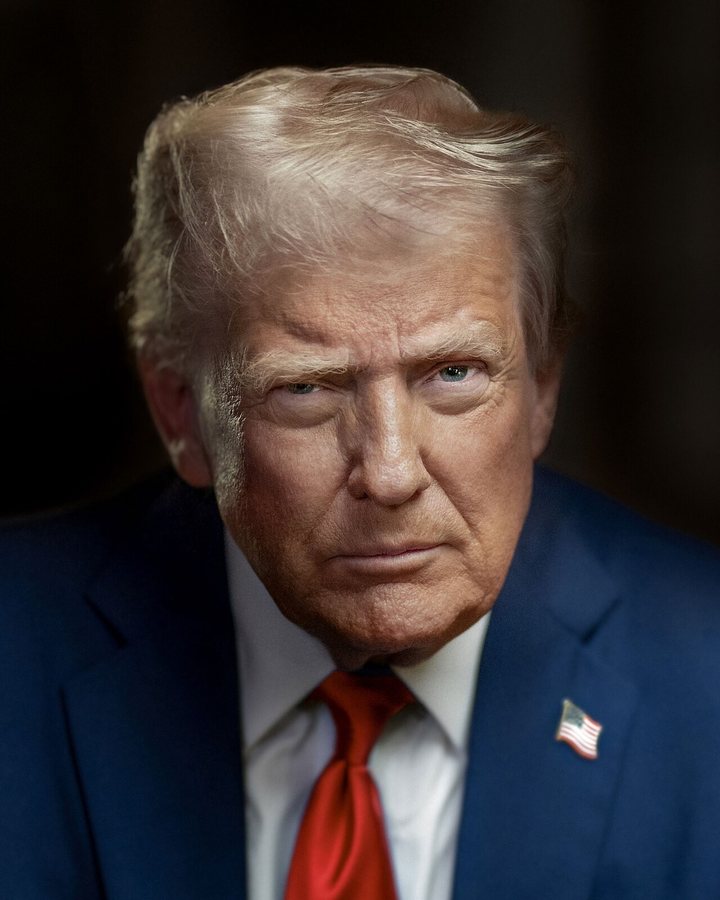
Donald Trump's second presidency began on January 20, 2025, when he was inaugurated as the 47th president of the United States. Trump, a Republican, had previously served as the 45th president from 2017 to 2021. He won the 2024 election against Democrat Kamala Harris, becoming the second former president to return to office after a non-consecutive term. The Republican Party also held majorities in both houses of Congress, giving the party control of the federal government.
Election and inauguration


Trump announced his 2024 candidacy in November 2022 and secured the Republican nomination in March 2024, with JD Vance as his running mate. He won 312 electoral votes to Harris's 226. He became the second president to serve non-consecutive terms, after Grover Cleveland, and the first president with a felony conviction, obtained in May 2024. He was sworn in by Chief Justice John Roberts at an indoor ceremony in the Capitol Rotunda because of a severe cold wave, and at 78 he became the oldest person to take the presidential oath.
Policies and legal disputes



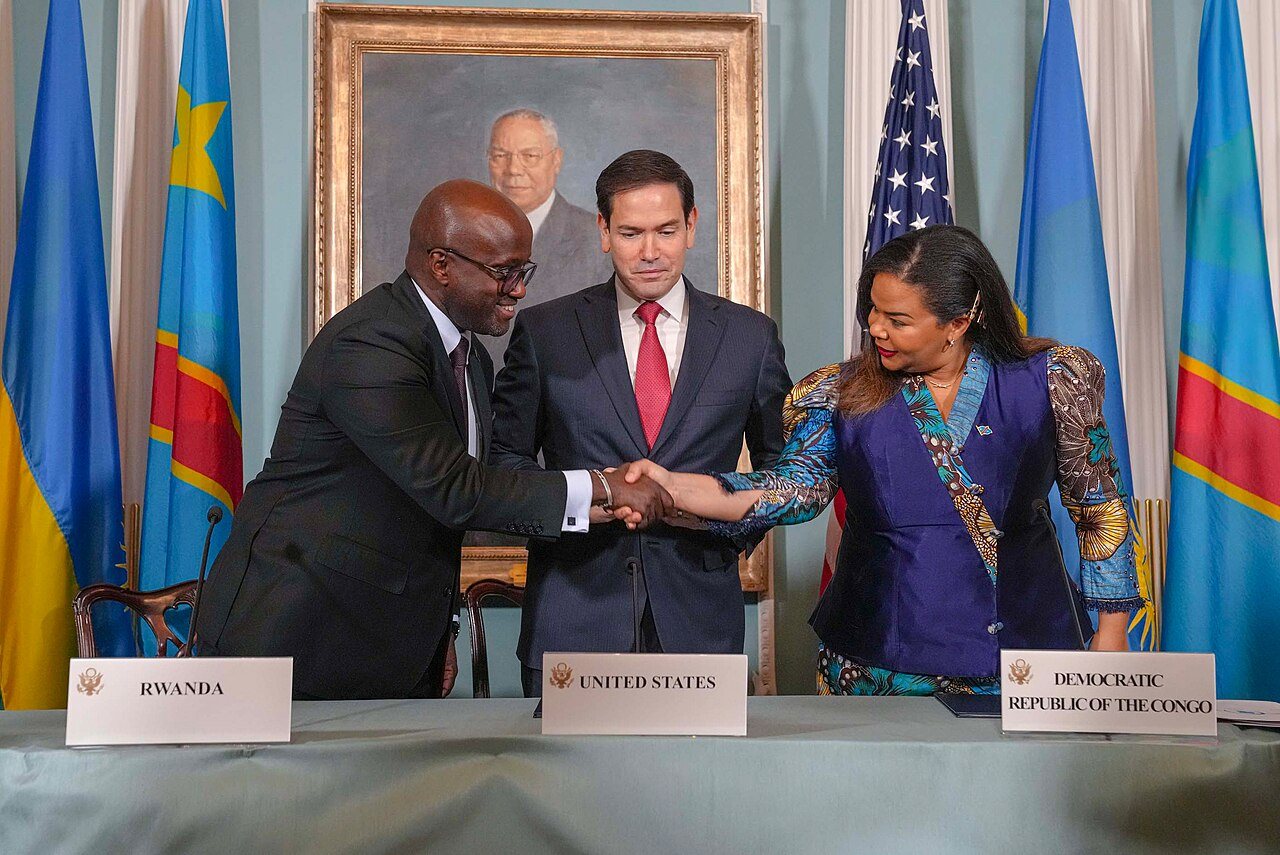


In his first hundred days, Trump signed a record number of executive orders, many of which faced immediate legal challenges. Policy priorities included immigration enforcement, tariffs, and reductions in federal spending and the civil service through the Department of Government Efficiency. Many of his administration's actions have been found unlawful by courts, and critics describe his expansion of presidential power as a defining feature of his second term.
International relations


Trump has pursued an assertive foreign policy, including the use of military force in the Middle East, the Caribbean and Venezuela. He has also withdrawn the United States from the World Health Organization, the Paris Climate Accords and UNESCO. His administration has faced criticism for its conduct abroad, and its dealings with allies and rivals have drawn wide international attention.