
Saint Sava, born Rastko Nemanjić, was a 12th-century Serbian prince who became a prominent monk and the first archbishop of the Serbian Church. As the youngest son of Stefan Nemanja, he initially ruled Zachlumia before choosing a monastic life on Mount Athos, where he founded the Hilandar monastery. A skilled diplomat, writer, and hagiographer, he played a fundamental role in shaping the religious and legal identity of the Serbian people through his extensive literary and legislative work.
Life and work

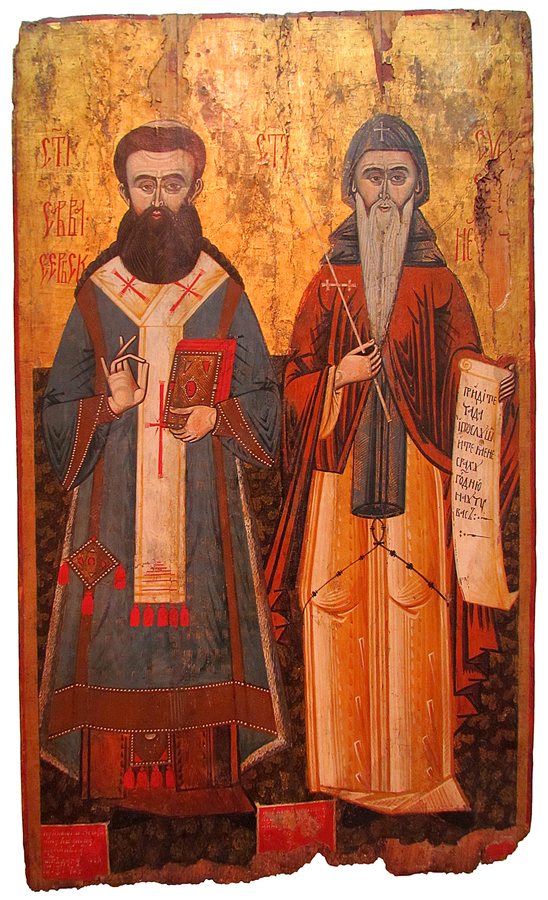
After adopting the name Sava during his time on Mount Athos, he transitioned from royalty to spiritual leadership. He authored the Zakonopravilo, which served as a Serbian constitution, and penned the nation's first biography. His influence extended to diplomacy and law, establishing a lasting foundation for the Serbian state and its ecclesiastical structure.
Veneration and legacy


Recognized as a wonderworker, Sava is venerated in the Eastern Orthodox Church. He is celebrated as the patron of Serbian medicine and education. Although his relics were destroyed by Ottoman forces in 1594, his memory remains central to Serbian identity. His feast days are observed on January 14 and January 27.