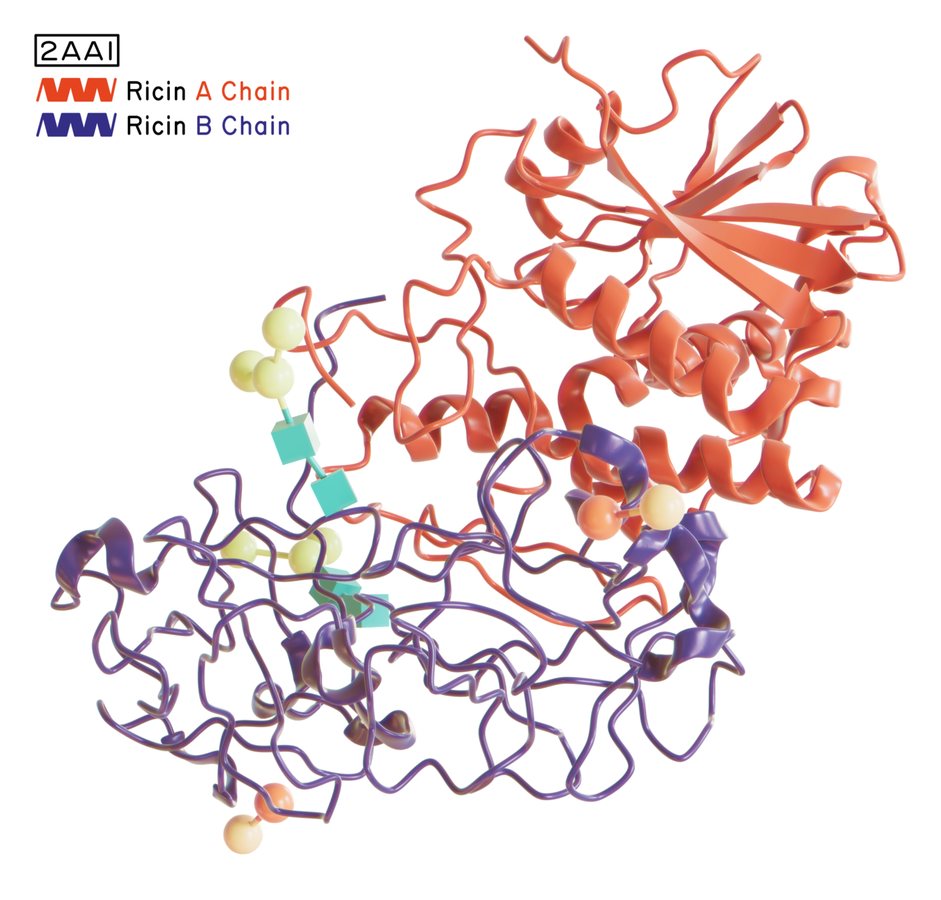
Ricin is a lectin, a carbohydrate-binding protein, and a highly potent toxin produced in the seeds of the castor plant, Ricinus communis. Its toxicity is high: the median lethal dose for mice injected intraperitoneally is around 22 micrograms per kilogram of body mass, while oral exposure is far less toxic. Ricin was first identified by Peter Hermann Stillmark, founder of lectinology, and is chemically similar to robin, a related plant protein.
Structure and action


Ricin is a type 2 ribosome-inactivating protein made of two chains linked by a disulfide bond. The A chain damages ribosomes, while the B chain binds sugar residues on cell surfaces and helps carry the A chain into the cell. Both chains must be present for toxic effects, so plants containing only the A chain, such as barley, are not toxic. Once inside the cell, the A chain cuts a specific bond in ribosomal RNA, halting protein synthesis.
Biosynthesis and significance


Ricin is synthesized in the endosperm of castor oil plant seeds as a precursor protein that is processed and cleaved into its mature form. Its high toxicity and biochemical mechanism make it a subject of ongoing scientific study, including research into how it moves through cells and how its activity might be countered.