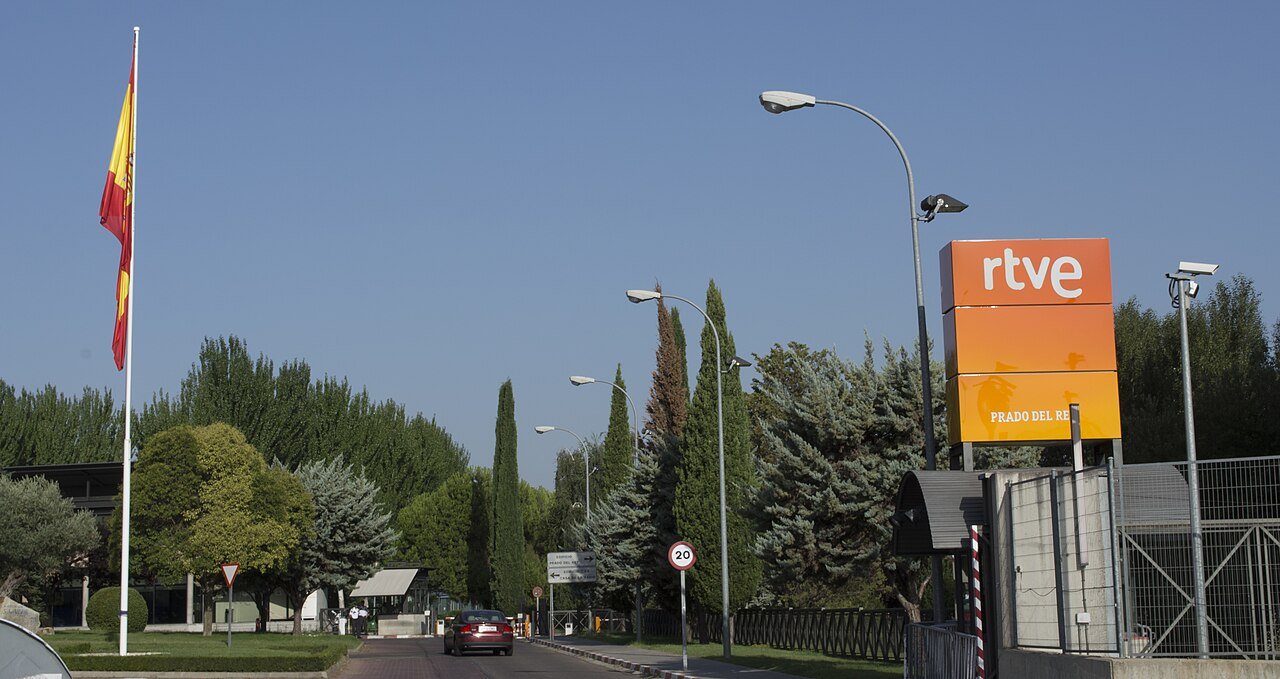
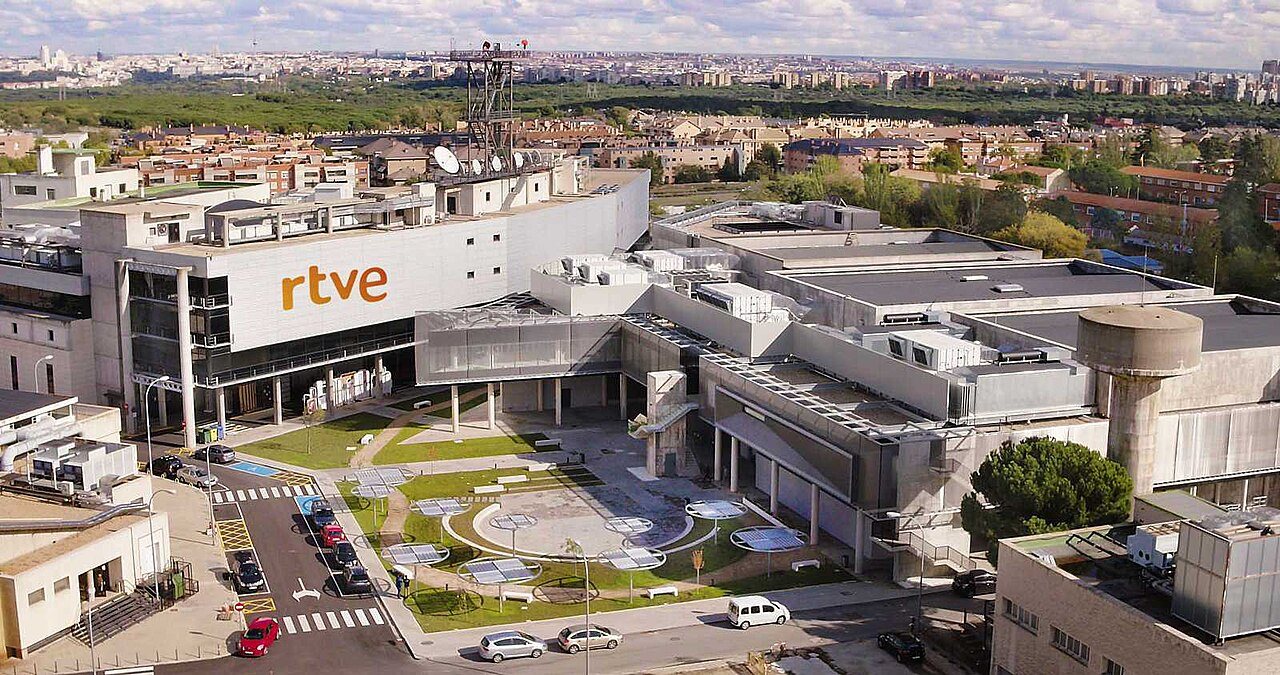
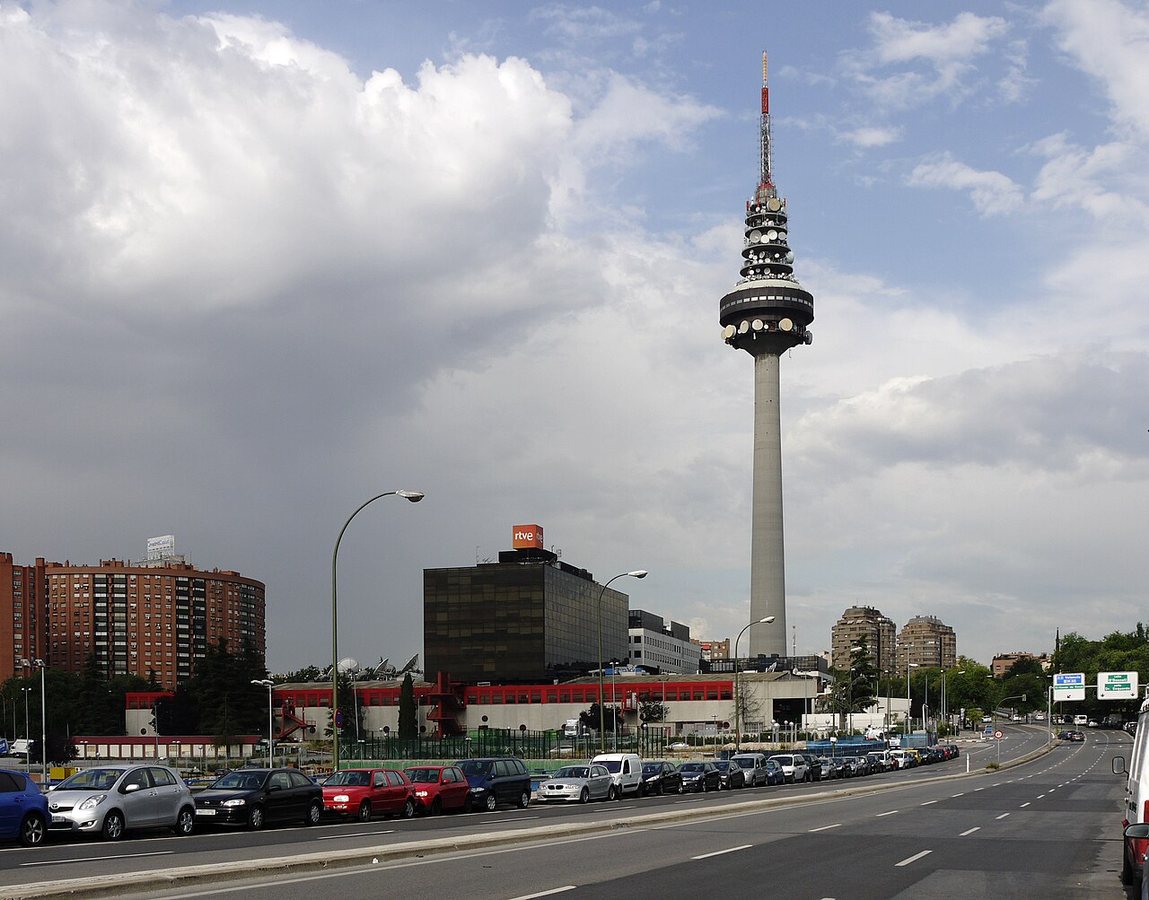
RTVE (Corporación de Radio y Televisión Española) is the national public radio and television broadcaster of Spain. It operates the television service Televisión Española (TVE), the radio network Radio Nacional de España, and the online platform RTVE Play. Formed as a state-owned company in 2007, it is funded mainly by government subsidies and a levy on private broadcasters and telecom companies. RTVE is a full member of the European Broadcasting Union, and its central headquarters are in Pozuelo de Alarcón.
Origins and development
Spanish public broadcasting began with Radio Nacional de España, first transmitting from Salamanca in 1937 as a propaganda tool for the Rebel faction in the Spanish Civil War. Under the Francoist dictatorship it passed between several government bodies. Television followed in 1956 with a first regular signal from Madrid. In 1973 radio and television were merged into a single public service, and the state broadcaster held a monopoly on television until regional channels emerged in the 1980s.
Corporate reorganisation
In 2007, under a 2006 law and amid a large deficit, the former public entity and its subsidiaries were dissolved and the Corporación RTVE was created as a fully state-owned company. Its chair became subject to appointment by the Cortes Generales rather than the government. Later years brought disputes over political influence, staffing and editorial decisions, which drew considerable public debate.
Television and regional output
RTVE's television division broadcasts mostly in Spanish across the country, with two general channels and several thematic ones covering sport, news and children's programming. TVE also has territorial centres in every autonomous community, producing local programmes in the co-official languages of those regions, such as Catalan segments made in Sant Cugat del Vallès.