
The president of the People's Republic of China is the country's state representative. On its own, the office is largely ceremonial and holds no real power in China's political system. Since 1993, however, the post has been held concurrently by the general secretary of the Chinese Communist Party and the chairman of the Central Military Commission, who is the country's paramount leader. The office has many characteristics of a head of state, but the constitution does not define it as one.
Origins of the office
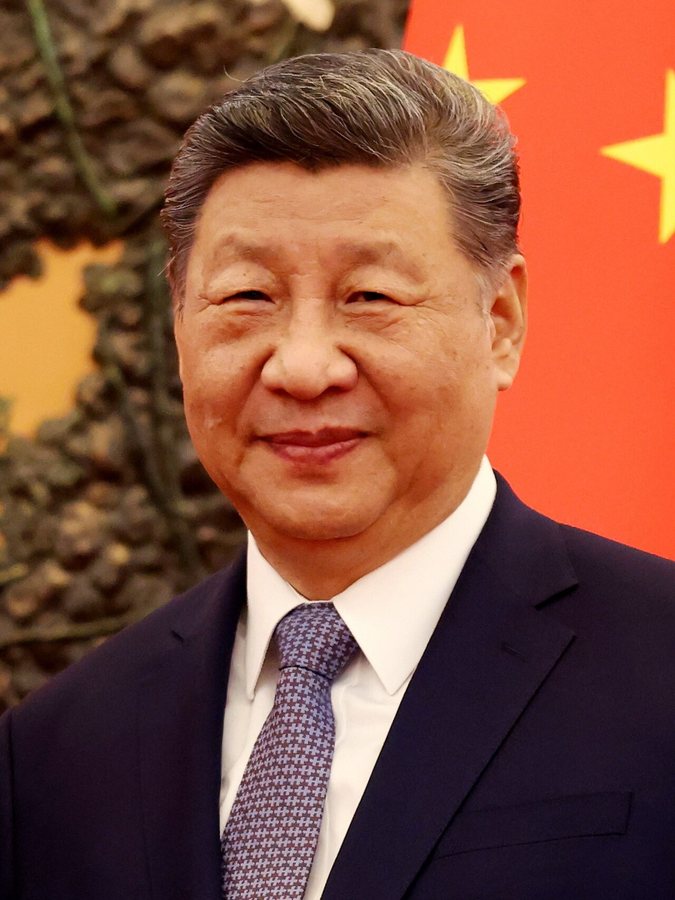
The presidency in its current form grew out of the chairmanship of the Central People's Government, established in 1949. It was replaced by the office of state chairman under the 1954 constitution, which Mao Zedong and Liu Shaoqi held in turn. After Liu fell during the Cultural Revolution, the post was abolished in 1975 and its representative role passed to the chairman of the National People's Congress Standing Committee. The office was reinstated in 1982 with reduced powers and a limit of two consecutive terms, a limit that was later removed in 2018.
Role in the state
The presidency is a state organ of the National People's Congress, the body that holds supreme state power, and is not a political office in the way the premier is. Together with the NPC Standing Committee, it carries out functions that heads of state perform in most other countries. The president acts only with the consent of the Standing Committee and has no independent powers beyond those it grants. Its significance today lies mainly in the fact that the officeholder usually also leads the Communist Party and the armed forces.