
Poland Is Not Yet Lost (Polish: Mazurek Dąbrowskiego) is the national anthem of Poland. Józef Wybicki wrote its original lyrics in 1797 in Reggio Emilia, Italy, two years after the Third Partition had ended the Polish–Lithuanian Commonwealth. It was first intended to raise the morale of the Polish Legions serving with Napoleon Bonaparte, and its message was that a nation can survive the loss of its state while its people endure and fight for it.
Origins and adoption


The song was written to encourage Jan Henryk Dąbrowski's Polish Legions, which fought in the Italian campaigns of the French Revolutionary Wars. After Poland regained independence in 1918, the song became the de facto national anthem of the Second Polish Republic, and it was officially adopted in 1927. It also inspired similar songs of other peoples seeking independence in the 19th century, including the Ukrainian and Israeli anthems.
Lyrics and music

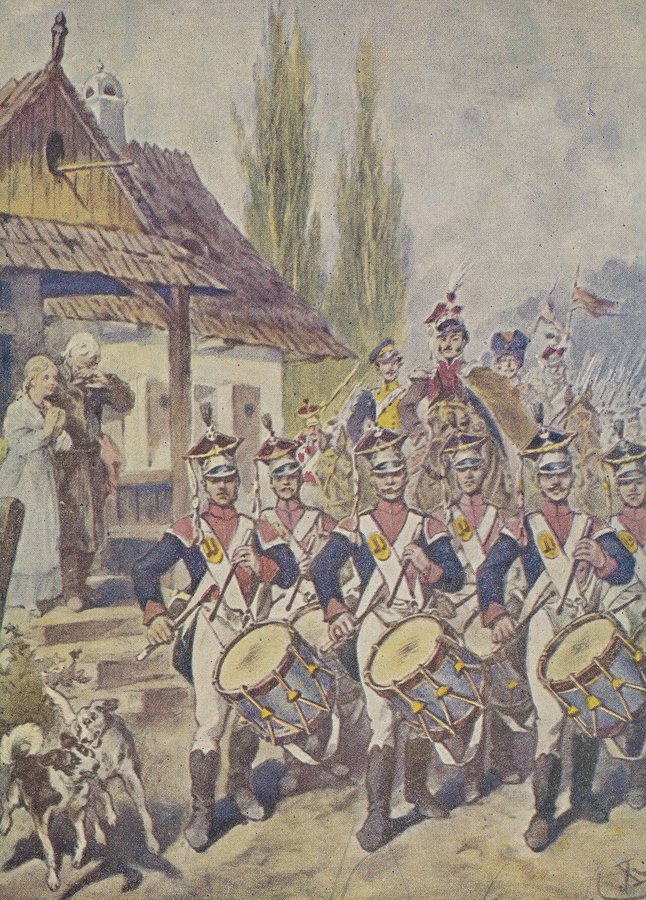


The poem has six quatrains with a refrain, and its lyrics name military heroes such as Dąbrowski, Napoleon, Stefan Czarniecki and Tadeusz Kościuszko as examples for soldiers. The melody is a lively mazurka, a form based on folk dances of northeast Poland. The composer of the tune is unknown, though modern performances often use an arrangement by Kazimierz Sikorski.