
The periodic table is an ordered arrangement of the chemical elements into rows called periods and columns called groups. Widely regarded as an icon of chemistry, it is also used across physics and other sciences. It depicts the periodic law, which holds that when elements are arranged by atomic number, their properties recur at approximately regular intervals. Elements in the same group usually share similar chemical characteristics, which makes the table a central tool for predicting how unfamiliar elements will behave.
Historical development


The first periodic table to gain general acceptance was published by the Russian chemist Dmitri Mendeleev in 1869, who linked chemical properties to atomic mass. Because many elements were still unknown, his table had gaps, and he used the periodic law to predict properties of some missing elements. The law was recognised as a fundamental discovery in the late 19th century and was explained early in the 20th century through atomic numbers and quantum mechanics. A recognisably modern form emerged in 1945 when Glenn T. Seaborg showed that the actinides belong to the f-block.
Structure and elements


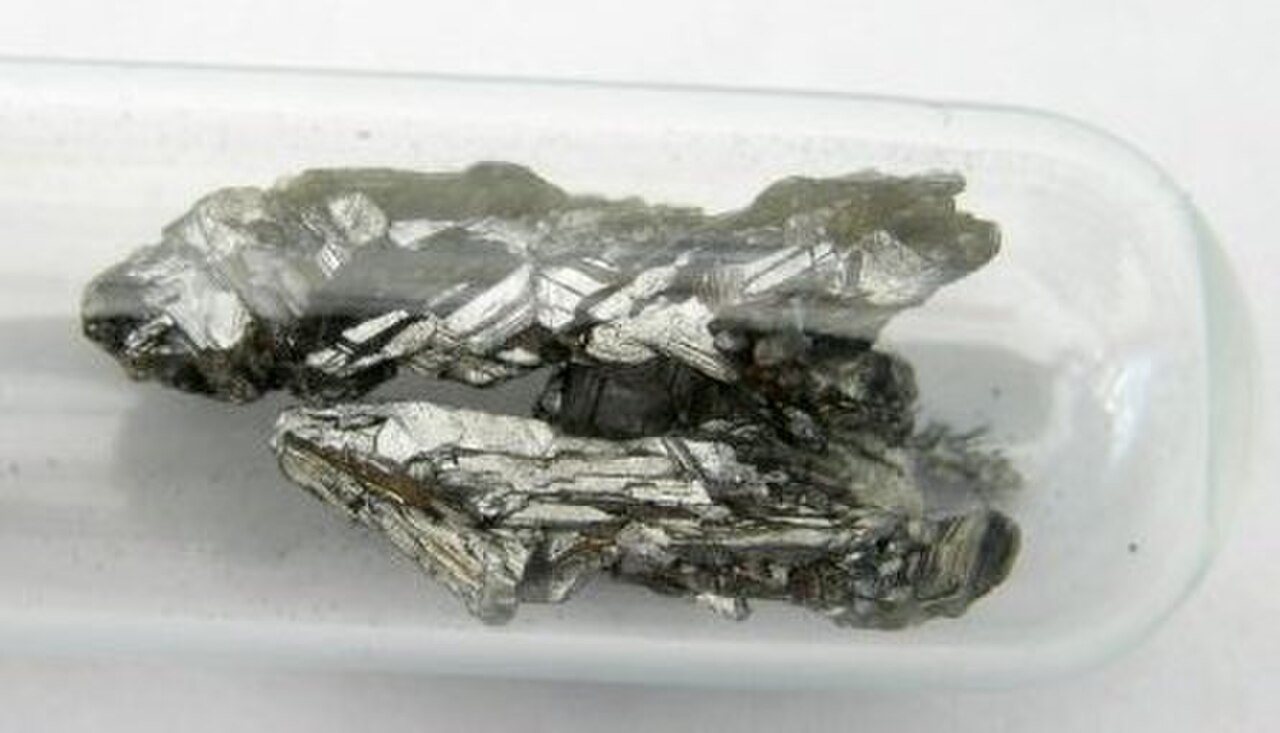

Each element has a unique atomic number, the count of protons in its nucleus, and the table lists elements in order of increasing atomic number. Rows begin when a new electron shell starts, and columns reflect the electron configuration of atoms. Of the 118 known elements, the first 94 occur naturally on Earth, while the remaining ones exist only when synthesised in laboratories. Isotopes of an element are kept together under a single entry, and atomic weights usually reflect the average of naturally occurring isotopes.
Ongoing evolution


The table continues to change as science progresses. By 2010 the first seven rows had been completed, but the heaviest elements still require chemical characterisation to confirm that their properties match their positions. Further discoveries may extend the table, though it is not known how many more elements are possible, and theoretical work suggests that this region may not follow the known patterns. Many alternative representations of the periodic law exist, and debate continues about whether an optimal form of the table exists.