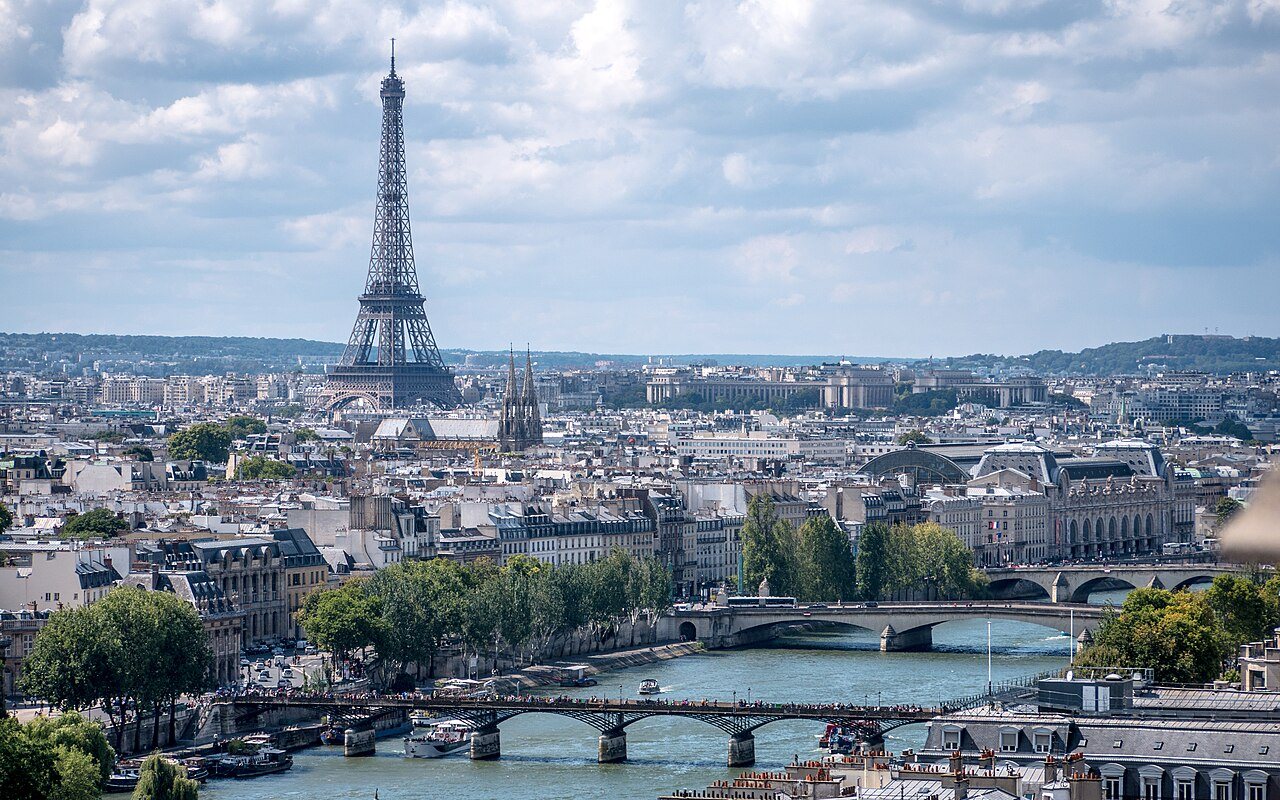
Paris is the capital and largest city of France, with an estimated population of 2.04 million within an area of 105.4 square kilometres as of January 2026. Located on the Seine in the centre of the Île-de-France region, it forms the largest metropolitan area in the European Union, with about 13.3 million people in 2023. The city is known for its museums, architectural landmarks, and its role as a centre of government, international organisations, and culture.
Origins and early history


The Parisii, a Gallic tribe, inhabited the area from around the mid-3rd century BC, and their settlement on the Île de la Cité became an important trading centre. Julius Caesar conquered the region for Rome in 52 BC, and a Roman town called Lutetia developed on the Left Bank. Clovis the Frank made the city his capital in 508, and by the 12th century Paris had become the political, economic, religious, and cultural capital of France.
Modern city and transport


Haussmann's renovation of the city created new boulevards, parks, and public works, shaping its modern form. Paris is a major railway, motorway, and air-transport hub, and Charles de Gaulle Airport was the busiest airport in the European Union in 2024. The city has received the Sustainable Transport Award twice and is home to the Art Nouveau-decorated Métro, which has become a symbol of Paris.