factograf
EN
Sign in

Protein-coding gene in the species Homo sapiens

PTPRJ

PTPRJ
All data from the card 19
Aliases
PTPRJ, CD148, DEP1, HPTPeta, R-PTP-ETA, SCC1, protein tyrosine phosphatase, receptor type J, protein tyrosine phosphatase receptor type J, R-PTP-J, HPTP eta
External IDs
OMIM: 600925; MGI: 104574; GeneCards: PTPRJ
PDB
Ortholog search: PDBe RCSB
3.1.3.48
↗
Chr.
Chromosome 11 (human)
Band
11p11.2
End
48,170,839 bp
Chr.
Chromosome 2 (mouse)
Band
2 E1|2 50.19 cM
End
90,410,991 bp
BioGPS
More reference expression data
Databases
NCBI: entry; OMA: entry
Species
Human
Entrez
5795
Ensembl
ENSG00000149177
UniProt
Q12913
RefSeq (mRNA)
NM_001098503NM_002843
RefSeq (protein)
NP_001091973NP_002834
Location (UCSC)
Chr 11: 47.98 – 48.17 Mb

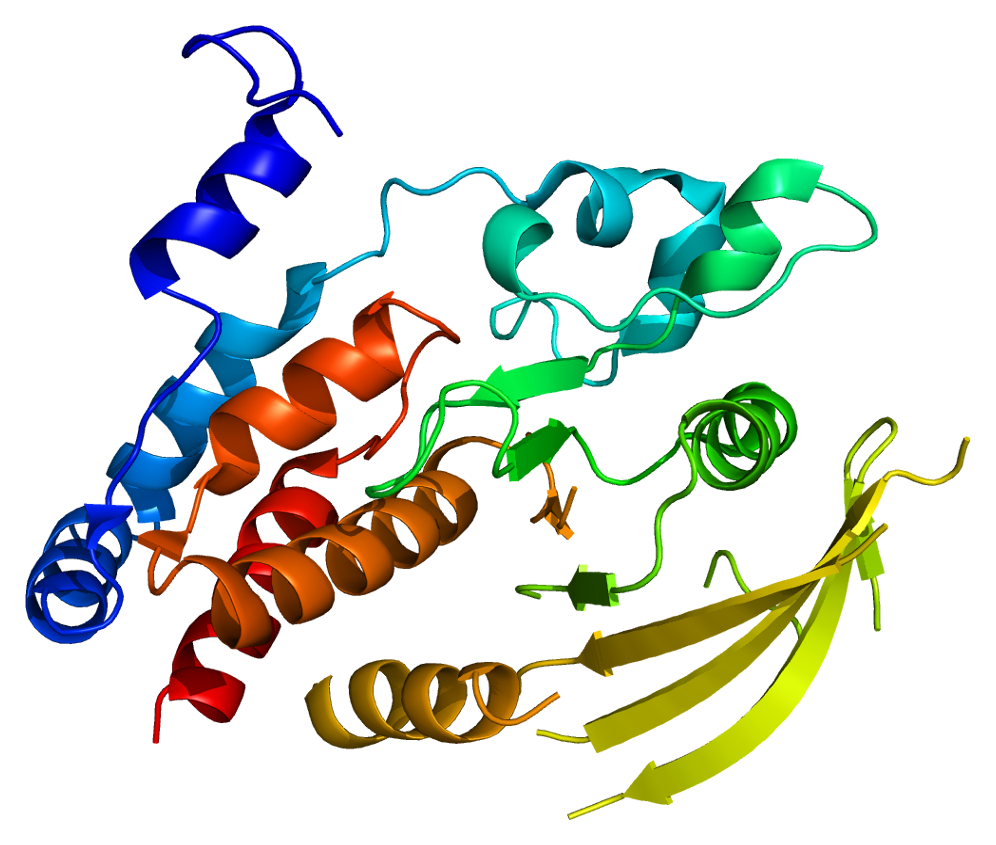
Receptor-type tyrosine-protein phosphatase eta is an enzyme that in humans is encoded by the PTPRJ gene.

Function

The protein encoded by this gene is a member of the protein tyrosine phosphatase (PTP) family. PTPs are known to be signaling molecules that regulate a variety of cellular processes including cell growth, differentiation, mitotic cycle, and oncogenic transformation. This PTP possesses an extracellular region containing five fibronectin type III repeats, a single transmembrane region, and a single intracytoplasmic catalytic domain, and thus represents a receptor-type PTP. This PTP is present in all hematopoietic lineages, and was shown to negatively regulate T cell receptor signaling possibly through interfering with the phosphorylation of Phospholipase C Gamma 1 (PLCG1) and Linker for Activation of T Cells (LAT). This PTP was also found to dephosphorylate PDGF beta receptor, and may be involved in UV-induced signal transduction.

Interactions

PTPRJ has been shown to interact with CTNND1.

Read next

In 6 languages

Text from Wikipedia, CC BY-SA 4.0 · Source article