factograf
EN
Sign in

German statesman and Chancellor (1815-1898)

Otto von Bismarck

Otto von Bismarck

Otto von Bismarck (1815–1898) was a German statesman and diplomat who oversaw the unification of Germany and served as its first chancellor from 1871 to 1890. Known as the Iron Chancellor, he rose from a Junker landowning background to dominate Prussian politics under King Wilhelm I. His pragmatic approach to power, called Realpolitik, shaped European diplomacy for much of the late nineteenth century.

Early years

Otto von Bismarck in 1885, cropped photo
Otto von Bismarck, photograph held in the German Federal Archives
Bismarck in 1833, at age 18
Bismarck in 1847, at age 32
Bismarck in 1863 with Roon (centre) and Moltke (right), the three leaders of Prussia in the 1860s
Bismarck as Minister President of Prussia in 1858, wearing the insignia of a knight of the Johanniterorden
Statue of Bismarck in Schleswig-Holstein, the northernmost German state
King William on a black horse with his suite, including Bismarck, Moltke and Roon, watching the Battle of Königgrätz
Surrender of Napoleon III after the Battle of Sedan, 1 September 1870
9 images

Bismarck was born in 1815 at Schönhausen, a noble family estate west of Berlin. His family's finances were modest, and he grew up largely on a Pomeranian estate. Although he was seen as a typical backwoods Junker, he was well educated and spoke several languages. He studied law at Göttingen and Berlin, briefly pursued a legal career, and then returned to manage the family estates. In 1847 he entered the newly created Prussian legislature, where he quickly gained a reputation as a royalist and conservative with sharp rhetorical skills.

Path to unification

Bismarck in 1873
Bismarck in 1873
Bismarck confronts Pope Pius IX between Berlin and Rome, 1875
The Krupp factory in Essen, 1880
Cartoon from 1867 mocking Bismarck's many roles, including general, foreign minister, federal chancellor, hunter, diplomat and president of the Zollverein parliament
Bismarck around 1875
German flag being raised at Mioko in German New Guinea, 1884
European officials dividing claims to Africa at the Berlin Conference of 1884
Franz von Lenbach's portrait of Bismarck in his 75th year, in the uniform of the Cuirassier Regiment No. 7 (Magdeburg)
Photograph of Chancellor Bismarck in the 1880s
9 images

From 1862 Bismarck served as minister president and foreign minister of Prussia. Under his leadership Prussia fought short wars against Denmark, Austria, and France. After defeating Austria in 1866, he replaced the German Confederation with the North German Confederation, excluding Austria. The 1870 victory over France, with support from the South German states, led to the creation of a unified German Empire under Prussian rule, and he was given the title Prince of Bismarck.

Legacy and criticism

Bismarck in 1890
Bismarck in 1890
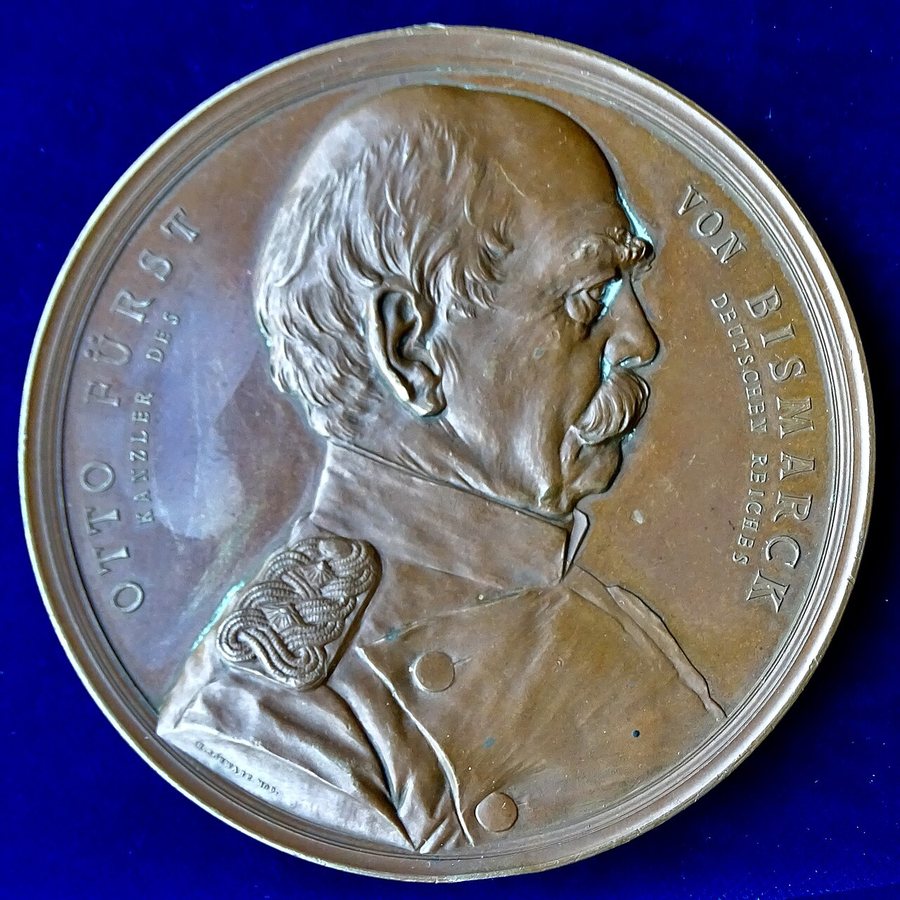
1890 medal by H. Schwabe showing Bismarck in his last year as chancellor (obverse)
Lenbach's painting of Bismarck in retirement, 1895
Bismarck on his deathbed, 30 July 1898
Bismarck Memorial in Berlin
Bismarck's punchy sayings were borrowed by his successors, including the Nazis; this 1942 Nazi propaganda poster quotes him: "If the Germans stick together, they will beat the devil out of hell."
Young Bismarck at the Rudelsburg
Bismarck monument in Hamburg
8 images

As chancellor, Bismarck used a balance-of-power approach to keep Germany secure in a largely peaceful Europe. At home he introduced the first welfare state while opposing socialists, and he fought the Catholic Church in the Kulturkampf, a campaign that ultimately failed. Historians praise his diplomacy but criticize his authoritarian rule and his persecution of Catholics. During the German Empire he became a hero to nationalists, who built many monuments in his honour.

In 160 languages

EnglishČeštinaDeutschEspañolFrançaisItaliano日本語PolskiPortuguêsРусскийУкраїнська中文AfrikaansShqipአማርኛOld EnglishAngikaAragoneseالعربيةMoroccan ArabicEgyptian ArabicAsturianuঅসমীয়াAvaricAwadhiAzbAzərbaycanBalineseBavarianbat-smgБашҡортBikolБеларускаяBetawiБългарскиবাংলাBrezhonegBosanskiBtmБуряадCatalàCebuanoНохчийнکوردیی ناوەندیKashubianCymraegDanskZazaΕλληνικάEsperantoEestiEuskaraفارسیfiu-vroSuomiFøroysktNorthern FrisianFurlanFryskGaeilgeGàidhligGalegoGuaraniGorontaloGothicGaelgHausaעבריתFiji Hindiहिन्दीHrvatskiHaitian CreoleMagyarՀայերենInterlinguaBahasa IndonesiaIlokoIdoÍslenskaJawaKara-KalpakქართულიKbpҚазақшаខ្មែរKanuriಕನ್ನಡ한국어Kurdî (kurmancî)KernewekКыргызчаLadinoLatinLëtzebuergeschLezghianLigureLombardLietuviųLatviešuमैथिलीMalagasyMariМакедонскиമലയാളംМонголमराठीMelayuMaltiمازرونیNeddersass’schनेपालीNewariNederlandsNorsk nynorskNorskOccitanਪੰਜਾਬੀPiemontèisWestern PanjabiپښتوRunasimiRomânăRusynСаха тылаᱥᱟᱱᱛᱟᱲᱤसंस्कृत भाषाSicilianuScotsسنڌيSrpski (latinica)සිංහලSlovenčinaSlovenščinaShqipСрпскиSaterland FrisianSvenskaKiswahiliதமிழ்తెలుగుТоҷикӣไทยTürkmen diliFilipinoTalyshTürkçeТатарئۇيغۇرچەاردوO‘zbekVepsTiếng ViệtVolapükWarayWalloonWu ChineseMingrelianייִדישÈdè Yorùbázh-yue

Редакція Factograf · Published October 14, 2026 · Partly based on Wikipedia, CC BY-SA 4.0 · Source article