factograf
EN
Sign in

epic poem attributed to Homer

Odyssey

Odyssey

The Odyssey is one of two major epics of ancient Greek literature attributed to Homer and one of the oldest surviving works of literature. It follows Odysseus, the king of Ithaca, on his homecoming journey after the ten-year Trojan War, a voyage lasting another ten years in which he faces many perils and loses all his crewmates. Meanwhile his wife Penelope and son Telemachus contend with unruly suitors. The poem remains popular with modern audiences and is divided into 24 books, like the Iliad.

Dating and composition
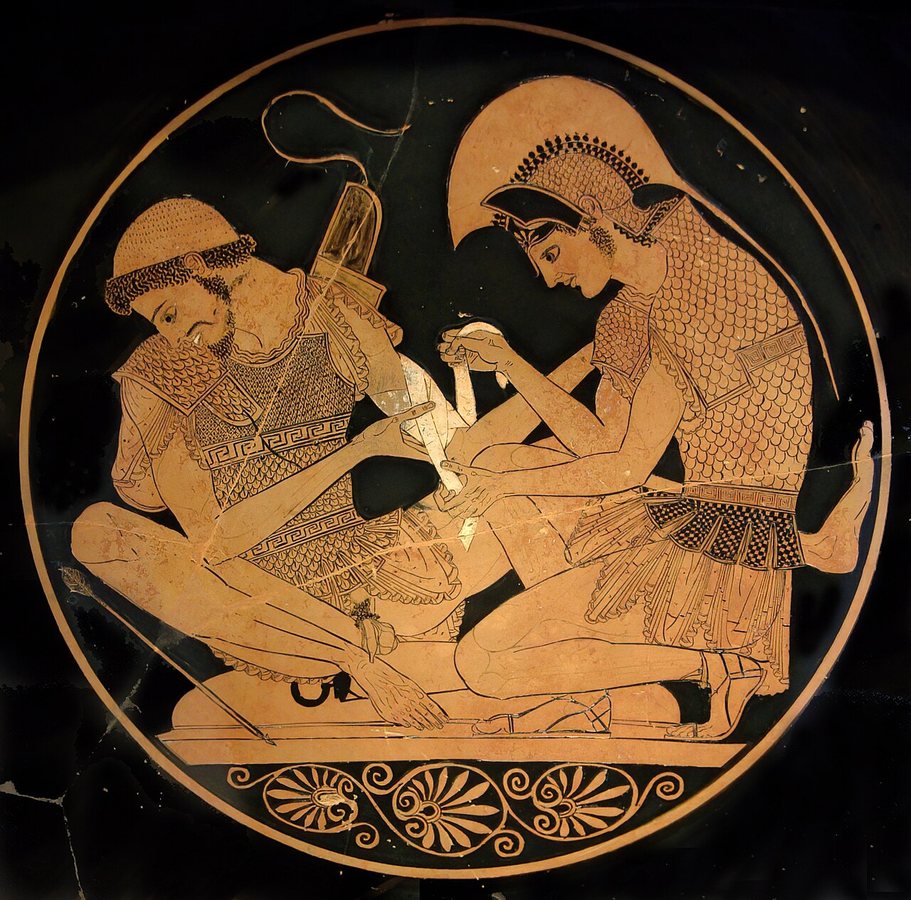
Achilles and Patroclus, vase in the Antikensammlung Berlin, F2278
Terracotta plaque of the Mesopotamian ogre Humbaba, a possible inspiration for the figure of Polyphemus
Mosaic depicting Odysseus from the villa of La Olmeda in Pedrosa de la Vega, Spain, late 4th to 5th centuries AD
Odysseus and his soldiers fight the Cicones, allies of the Trojans, during the sacking of their city; Odysseus is then driven back by their allies
4 images

The Odyssey was first composed in Homeric Greek around the 8th or 7th century BC and had become part of the Greek literary canon by the mid-6th century BC. Scholars disagree on when it was written down, and they generally agree that the Homeric epics developed within a long oral tradition. Because literacy was limited, the poem was performed for audiences by singers or rhapsodes, and its content may have varied from one performance to another.

Themes and influences

Odysseus and the Sirens on the eponymous vase of the Siren Painter, c. 480–470 BC, British Museum
15th-century manuscript of Book I written by scribe John Rhosos, British Museum
1794 student edition of the Odyssey including the Batrachomyomachia
Statue representing the Odyssey in the Museum of the Ancient Agora of Athens
4 images

Key themes include nostos, or homecoming, wandering, xenia or guest-friendship, testing, and omens. Unlike the Iliad, which focuses on soldiers and kings, the Odyssey gives notable prominence to women and slaves. Scholars also note strong influences from Near Eastern literature, particularly parallels with the Epic of Gilgamesh in the journeys to the ends of the earth and to the land of the dead.

Lasting significance

Penelope questions Odysseus to prove his identity, 1802 painting by Johann Heinrich Wilhelm Tischbein
Odysseus and Eurycleia, painting by Johann Heinrich Wilhelm Tischbein
Ulysses and Telemachus kill Penelope's suitors, painting by Thomas Degeorge, 1812
Front cover of James Joyce's Ulysses, 1922
4 images

The Odyssey is regarded as one of the most significant works of the Western canon. The first complete English translation appeared in 1616, and adaptations continue across many media. In 2018, when BBC Culture polled experts worldwide to find literature's most enduring narrative, the Odyssey topped the list.

In 131 languages

Редакція Factograf · Published October 14, 2026 · Partly based on Wikipedia, CC BY-SA 4.0 · Source article