factograf
EN
Sign in

series of military tribunals after World War II, held 1945-1946

Nuremberg trials

Nuremberg trials

The Nuremberg trials were international criminal trials held by France, the Soviet Union, the United Kingdom, and the United States against leaders of defeated Nazi Germany. The defendants were charged with plotting and carrying out invasions across Europe and with atrocities against civilians during the Second World War. The main trial of 22 leading figures, before the International Military Tribunal, ran from November 1945 to October 1946, and twelve further trials were conducted by the United States against lower-level perpetrators. The proceedings introduced the idea that individuals could be held responsible for violations of international law.

Origins of the trials

Emblem of the International Military Tribunal, Nuremberg
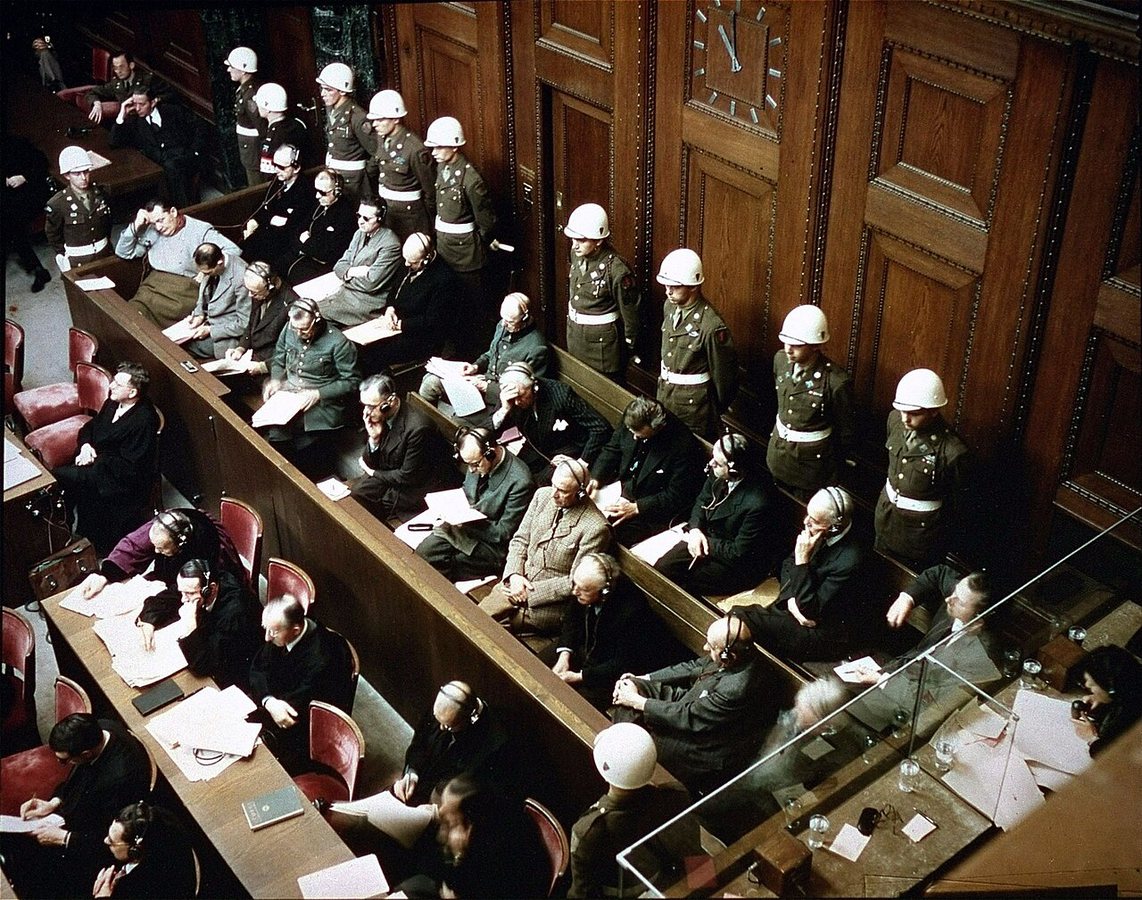
Colour photograph of the judges' bench at the International Military Tribunal
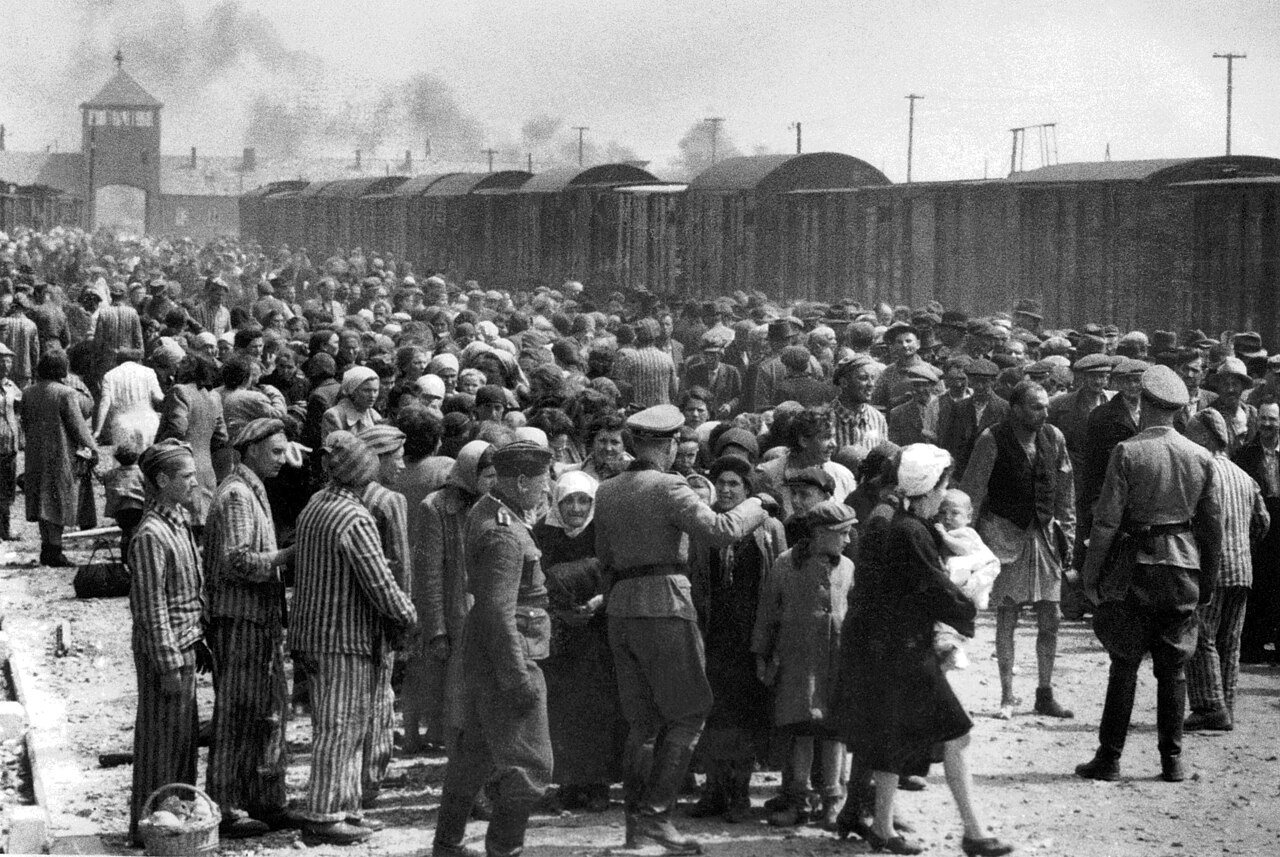
Jews arriving at Auschwitz concentration camp, 1944. According to legal historian Kirsten Sellars, the extermination camps formed the moral core of the Allies' case against the Nazi leaders.
Aron Trainin (centre, with moustache) speaks at the London Conference.
Aerial view of the Palace of Justice in 1945, with the prison attached behind it
Ruins of Nuremberg, c. 1945
Handing over the indictment to the tribunal, 18 October 1945
United States Army clerks with evidence
Presenting information on German aggression, 4 December
9 images

Between 1939 and 1945, Nazi Germany invaded many European countries, and the war cost the Soviet Union alone around 27 million lives, mostly civilians. The Allies disagreed on how to punish the defeated leaders. The Soviet Union favoured a trial with a predetermined outcome, the United Kingdom preferred summary execution, and the United States pushed for a trial seen as legitimate. In mid-1945 the four powers agreed on a joint tribunal in occupied Germany, with a charter setting out the offences to be prosecuted: crimes against peace, crimes against humanity, and war crimes.

Legacy of the proceedings

Evidence about Ernst Kaltenbrunner's crimes is presented, 2 January 1946.
Roman Rudenko opens the Soviet case.
Hermann Göring under cross-examination
A member of the Soviet delegation addresses the tribunal.
Telford Taylor opens for the prosecution in the Ministries Trial, 6 January 1948.
Monowitz prisoners unload cement from trains for IG Farben, presented as evidence at the IG Farben Trial.
Press at the International Military Tribunal
Germans read Süddeutsche Zeitung reporting the verdict, 1 October 1946
Benjamin Ferencz, chief prosecutor of the Einsatzgruppen trial, in the Palace of Justice courtroom, 2012
9 images

The main trial's verdict described the crime of plotting and waging aggressive war as the supreme international crime. The Holocaust was a major focus of the proceedings. The trials were controversial at the time because they applied criminal liability to aggression retroactively. Their practice of holding individuals accountable for breaches of international law is widely regarded as the starting point of international criminal law.

In 80 languages

Редакція Factograf · Published October 14, 2026 · Partly based on Wikipedia, CC BY-SA 4.0 · Source article