
The November 2015 Paris attacks were a series of coordinated Islamic terrorist attacks on Friday, 13 November 2015 in Paris and the northern suburb of Saint-Denis. Attackers struck near the Stade de France during an international football match, fired on crowded cafés and restaurants, and took hostages at a concert in the Bataclan theatre. The attacks killed 130 people and were the deadliest in France's history and the deadliest in the European Union since the 2004 Madrid train bombings. The Islamic State claimed responsibility.
Background to the attacks
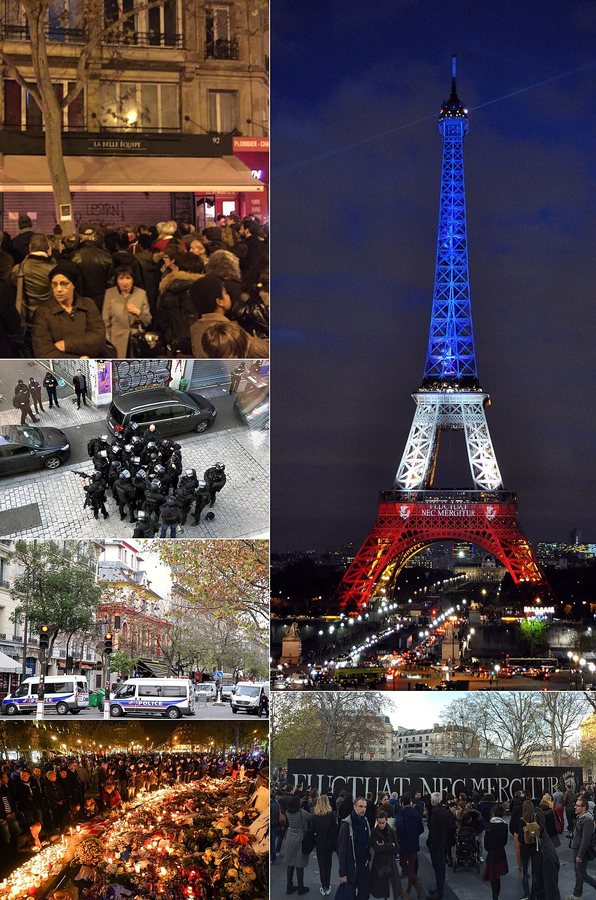


France had been on high alert since the January 2015 attacks on the Charlie Hebdo offices and a Jewish supermarket in Paris, which killed 17 people. Security had also been raised ahead of the planned United Nations Climate Change Conference in Paris. The Bataclan theatre had previously been threatened because its Jewish owners supported Jewish organisations and Israel. Intelligence agencies in Turkey and Iraq had reportedly warned of an imminent attack on France months earlier, though French authorities said they received such messages routinely.
Attacks and aftermath


Three groups of men carried out six attacks, including suicide bombings near the Stade de France and shootings at cafés and the Bataclan. Police ended the Bataclan standoff, during which attackers detonated their vests. The attackers were directed from Brussels, and most had been born in France or Belgium and had fought in Syria. France declared a three-month state of emergency, and on 18 November the suspected lead operative, Abdelhamid Abaaoud, was killed in a police raid in Saint-Denis.