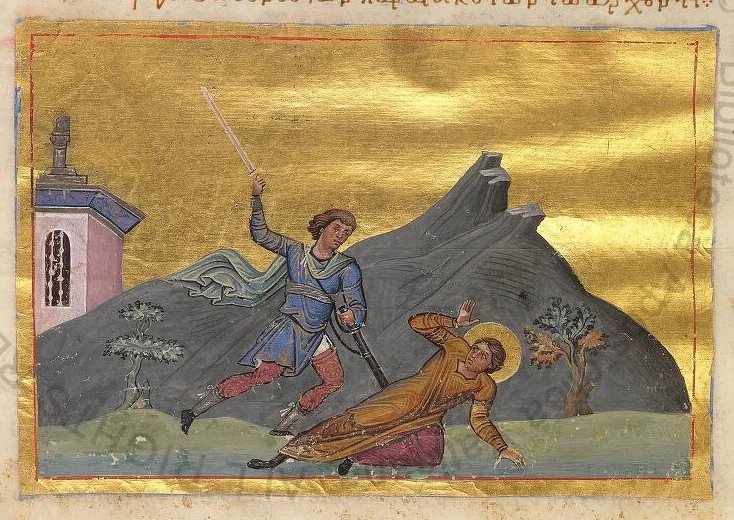
Neophytus of Nicea was a Christian martyr born in Nicaea around 294. As the son of Theodore and Florentia, he lived during the period of the Diocletianic Persecution. He gained recognition for his courageous rejection of paganism, which led to his execution by Roman soldiers in 303. His death occurred roughly a decade before the Edict of Milan granted religious tolerance to Christians throughout the Roman Empire.
Life and death

Born in Bithynia to Christian parents, Neophytus returned to Nicaea during a time of intense religious conflict. He publicly criticized pagan beliefs, an act that resulted in his death at a young age. He was killed by Roman soldiers in 303, during the height of the persecutions directed against the early Christian community.
Veneration and legacy
He is honored as a saint in Catholic and Orthodox traditions, with his feast day observed on January 20 or 21. In 2014, researchers discovered a submerged Byzantine basilica in Lake İznik, located in modern-day Turkey. This underwater structure is believed to have been built on the shore where he died to honor his memory.