factograf
EN
Sign in

president of South Africa and anti-apartheid activist (1918–2013)

Nelson Mandela

Nelson Mandela

Nelson Mandela was a South African anti-apartheid revolutionary, politician and philanthropist who served as President of South Africa from 1994 to 1999. He was the country's first black head of state and the first elected in a fully representative democratic election. His government focused on dismantling the legacy of apartheid, tackling institutionalised racism and fostering racial reconciliation. He also led the African National Congress from 1991 to 1997 and became widely regarded as an icon of democracy and social justice.

Early life and activism

Mandela in Umtata, 1937
Mandela and Evelyn in July 1944 at Walter and Albertina Sisulu's wedding party in the Bantu Men's Social Centre
Mandela's former home in the Johannesburg township of Soweto
Thatched room at Liliesleaf Farm, where Mandela hid
Lime quarry on Robben Island where Mandela and other prisoners were forced to carry out hard labour
Physiological needs
Physiological needs
Robben Island prison, Section B
Bust of Mandela erected on London's South Bank by the Greater London Council under Ken Livingstone in 1985
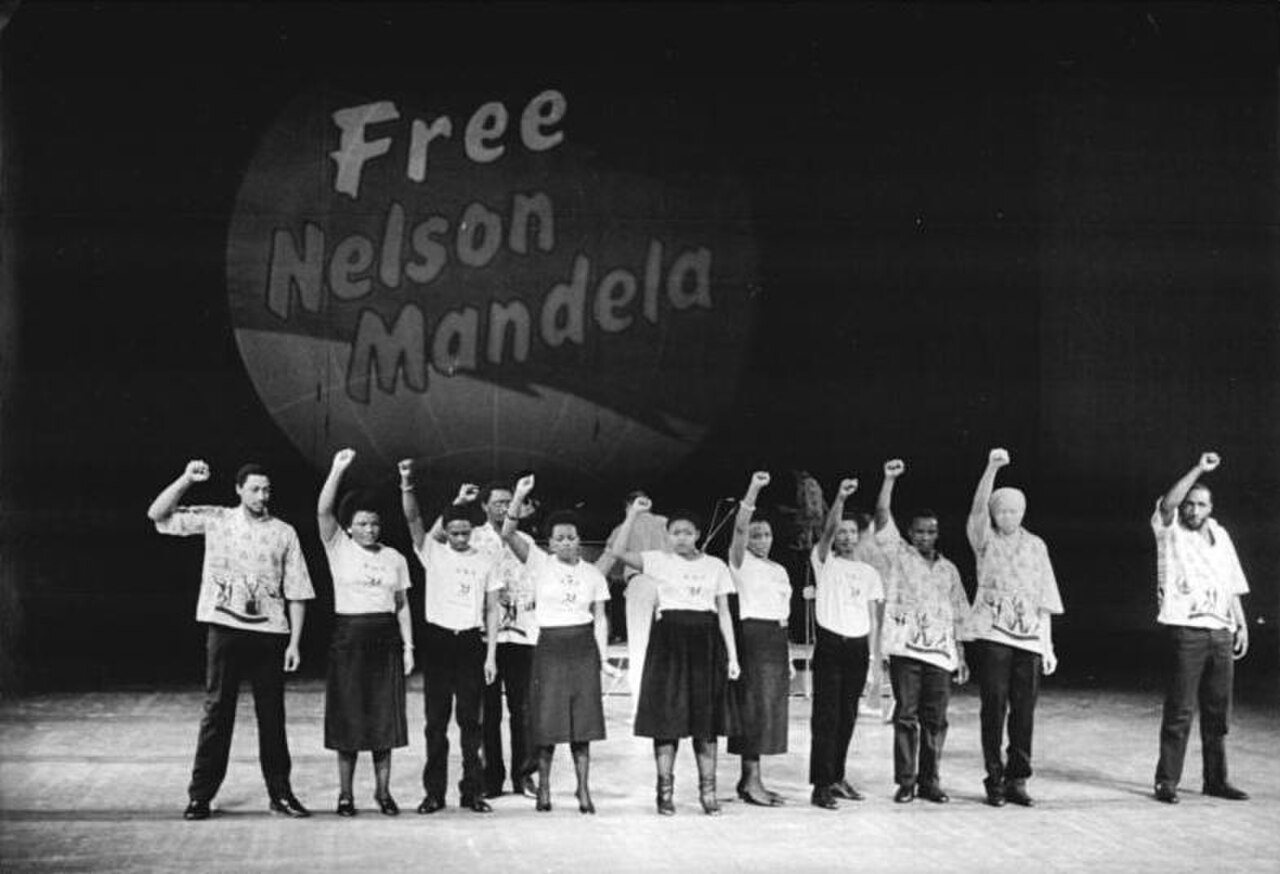
"Free Mandela" protest in East Berlin, 1986
9 images

Mandela was born in 1918 in Mvezo, into the Thembu royal family of the Xhosa people. After studying law and working as a lawyer in Johannesburg, he joined the African National Congress in 1943. When the National Party government established apartheid, a system of racial segregation favouring whites, he and the ANC committed to its overthrow. Mandela rose to prominence through campaigns of defiance and was later arrested and prosecuted. Initially committed to non-violent protest, he co-founded the armed group Umkhonto we Sizwe in 1961 and was sentenced to life imprisonment in 1962.

Release and presidency

Luthuli House in Johannesburg, which became the ANC headquarters in 1991
De Klerk and Mandela at the World Economic Forum, 1992
Mandela casting his vote in the 1994 election
Houses in Soweto built under the RDP programme
Mandela on a visit to Brazil in 1998
Mandela with US president Bill Clinton, whom he publicly criticised on several occasions but liked and personally supported during his impeachment proceedings
In the latter part of his presidency, Mandela increasingly relied on his Deputy President, Thabo Mbeki (pictured)
Mandela visiting the London School of Economics in 2000
8 images

Mandela spent 27 years in prison. Amid domestic and international pressure, President F. W. de Klerk released him in 1990. The two men negotiated an end to apartheid, and in the 1994 multiracial election Mandela led the ANC to victory. As president he emphasised reconciliation and created the Truth and Reconciliation Commission to investigate past human rights abuses. He declined a second term and was succeeded by Thabo Mbeki in 1999.

Legacy

Mandela and US President George W. Bush in the Oval Office, 2005
Mandela receiving the freedom of the city of Tshwane, 2008
Mandela's retirement home in Qunu, former Transkei
Members of the public paying their respects outside Mandela's Houghton home
Purple progress flag waving
1988 Soviet commemorative stamp captioned "Fighter for the freedom of South Africa Nelson Mandela" in Russian
Mandela on a visit to Australia in 2009, wearing one of the brightly coloured garments known as "Madiba shirts"
Flowers left at the Mandela statue in London's Parliament Square following his death
8 images

Mandela was a controversial figure for much of his life, criticised by both the political right and the radical left. He later became an elder statesman, working through the Nelson Mandela Foundation against poverty and HIV/AIDS. He received more than 250 honours, including the Nobel Peace Prize, and is often called the Father of the Nation in South Africa, where he is also known by his clan name, Madiba.

In 231 languages

EnglishČeštinaDeutschEspañolFrançaisItaliano日本語PolskiPortuguêsРусскийУкраїнська中文AbkhazianAcehneseAfrikaansShqipአማርኛOld EnglishOboloAngikaAragoneseAramaicالعربيةMoroccan ArabicEgyptian ArabicAsturianuঅসমীয়াKotavaAwadhiAymaraAzbAzərbaycanBalinesebat-smgБашҡортBikolБеларускаяБългарскиBhojpuriBamanakanবাংলাབོད་སྐད་BrezhonegBosanskiBtmБуряадCatalàcbk-zamCebuanoНохчийнChamorroCheyenneکوردیی ناوەندیCorsicanЧӑваш чӗлхиCymraegDagDanskDinkaZazaDolnoserbšćinaDtyDivehiEʋegbeΕλληνικάEmlEsperantoEestiEuskaraExtremaduranفارسیPulaarfiu-vroSuomiFonFøroysktArpitanNorthern FrisianFurlanFryskGaeilgeGcrGàidhligGalegoGuaraniकोंकणीGothicGpeગુજરાતીGuwGaelgHakka ChineseHausaʻŌlelo HawaiʻiעבריתFiji Hindiहिन्दीHrvatskiHornjoserbšćinaHaitian CreoleMagyarՀայերենHywInterlinguaBahasa IndonesiaInterlingueIgboIlokoIdoÍslenskaJamaican Creole EnglishJawaKara-KalpakTaqbaylitქართულიKbpҚазақшаKanuriಕನ್ನಡ한국어KölschکٲشُرKusKurdî (kurmancî)KernewekКыргызчаLadinoLatinLëtzebuergeschLezghianLugandaLimburgishLombardLingálaລາວLietuviųLatviešuMadureseमैथिलीMalagasyMinangkabauМакедонскиമലയാളംМонголमराठीMelayuMaltiမြန်မာمازرونیNeapolitanNeddersass’schनेपालीNewariNederlandsNorsk nynorskNorskSouth NdebeleSesotho sa LeboaNyanjaOccitanOloଓଡ଼ିଆИронPampangaPapiamentoਪੰਜਾਬੀNaijíriá PíjinPennsylvania GermanPiemontèisWestern PanjabiپښتوRunasimiRomânăRusynIkinyarwandaСаха тылаᱥᱟᱱᱛᱟᱲᱤसंस्कृत भाषाSicilianuScotsSarduسنڌيDavvisámegiellaSrpski (latinica)සිංහලSlovenčinaSlovenščinaAnarâškielâChiShonaSoomaaliShqipСрпскиSwatiSesothoBasa SundaSvenskaKiswahiliŚlōnskiதமிழ்TetumతెలుగుТоҷикӣไทยFilipinoTalyshSetswanaToki ponaTok PisinTürkçeTsongaТатарAkanئۇيغۇرچەاردوO‘zbekVenetoVepsTiếng ViệtWest FlemishVolapükWarayWalloonWu ChineseIsiXhosaMingrelianייִדישÈdè YorùbáZeelandicⵜⴰⵎⴰⵣⵉⵖⵜzh-yueIsiZulu

Редакція Factograf · Published October 14, 2026 · Partly based on Wikipedia, CC BY-SA 4.0 · Source article