factograf
EN
Sign in

capital city of Campania, Italy

Naples

Naples

Naples is the regional capital of Campania in southern Italy and the largest city in southern Italy. Its city proper had a population of 905,050 as of 2026, and its metropolitan area, the seventh most populous in the European Union, has about 4.4 million residents. Founded by the Greeks, it is one of the oldest continuously inhabited urban areas in the world and has long been a major centre of culture, the arts, education and classical music, including the Neapolitan School of opera.

Ancient origins

Naples, Maschio Angioino castle
Front view of the Maschio Angioino castle
Piazza del Plebiscito, Naples
Southwest facade of the Capodimonte Museum in Naples
Royal Palace of Naples
Centro Direzionale di Napoli, cropped view
Mount Echia, the site where the polis of Parthenope arose
The columns of the Temple of Castor and Pollux, built into the facade of San Paolo Maggiore
The Gothic Battle of Mons Lactarius on Vesuvius, painted by Alexander Zick
Frederick II
Frederick II
Castel Nuovo, also called Maschio Angioino, seat of medieval kings of Naples, Aragon and Spain
The Viceroy of Naples paying tribute to De Ruyter's fleet in the port of Naples, 1676, by Jan van Essen
12 images

Sailors from the Greek island of Rhodes probably founded a small trading port called Parthenope in the ninth century BC, on the island of Megaride. Cumaeans later expanded the settlement, and in the sixth century BC it was refounded as Neápolis. The city became one of the foremost cities of Magna Graecia and an ally of Rome. Under Roman rule it kept its Greek language and customs and became a fashionable place for emperors to holiday, while also being associated with the poet Virgil.

Medieval and modern rule

View of the Bay of Naples with Admiral Byng's fleet at anchor, 1718, painting by Gaspar Butler
Naples depicted during the short-lived Parthenopean Republic
Entry of Garibaldi into Naples on 7 September 1860
Allied bombardment of Naples, 1943
Piazza San Domenico Maggiore and obelisk, Naples
Royal Palace of Naples
The Egg Castle
The Egg Castle
National Archaeological Museum
Naples Cathedral
Naples Cathedral
Church of Gesù Nuovo
Hanging gardens of the Certosa di San Martino
11 images

Naples served as the capital of the Duchy of Naples, then of the Kingdom of Naples, and finally of the Kingdom of the Two Sicilies until Italian unification in 1861. The city is also regarded as a centre of the Baroque, beginning with the career of the painter Caravaggio in the seventeenth century, and it was an important hub of humanism and the Enlightenment. During the Second World War, it suffered heavy Allied bombing, and it was rebuilt extensively after the war.

Culture and heritage

Interior of the Church of the Girolamini
Villa Comunale
Villa Comunale
One of the city's many examples of Neapolitan Liberty (Art Nouveau) architecture
Underground Naples
Underground Naples
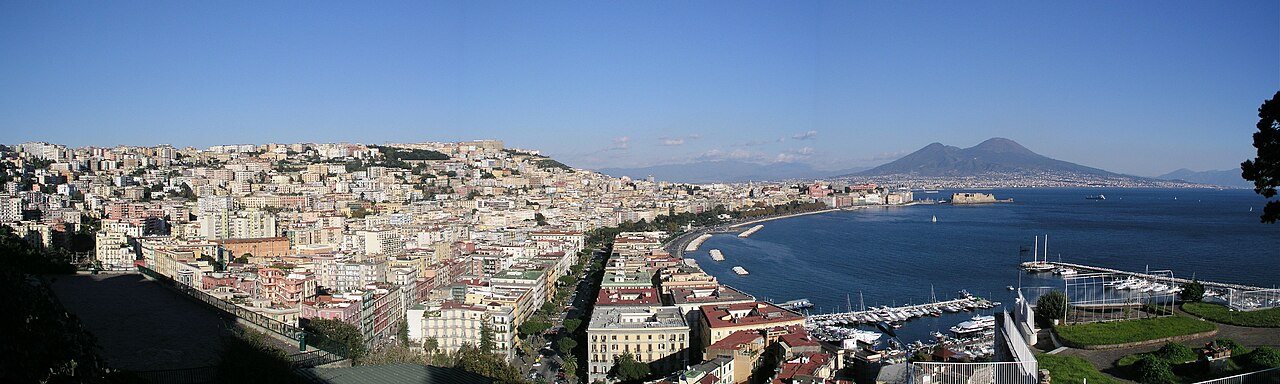
The Gulf of Naples
The Gulf of Naples
Urban density in central Naples
Palazzo Donn'Anna and the Bagno Donn'Anna beach in Posillipo
Main building of the University of Naples Federico II
Palazzo San Giacomo, the city hall
Palazzo delle Poste in Naples by Gino Franzi, 1936, a masterpiece of modernism in marble and diorite
The port of Naples
The port of Naples
Naples International Airport
12 images

Naples has a historic centre designated as a UNESCO World Heritage Site and is known for its dense concentration of cultural and monumental sites. It is also the birthplace of pizza, and the art of the Neapolitan pizzaiolo is recognised by UNESCO. The city hosts the University of Naples Federico II, founded in 1224, which is regarded as the oldest state-funded secular university in the world.

Port and economy

Romantic painting by Salvatore Fergola of the 1839 inauguration of the Naples–Portici railway line
Neapolitan pizza, which was invented in Naples
Sfogliatella, a popular Neapolitan pastry
An 1813 depiction of the Piedigrotta festival
Giordano Bruno
Giordano Bruno
Statue of Giambattista Vico
Engraving of Pulcinella from 1700
Interior of the Teatro San Carlo
Neapolitan mandolin
Neapolitan mandolin
Totò, a famous Neapolitan actor
Wall painting of Maradona
11 images

Since the late twentieth century, Naples has seen significant economic growth, supported by the Centro direzionale business district and an expanded transport network that includes high-speed rail and a larger metro system. It is the third-largest urban economy in Italy by GDP, and its port is one of the most important in Europe. The city also hosts NATO's Allied Joint Force Command Naples.

In 168 languages

EnglishČeštinaDeutschEspañolFrançaisItaliano日本語PolskiPortuguêsРусскийУкраїнська中文AfrikaansShqipአማርኛAragoneseالعربيةEgyptian ArabicAsturianuKotavaAymaraAzbAzərbaycanBalinesebat-smgБашҡортBikolБеларускаяБългарскиবাংলাBrezhonegBosanskiCatalàCebuanoНохчийнکوردیی ناوەندیCorsicanCrimean TatarKashubianЧӑваш чӗлхиCymraegDanskZazaΕλληνικάEmlEsperantoEestiEuskaraExtremaduranفارسیSuomiFøroysktArpitanNorthern FrisianFurlanFryskGaeilgeGàidhligGalegoHakka ChineseHausaעבריתहिन्दीHrvatskiHornjoserbšćinaMagyarՀայերենHywInterlinguaBahasa IndonesiaInterlingueIdoÍslenskaJawaKara-KalpakTaqbaylitქართულიҚазақша한국어Kurdî (kurmancî)KomiКыргызчаLadinoLatinLëtzebuergeschLezghianLigureLimburgishLldLombardLingálaLietuviųLatviešuMalagasyMariMāoriМакедонскиമലയാളംМонголमराठीMelayuMaltiمازرونیNeapolitanNeddersass’sch (Nedderlannen)Neddersass’schनेपालीNewariNederlandsNorsk nynorskNorskNrmOccitanИронPampangaPapiamentoPicardPennsylvania GermanPiemontèisWestern PanjabiپښتوRunasimiRumantschRoa (Tara)RomânăСаха тылаसंस्कृत भाषाSicilianuScotsSarduSrpski (latinica)SkrSlovenčinaSlovenščinaAnarâškielâShqipСрпскиSvenskaKiswahiliŚlōnskiSzyதமிழ்ТоҷикӣไทยFilipinoTalyshToki ponaTürkçeТатарTumbukaAkanUdmurtئۇيغۇرچەاردوO‘zbekVenetoVepsTiếng ViệtWest FlemishVolapükWarayWu ChineseIsiXhosaMingrelianייִדישÈdè YorùbáZeelandiczh-yue

Редакція Factograf · Published October 14, 2026 · Partly based on Wikipedia, CC BY-SA 4.0 · Source article