
Mikhail Gorbachev (1931–2022) was a Soviet and Russian politician who served as the last leader of the Soviet Union from 1985 until the country's dissolution in 1991. He was General Secretary of the Communist Party from 1985 and head of state from 1988. He began as a committed Marxist–Leninist but moved toward social democracy by the early 1990s. His reforms of openness and restructuring changed Soviet politics and helped end the Cold War, and he received the Nobel Peace Prize for this work. He remains a controversial figure.
Early life and career


Born in 1931 in Privolnoye, a village in the North Caucasus with mixed Russian and Ukrainian families, Gorbachev grew up under Joseph Stalin's rule. As a young man he worked on a collective farm operating combine harvesters before joining the Communist Party. He studied law at Moscow State University, then built his career in Stavropol, where he oversaw regional party work. In 1978 he moved to Moscow as a secretary of the party's Central Committee, and he joined the Politburo, the party's top decision-making body, in 1980.
Reforms and the end of the Union


After Leonid Brezhnev's death and the brief leaderships that followed, the Politburo chose Gorbachev as general secretary in 1985. He withdrew Soviet troops from Afghanistan and held summits with United States president Ronald Reagan to reduce nuclear weapons. His policies of glasnost (openness) and perestroika (restructuring) expanded freedom of speech and the press and decentralized economic decisions. Rising nationalism in the republics, together with an unsuccessful hardliner coup in August 1991, led to the Soviet Union's dissolution later that year, a result Gorbachev had opposed.
Later years and legacy


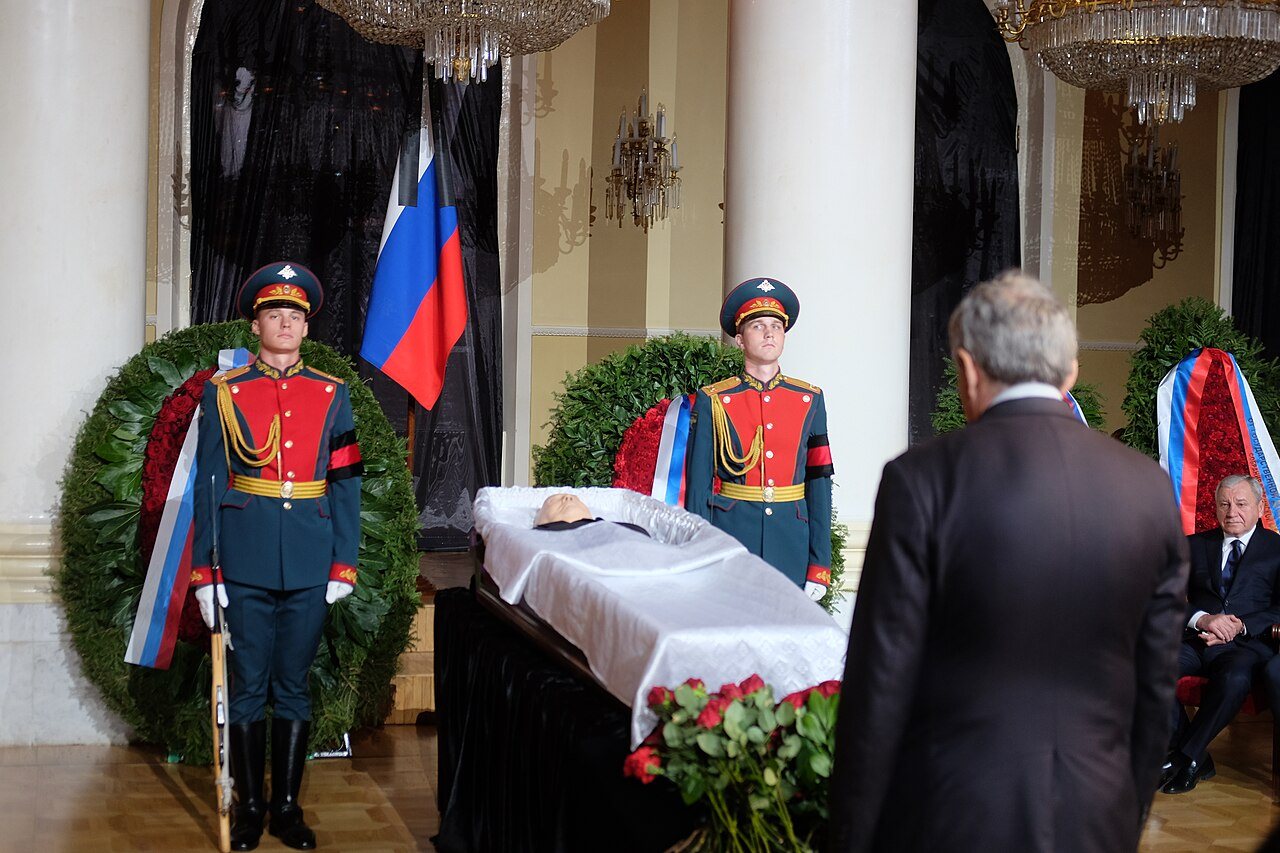


After resigning the presidency, Gorbachev founded the Gorbachev Foundation and became a critic of Russian presidents Boris Yeltsin and Vladimir Putin, while supporting Russia's social-democratic movement. Many regard him as one of the most significant figures of the late twentieth century for easing the Cold War and introducing political and economic freedoms. Critics argue that he weakened Russia's global influence and contributed to economic collapse in the country.