factograf
EN
Sign in

capital and largest city of Mexico

Mexico City

Mexico City

Mexico City is the capital and largest city of Mexico, as well as the most populous city in North America. It is one of the world's leading cultural and financial centers and is classified as an Alpha world city. Located in the Valley of Mexico on the high Mexican Central Plateau, it sits at an altitude of 2,240 meters. The city is divided into 16 boroughs, known as alcaldías, which are further subdivided into neighborhoods called colonias.

Origins and colonial era
Aerial flyover of Mexico City, cropped
The Angel of Independence monument in Mexico City
Exterior of the Soumaya Museum designed by Fernando Romero, photo by Adam Wiseman, cropped
Monument to the Revolution, cropped
Paseo de la Reforma in Mexico City
Panoramic view of the parade in the Zócalo, Mexico City
Palace of Fine Arts, Mexico City
A trajinera boat on the Nativitas canal
The city was the site of Mexico-Tenochtitlan, the Aztec capital.
The panel on the Tenochtitlan campaign in the 1552 Tlaxcala Canvas shows Hernán Cortés and Malintzin meeting Moctezuma II in Mexico-Tenochtitlan on 8 November 1519.
An 18th-century painting of the Mexico City Metropolitan Cathedral, built by the Spaniards over the ruins of the main Aztec temple.
Mexico City in 1690, from the Atlas Van der Hagen.
12 images

The city began as Tenochtitlan, a Mexica city built around 1325 on islands in Lake Texcoco. After the 1521 siege of Tenochtitlan, it was nearly destroyed and then rebuilt according to Spanish urban standards. In 1524 the municipality was established as México Tenochtitlán, and from 1585 it was officially known as Ciudad de México. During the Spanish colonial period it was a major political, administrative, and financial center, and it is the oldest capital city in the Americas.

Government and autonomy

Chapultepec was an important park during the Aztec Empire, when access was limited to nobility, and was opened to the public by a decree of Charles V in 1530. It is one of the world's largest city parks.
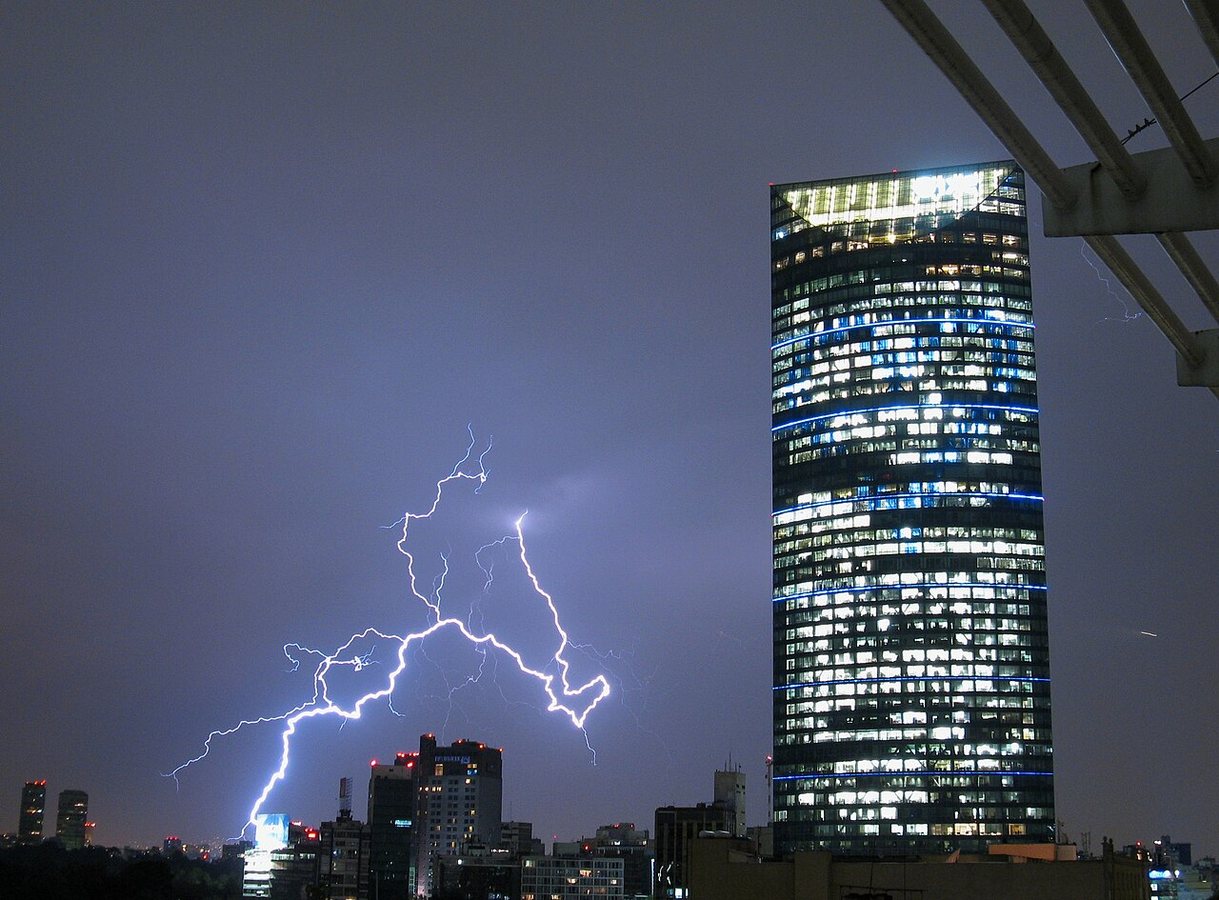
Lightning in the background of the Torre Mayor.
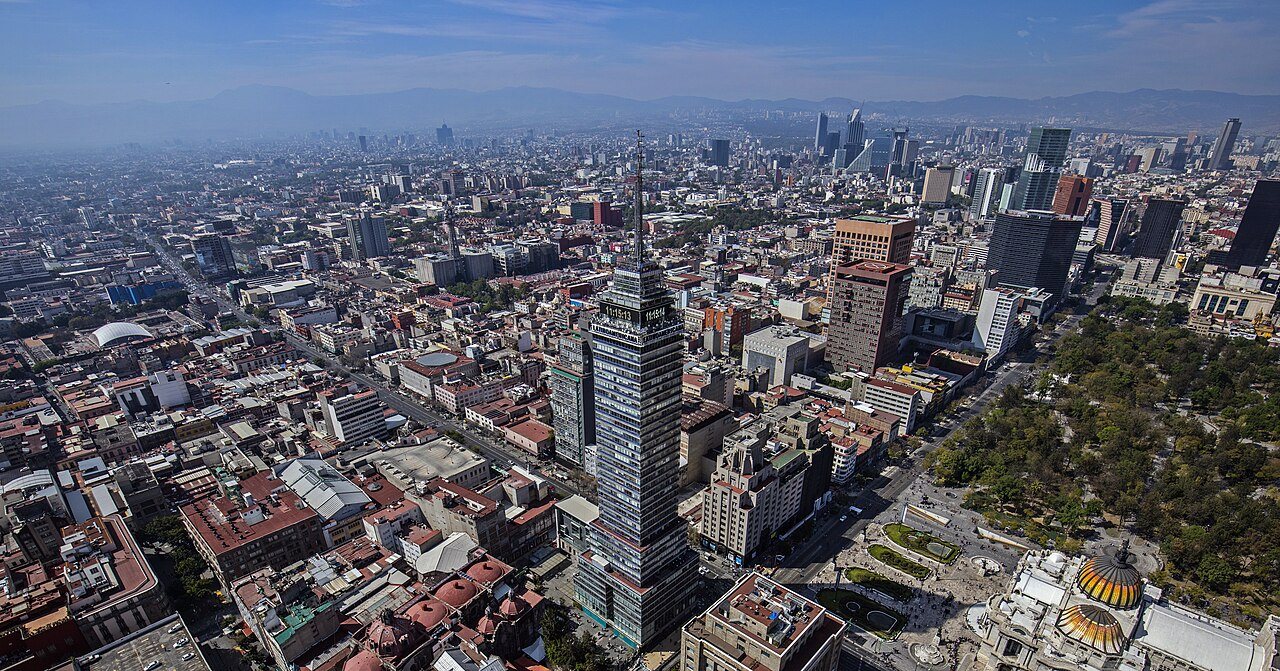
Panorama of Mexico City from the Torre Latinoamericana.
Basilica of Our Lady of Guadalupe in La Villa de Guadalupe, the main Catholic pilgrimage site in the Americas, which houses the original image of Our Lady of Guadalupe.
The XXI Century National Medical Center, managed by the Mexican Social Security Institute (IMSS).
El Colegio de México, dedicated to higher education and research in the social sciences and humanities, with an emphasis on Mexican and Latin American studies.
Central Campus of the UNAM University City, a UNESCO World Heritage Site since 2007.
The National Palace of Mexico.
Senate of the Republic.
Legislative Palace of San Lázaro.
Offices of the Secretariat of Foreign Affairs.
Building of the Mexico City Legislative Assembly.
12 images

After Mexico became independent, the surrounding territory was organized in 1824 as the country's federal district. Residents won the right to elect their head of government and legislative assembly in 1997. On 29 January 2016 the Federal District was officially renamed Ciudad de México, or CDMX. A constitutional clause still prevents the city from becoming a state while it remains the capital.

Population and economy

Buenavista railway station.
Metrobús at Wikimania 2015.
Mexibús at the Palacios Municipal stop.
Trolleybus of Mexico City.
New Yutong RTP buses.
Terminal Central de Autobuses del Norte.
Cablebús cable car.
Cablebús cable car.
Bicycles available for rental in Zona Rosa.
The monument To the Meritorious Benito Juárez, Mexico City.
The Reception Hall at the Museo Nacional de Arte.
Monument to Lázaro Cárdenas, with an outstretched hand welcoming Spanish immigrants, in Parque España.
A reconstruction of the entrance to the Hochob temple in the National Museum of Anthropology.
12 images

According to the 2020 census, the city proper had a population of 9,209,944, while the wider metropolitan area had 21,804,515 inhabitants. In 2011 the metropolitan area had a GDP of $411 billion, and the city accounted for 15.8% of Mexico's GDP. The city is also known for its progressive policies, including legal abortion, same-sex marriage, and legal gender change.

In 222 languages

EnglishČeštinaDeutschEspañolFrançaisItaliano日本語PolskiPortuguêsРусскийУкраїнська中文AcehneseAfrikaansShqipSouthern AltaiአማርኛOld EnglishAragoneseالعربيةMoroccan ArabicEgyptian ArabicAsturianuঅসমীয়াAtikamekwAvaricAymaraAzbAzərbaycanBalineseBavarianbat-smgБашҡортBikolБеларускаяБългарскиBhojpuriBanjarবাংলাབོད་སྐད་BrezhonegBosanskiБуряадCatalàcbk-zamCdoCebuanoНохчийнکوردیی ناوەندیCorsicanCrimean TatarЧӑваш чӗлхиCymraegDanskZazaDtyΕλληνικάEmlEsperantoEestiEuskaraExtremaduranفارسیfiu-vroSuomiFijianFøroysktNorthern FrisianFurlanFryskGaeilgeGcrGàidhligGilakiGalegoGuaraniગુજરાતીHakka ChineseHausaʻŌlelo HawaiʻiעבריתFiji Hindiहिन्दीHrvatskiHornjoserbšćinaHaitian CreoleMagyarՀայերենHywInterlinguaIbanBahasa IndonesiaInterlingueIgboIlokoIngushIdoÍslenskaJamaican Creole EnglishLojbanJawaKara-KalpakTaqbaylitქართულიKbpTyapKgeGikuyuҚазақшаKanuriಕನ್ನಡ한국어Karachay-BalkarKurdî (kurmancî)KomiKernewekКыргызчаLadinoLatinLëtzebuergeschLezghianLingua Franca NovaLigureLimburgishLldLombardLingálaLietuviųLatviešuMokshaMalagasyMariMinangkabauМакедонскиമലയാളംМонголWestern MariमराठीMelayuMaltiErzyaမြန်မာمازرونیNahNeapolitanNeddersass’schNewariNederlandsNorsk nynorskNovialNorskNavajoNyanjaOccitanOloଓଡ଼ିଆИронPapiamentoਪੰਜਾਬੀPicardPiemontèisWestern PanjabiپښتوRunasimiRumantschroa-rupRoa (Tara)RomânăRusynСаха тылаᱥᱟᱱᱛᱟᱲᱤSicilianuScotsSarduسنڌيDavvisámegiellaⵜⴰⵛⵍⵃⵉⵜSrpski (latinica)සිංහලSkrSlovenčinaSlovenščinaAnarâškielâSamoanChiShonaShqipСрпскиSaterland FrisianSesothoSvenskaKiswahiliŚlōnskiSzyதமிழ்తెలుగుТоҷикӣไทยTürkmen diliFilipinoTalyshToki ponaLea fakatongaTürkçeТатарTumbukaAkanUdmurtئۇيغۇرچەاردوO‘zbekVenetoVepsTiếng ViệtVolapükWarayWu ChineseMingrelianייִדישÈdè YorùbáZeelandicⵜⴰⵎⴰⵣⵉⵖⵜzh-yue

Редакція Factograf · Published October 14, 2026 · Partly based on Wikipedia, CC BY-SA 4.0 · Source article