
Lviv is the fifth-largest city in Ukraine and the largest in the country's western part, with a population of 723,403 according to a 2025 estimate. It serves as the administrative centre of Lviv Oblast and Lviv Raion and is one of Ukraine's main cultural centres. The city has carried several names over its history, and its historic centre is listed as a UNESCO World Heritage Site.
Medieval origins
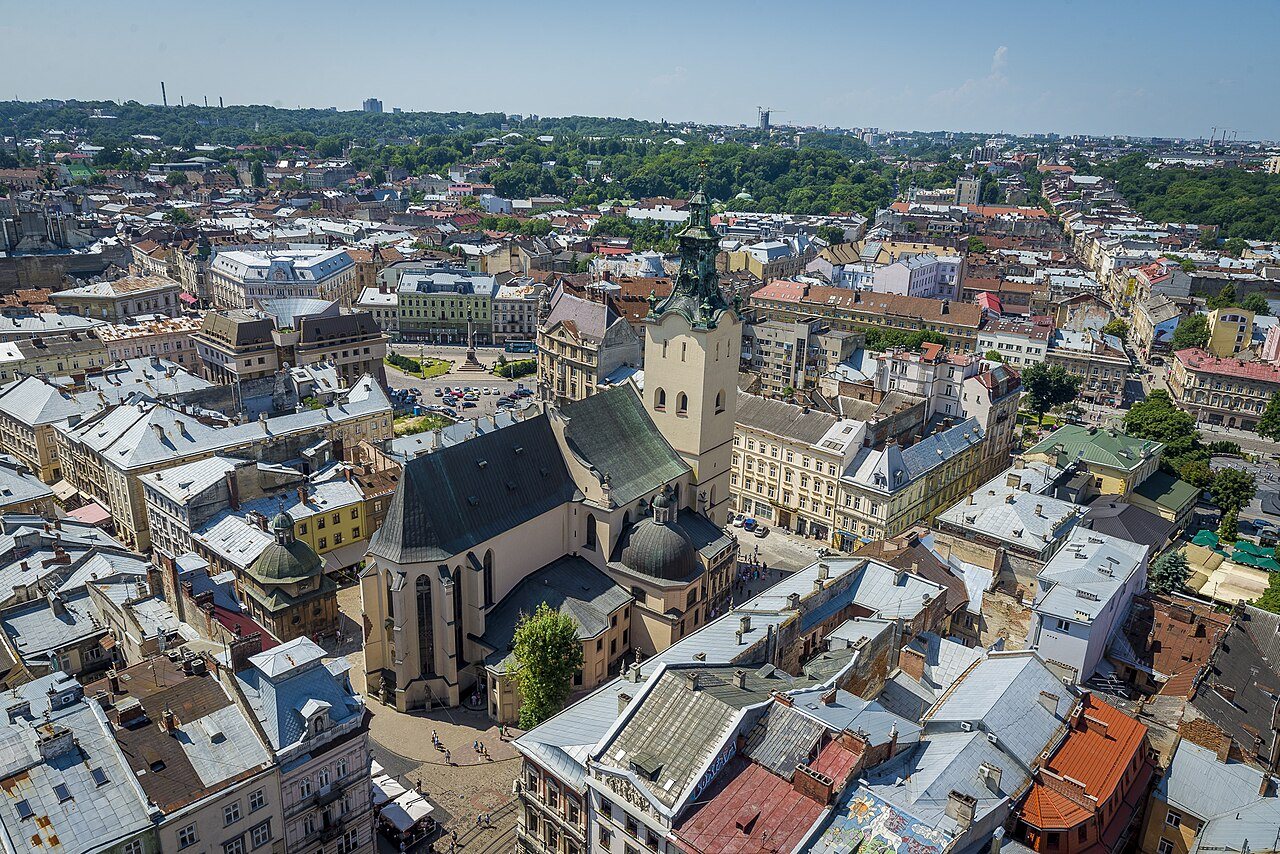


Archaeologists have found evidence of settlement in the Lviv area by the fifth century. The city was founded in 1250 by Daniel of Galicia, who named it after his son Lev. Lviv became the capital of the Galicia-Volhynia state around 1270, and in the following centuries it passed to Poland, Lithuania and later the Habsburg monarchy, growing into the regional centre of Red Ruthenia and Galicia.
Interwar and Soviet periods


Between 1918 and 1939 the city was the heart of the Lwów Voivodeship in the Second Polish Republic, a period in which its culture, industry and academic institutions flourished. After the 1939 invasion of Poland it was annexed by the Soviet Union, and in 1946 it became part of the Ukrainian Soviet Socialist Republic, having lost an estimated 80 to 90 percent of its prewar population. It remained part of Ukraine after the Soviet Union dissolved in 1991.
Architecture and culture


The historic centre has cobblestone streets and a mix of Renaissance, Baroque, Neoclassical and Art Nouveau architecture, and it is listed as an endangered site because of the Russian invasion of Ukraine. The city hosts industries and higher education institutions, including Lviv University and Lviv Polytechnic, as well as the Lviv Philharmonic and the Lviv Theatre of Opera and Ballet.