factograf
EN
Sign in

king of France and Navarre from 1774 to 1792

Louis XVI

Louis XVI

Louis XVI (1754–1793) was the last king of France before the monarchy fell during the French Revolution. He became king in 1774 on the death of his grandfather Louis XV and reigned until the monarchy was abolished in September 1792. He was tried for high treason and executed by guillotine in January 1793, ending more than a thousand years of continuous French monarchy. His indecisiveness and conservatism toward demands for reform made him a symbol of the old regime's tyranny in the eyes of many revolutionaries.

Early reign and reforms

The young Duke of Berry (right) with his younger brother, the Count of Provence, by François-Hubert Drouais, 1757
The young Duke of Berry painted by Jean-Martial Frédou, around 1760
Marie Antoinette, queen of France and wife of Louis XVI, with their three eldest children, by Élisabeth Vigée-Lebrun, 1787
The seven-year-old Louis XVII, 1792
"The Coronation of Louis XVI", 18th-century motif by Benjamin Duvivier, coins honouring the coronation of 11 June 1775
Louis XVI visiting Cherbourg in June 1786 for the work on a dike, 1817 painting
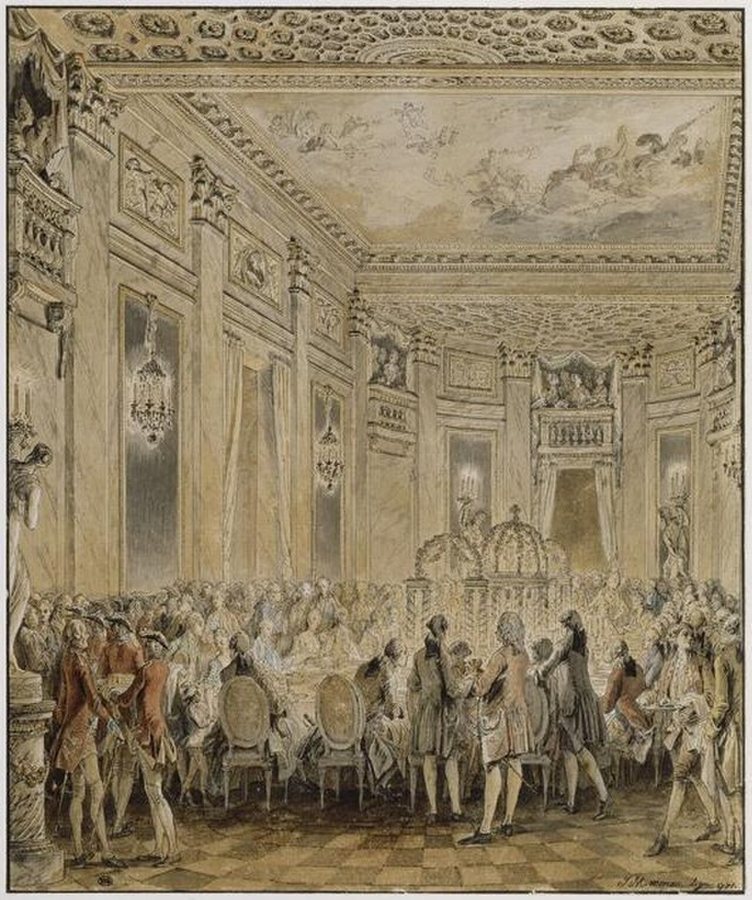
Jean-Michel Moreau, Supper given at Louveciennes, 1771
Louis XVI receiving the ambassadors of Tipu Sultan in 1788, by Voyer after Émile Wattier, 19th century
Surrender of Cornwallis to French (left) and American (right) troops at the Siege of Yorktown in 1781, by John Trumbull
Louis XVI Giving His Instructions to La Pérouse by Nicolas-André Monsiau, 1817
10 images

The first part of Louis XVI's reign was marked by attempts to reform the government along Enlightenment lines, including greater tolerance toward non-Catholics and the abolition of the death penalty for deserters. The French nobility opposed these proposals and blocked them. A grain market deregulation, backed by his minister Turgot, raised bread prices, and during poor harvests this led to food shortages and revolts. From 1776 Louis supported the North American colonists in their struggle against Great Britain, a effort that ended with the Treaty of Paris in 1783 but added to the state's debts.

Revolution and downfall

One louis d'or, 1788, depicting Louis XVI
Silver coin: one écu, Louis XVI, 1784
Declaration to the French People, June 1791
The return of the royal family to Paris on 25 June 1791, coloured copperplate after a drawing by Jean-Louis Prieur
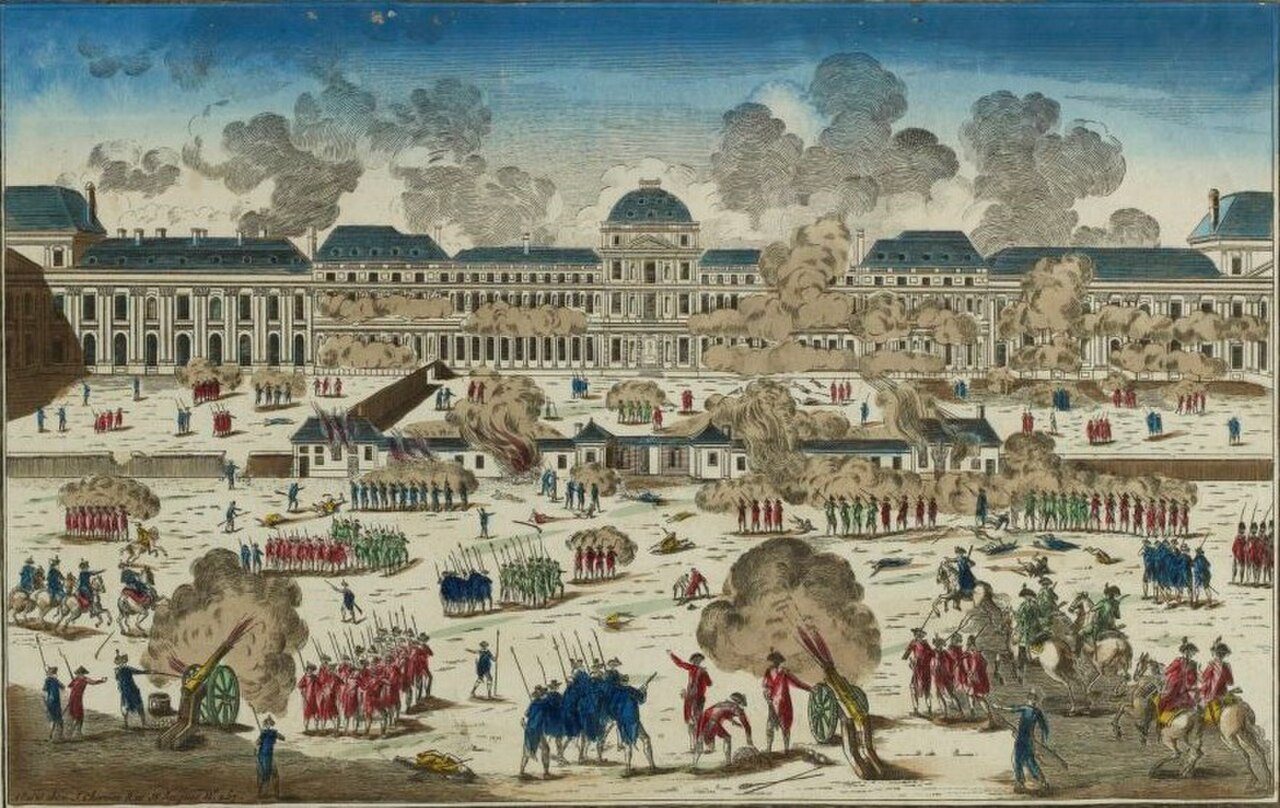
The storming of the Tuileries Palace on 10 August 1792 (Musée de la Révolution française)
Posthumous portrait of Louis XVI imprisoned at the Tour du Temple, by Jean-François Garneray, 1814
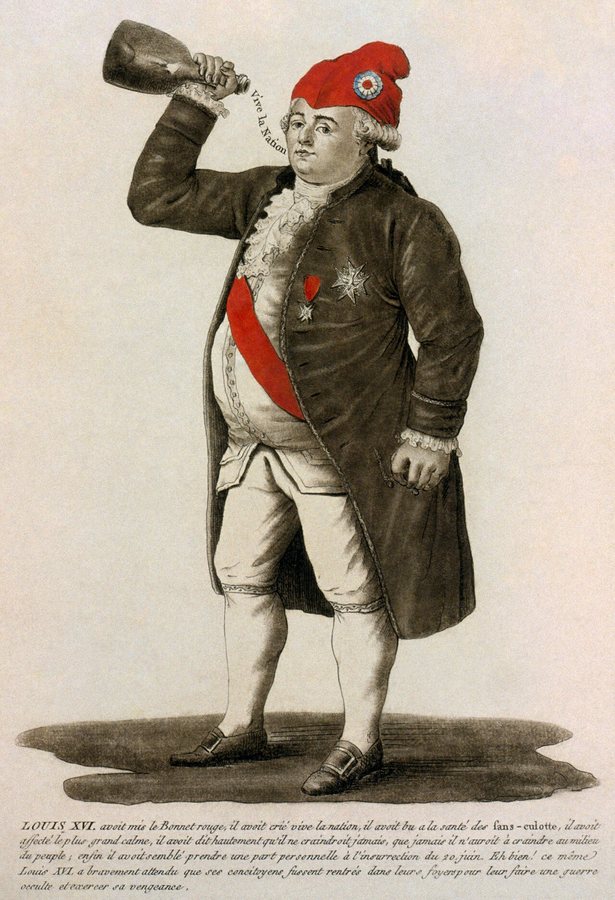
Tinted etching of Louis XVI, 1792, referring to the Tennis Court Oath and suggesting he secretly plotted revenge while citizens returned home
Execution of Louis XVI at the Place de la Révolution; the empty pedestal had held an equestrian statue of Louis XV, torn down and melted after the monarchy's abolition on 21 September 1792
Memorial to Louis XVI and Marie Antoinette, sculptures by Edme Gaulle and Pierre Petitot in the Basilica of Saint-Denis
The Duchess of Angoulême at the deathbed of Henry Essex Edgeworth, last confessor to Louis XVI, by Alexandre-Toussaint Menjaud, 1817
10 images

Financial crisis and public discontent led to the convening of the Estates General in 1789, and tensions soon escalated into violence, including the storming of the Bastille. After an unsuccessful flight to Varennes in 1791, which seemed to confirm suspicions that he sought foreign help to restore his power, his legitimacy collapsed. Following his arrest during the insurrection of 10 August 1792, the monarchy was abolished and a republic proclaimed. He was tried by the National Convention and executed in January 1793.

In 106 languages

Редакція Factograf · Published October 14, 2026 · Partly based on Wikipedia, CC BY-SA 4.0 · Source article