
Lion (Panthera leo) is a large cat of the genus Panthera, currently ranging only in Sub-Saharan Africa and India. It has a muscular, broad-chested body and a dark tuft at the tip of its tail. Adult males are larger than females and have a prominent mane. Lions are social, living in groups called prides, and are apex and keystone predators of medium-sized and large hooved mammals. Their populations have declined, and the species is listed as Vulnerable.
Habitat and behaviour
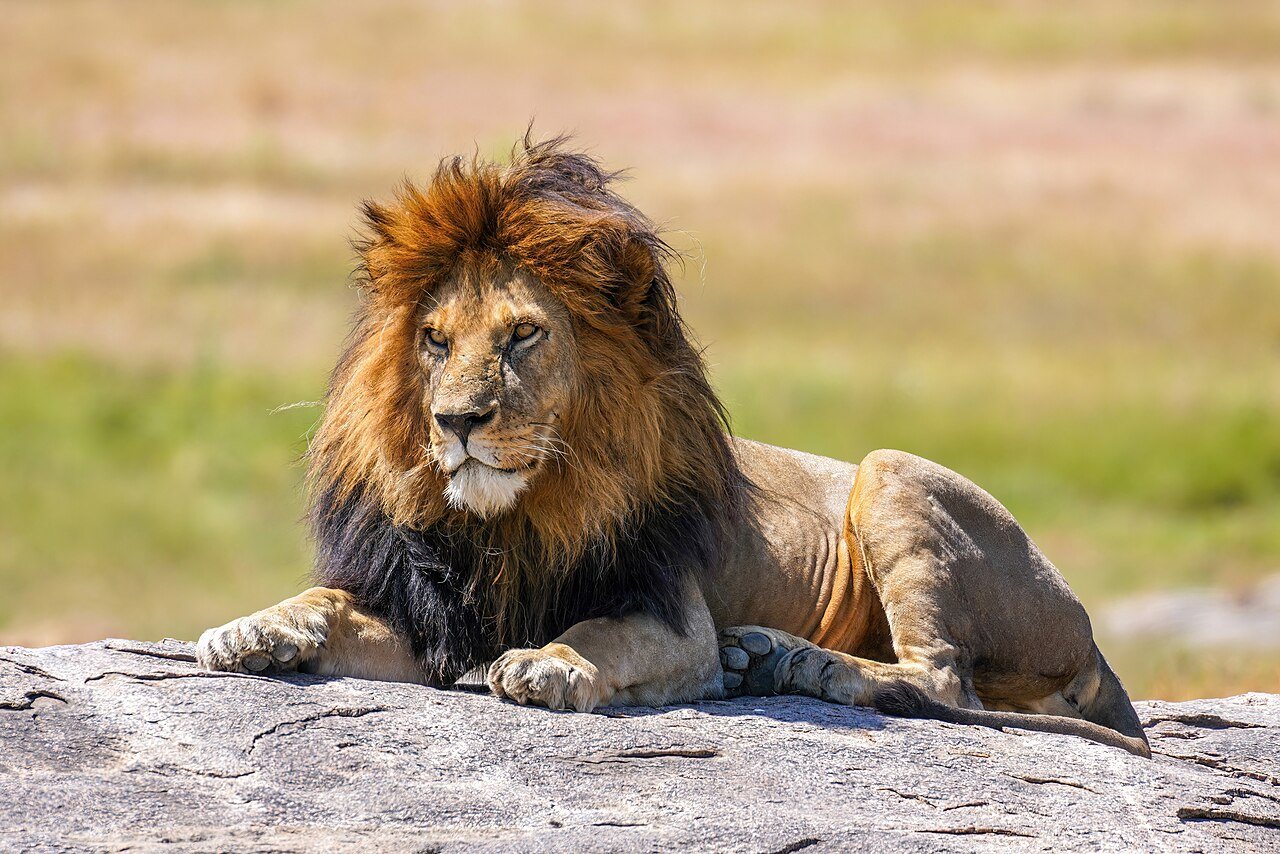


Lions inhabit grasslands, savannahs, and shrublands. Usually more active during the day than other wild cats, they shift to night and twilight activity when persecuted. A pride consists of related females and their cubs, along with one or a few unrelated adult males. Female lions usually hunt together, while adult males often compete to keep or gain their place in the pride.
Range and conservation


During the Neolithic period, lions ranged throughout Africa and Eurasia, from southeastern Europe to India. They now survive in fragmented populations in sub-Saharan Africa and one population in western India. Lion numbers in African countries have fallen by about 43% since the early 1990s, and habitat loss and conflict with humans are the greatest concerns.
Cultural significance


The lion is one of the most widely recognised animal symbols in human culture, appearing in sculptures, paintings, flags, literature, and films. It is especially associated with power and royalty, and figures as a symbol and deity in many ancient religions.