
Leipzig is the most populous city in the German state of Saxony, with 633,592 residents as of 31 December 2025. It is the eighth-largest city in Germany and part of the Central German Metropolitan Region. Located about 150 km southwest of Berlin in the Leipzig Bay, it sits where the White Elster river meets its tributaries, the Pleiße and the Parthe.
Trade and history
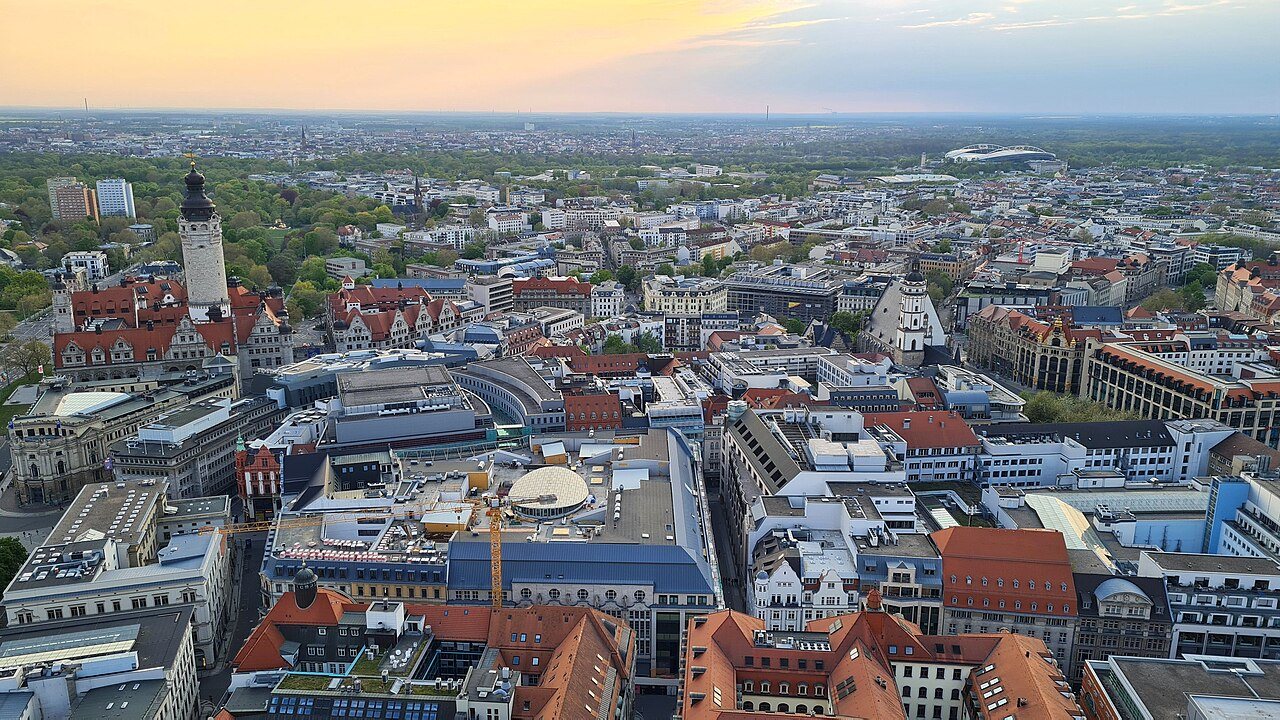


Leipzig has been a trade city since at least the Holy Roman Empire, when two major medieval trade routes, the Via Regia and the Via Imperii, crossed there. The Leipzig Trade Fair dates back to 1190. From 1764 to 1945 the city was a centre of publishing. After the Second World War it remained a major urban centre in East Germany, and events in Leipzig in 1989, especially demonstrations starting from St. Nicholas Church, helped precipitate the fall of Communism in Europe. Since the early 2000s the city has undergone urban, economic and transport modernisation.
Culture and institutions


Leipzig is home to Leipzig University, one of the oldest universities in Europe, and is the main seat of the German National Library. It has long been a major centre for music. The Thomanerchor, a boys' choir, was founded in 1212, and the Gewandhaus Orchestra, established in 1743, is among the oldest symphony orchestras in the world. Composers including Johann Sebastian Bach, Felix Mendelssohn and Richard Wagner lived and worked in the city.
Transport and architecture


The central railway terminus, Leipzig Hauptbahnhof, is Europe's largest railway station measured by floor area. Since the Leipzig City Tunnel opened in 2013, it has formed the centrepiece of the S-Bahn Mitteldeutschland, Germany's largest S-Bahn network. The city's late-19th-century Gründerzeit architecture comprises around 12,500 buildings.