factograf
EN
Sign in

right-wing and nationalist political party in Poland

Law and Justice

Law and Justice

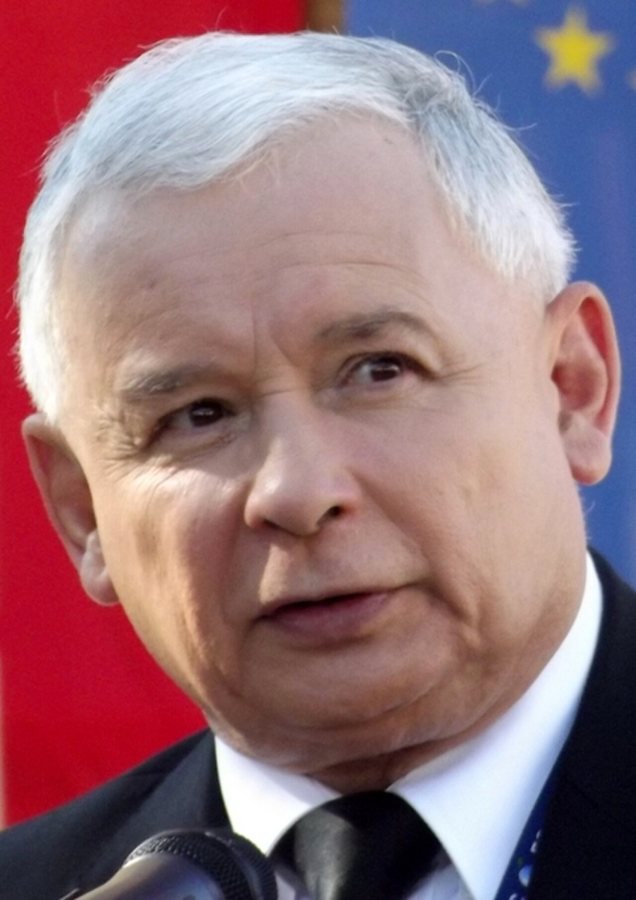
Law and Justice (Polish: Prawo i Sprawiedliwość, PiS) is a right-wing populist and national-conservative political party in Poland. It is a member of the European Conservatives and Reformists group and heads the United Right coalition at national level. Founded in 2001 by Jarosław and Lech Kaczyński, it has won several national elections and governed for eight years, but has also faced accusations of authoritarianism and democratic backsliding.

Formation and early years

Old logo of the party, used between 2001 and 2005
Former regional office of PiS on Zwycięstwa Street in Antoniuk District of Białystok, May 2019
Jarosław Kaczyński and Andrzej Duda, 18 April 2013
Committee for the Defence of Democracy demonstration in Warsaw against the ruling Law and Justice party, 7 May 2016
Sylwester Marciniak – certificate
Wojciech Sych
Wojciech Sych
Law and Justice's main support (dark blue) is concentrated in the south-east of the country, in the former Russian and Austrian partitions. Results of the 2015 Polish parliamentary election.
Law and Justice's main support (dark blue). PiS has seen increased support in the 2019 Polish parliamentary election.
8 images

The party was created after Lech Kaczyński gained popularity while heading the Ministry of Justice in the AWS-led government. It was founded in 2001 as a successor to the Centre Agreement after splitting from the Solidarity Electoral Action. Although it won only 44 seats in the 2001 parliamentary election, it went on to win the 2005 presidential and parliamentary elections and formed governments led by Kazimierz Marcinkiewicz and Jarosław Kaczyński, which relied on coalition partners before collapsing in 2007.

Opposition and return to power

Beata Szydło during the National Independence Day
PiS meeting on National Independence Day
Visegrád Group leaders' meeting in Prague, 2015
Anti-PiS poster during the October 2020 protests in Kraków (five stars represent a common profanity, three represent the party name)
Lech Kaczyński in 2002, cropped
Jarosław Kaczyński, 15 March 2024, cropped
Lech Kaczyński
Lech Kaczyński
Andrzej Duda portrait
8 images

After losing the 2007 snap election to Civic Platform, the party spent the next years in opposition. Following the death of Lech Kaczyński in the 2010 Smolensk air disaster, Jarosław Kaczyński became sole leader. The party returned to power in 2015 by winning the presidential and parliamentary elections, governing for eight years before losing its majority in 2023. It later faced a split when former prime minister Mateusz Morawiecki formed a new party.

Ideology and policies
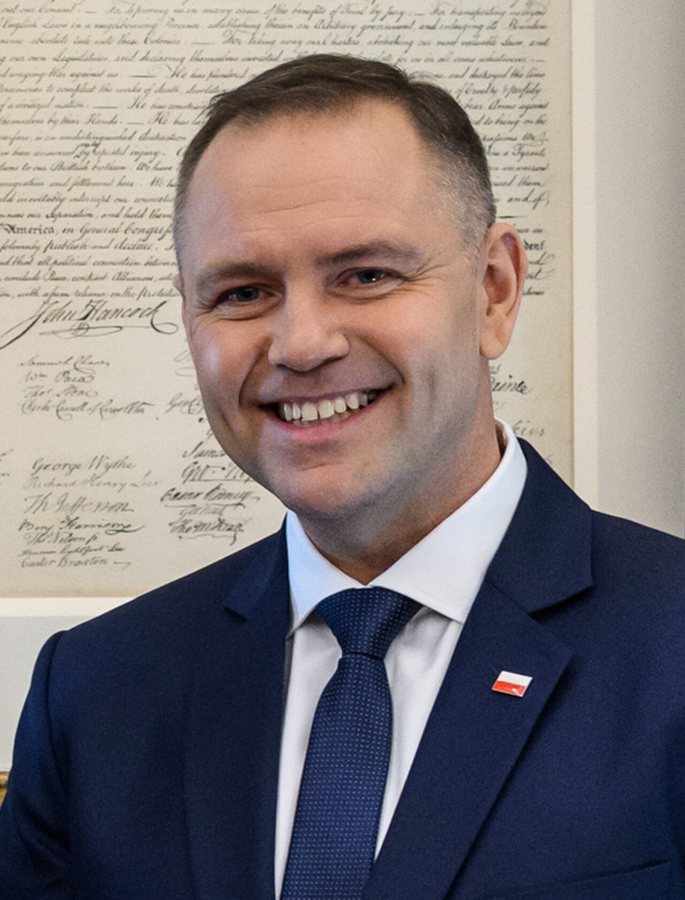
Karol Nawrocki, 2025, cropped
Kazimierz Marcinkiewicz, 2005
Jarosław Kaczyński, cropped
Beata Szydło at the Tallinn Digital Summit 2017, cropped
Mateusz Morawiecki, Prime Minister, cropped
J. Stawiarski
J. Stawiarski
Władysław Ortyl, Chancellery of the Senate
Łukasz Smółka, cropped
8 images

The party initially sought to position itself as centrist and Christian-democratic, but soon adopted more culturally and socially conservative views and shifted to the right. Under Jarosław Kaczyński it embraced economic interventionism and, during the 2010s, right-wing populist positions. After 2015 it pursued more populist social policies and close relations with the Catholic Church. Commentators have also described it as left-paternalistic and left-conservative.

In 55 languages

Редакція Factograf · Published October 14, 2026 · Partly based on Wikipedia, CC BY-SA 4.0 · Source article