
Latvia, officially the Republic of Latvia, is a country in the Baltic region of northern Europe, one of the three Baltic states alongside Estonia and Lithuania. It borders Russia and Belarus and shares a maritime border with Sweden. Its capital and largest city is Riga. Latvians form the majority of the population of about 1.83 million, and Russians are the most prominent minority. Latvia is a democratic unitary parliamentary republic and a member of the European Union, NATO and the Eurozone.
Early history


Proto-Baltic ancestors of the Latvian people settled on the eastern Baltic coast around 3000 BC and traded amber for precious metals. From the late 12th century, missionaries and German crusaders brought the region into the European political system, and the crusader state of Livonia emerged. Riga joined the Hanseatic League, and the territory later passed under Polish-Lithuanian, Swedish and Russian rule. Much of this period shaped the language, religion and society of the region.
Independence and Soviet era


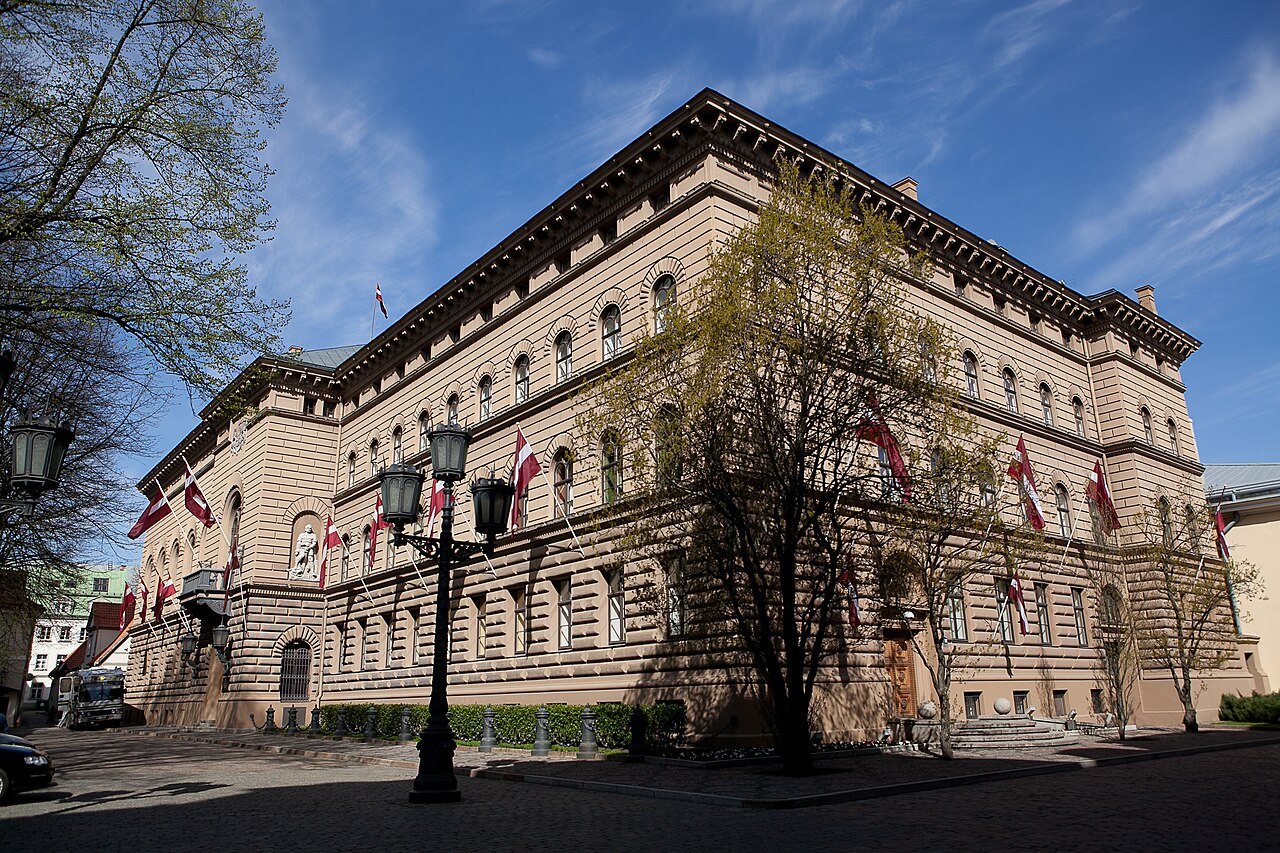


The independent Republic of Latvia was established on 18 November 1918, after breaking away from the Russian Empire following World War I. The country grew increasingly autocratic after a 1934 coup. Its de facto independence was interrupted at the start of World War II by forcible incorporation into the Soviet Union, followed by German occupation and renewed Soviet occupation, which created the Latvian SSR. Independence was restored on 21 August 1991 after the peaceful Singing Revolution.
Modern Latvia


Latvia has since developed into a high-income economy with an advanced standard of living, ranking 39th in the Human Development Index. It is a member of the European Union, the Eurozone, NATO, the Council of Europe, the United Nations and the Organisation for Economic Co-operation and Development. Its historic centre of Riga was declared a UNESCO World Heritage Site in 1997.