
Lampião was the nickname of Virgulino Ferreira da Silva, a Brazilian bandit leader who led a band of cangaceiros across seven states of Brazil's Northeast, probably the most successful traditional bandit of the twentieth century. He was active in the 1920s and 1930s, when banditry known as cangaço was especially widespread in the region. His exploits made him a folk hero, and his image, along with that of his partner Maria Bonita, remains visible across the Northeast of Brazil.
Early life


Born near Serra Talhada in the state of Pernambuco, Virgulino grew up in a poor family of subsistence farmers and worked herding cattle, sheep and goats until he was 21. Although he never attended school, he could read, which was unusual in his rough region. The backlands had weak law enforcement, and police often served local landowners. After his father was killed by police in 1921, Virgulino became an outlaw and was pursued relentlessly. He gained the nickname Lampião that year, reportedly because he fired his rifle so quickly at night that it looked like he was holding a lamp.
Bandit leader

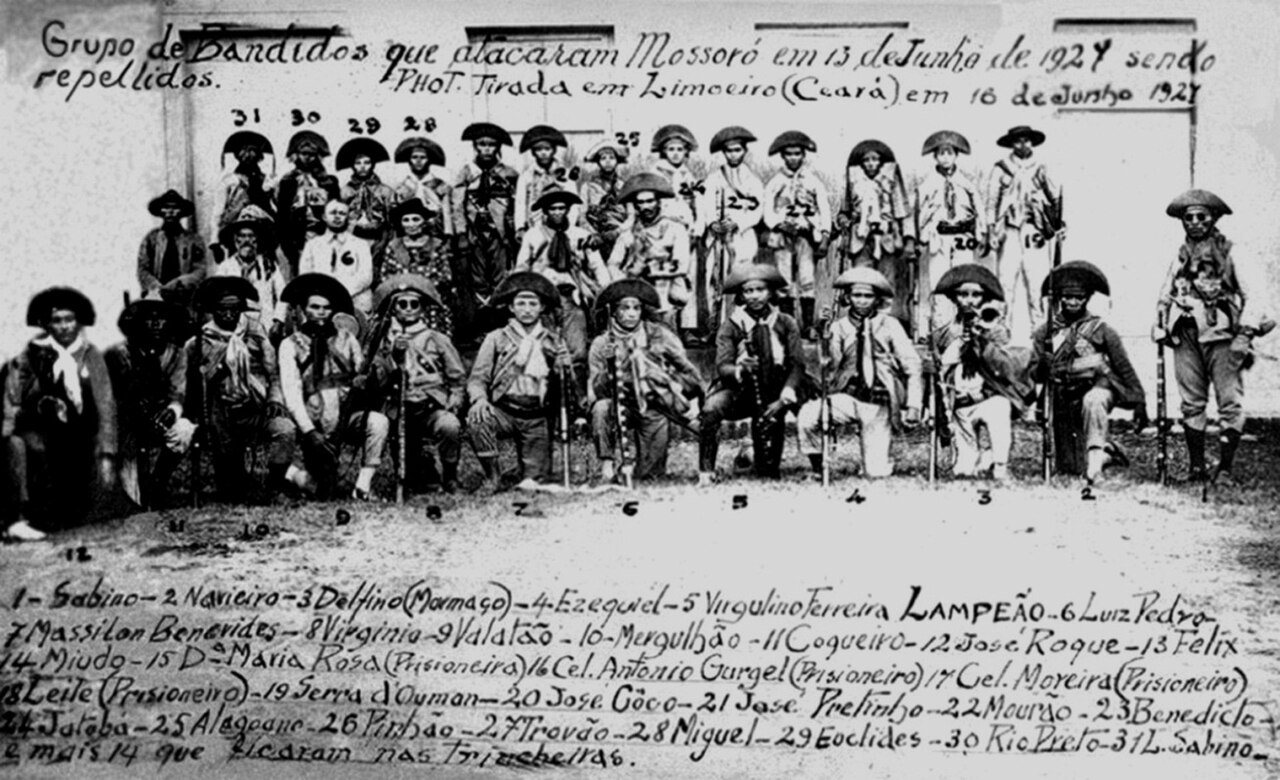
After taking over the remnants of an established bandit leader's band in 1922, Lampião led cangaceiros for sixteen years, with membership ranging from about a dozen to around a hundred. The bandits were heavily armed and wore protective leather clothing against the thorny caatinga shrubland. Lampião combined violence with a deep religious devotion and loyalty to those who helped him. His band attacked towns and farms, and many people were killed, reportedly including over a thousand victims.
Legacy


Lampião's activities made him a symbol of resistance and defiance for many people in the Northeast, comparable to figures such as Jesse James or Pancho Villa. His life has been widely remembered in the region through images and cultural depictions, and his band's dramatic raids, such as the attack on the town of Queimadas in 1929, are frequently cited as examples of his ambivalent character.