factograf
EN
Sign in

Republic of China political party

Kuomintang

Kuomintang

Kuomintang (KMT) is a major political party in the Republic of China (Taiwan). It ruled China as the sole governing party from 1928 until its defeat by the communists in 1949, after which it moved to Taiwan. There it governed under martial law until 1987. The party is centre-right to right-wing and leads the Pan-Blue Coalition, while its main rival is the Democratic Progressive Party.

Origins and early years

The Revolutionary Army attacking Nanjing in 1911
Venue of the 1st National Congress of Kuomintang in 1924
Closing ceremony of the National Army Reorganization and Disbandment Conference at the National Government compound, Nanjing, January 25, 1929
National Revolutionary Army soldiers marched into the British concessions in Hankou during the Northern Expedition
Nationalist soldiers during the Second Sino-Japanese War
The retrocession of Taiwan in Taipei on 25 October 1945
KMT flag displayed in Lhasa, Tibet in 1938
The KMT in Tihwa (Ürümqi), Xinjiang in 1942
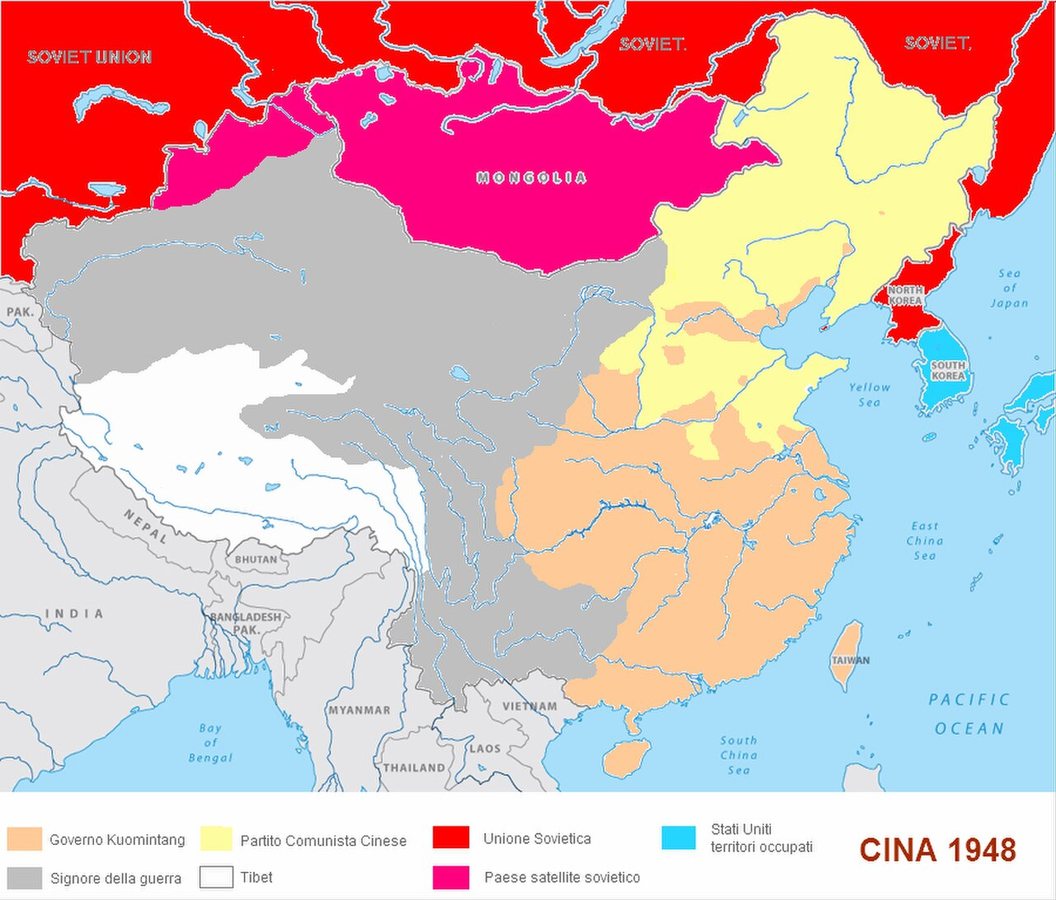
Territories under the control of the Kuomintang/warlords (orange/grey) and communists (yellow) in 1948
Official portrait of President Chiang Kai-shek of the Republic of China, 1955
The former KMT headquarters in Taipei City (1949–2006), whose imposing structure, directly facing the Presidential Office Building, was seen as a symbol of the party's wealth and dominance
11 images

The party traces its roots to Sun Yat-sen, a revolutionary who promoted Chinese nationalism and democracy. He founded the Revive China Society in Honolulu in 1894 and later joined other anti-monarchist groups in Tokyo to form the Tongmenghui, which aimed to overthrow the Qing dynasty. After the 1911 Xinhai Revolution, a Nationalist Party was formed in 1912, and Sun resurrected the group as the Kuomintang in 1919. In 1923 it received Soviet aid and adopted a Leninist party structure.

Rule on Mainland and Taiwan

Pan-blue supporters at a rally during the 2004 presidential election
Kuomintang public service center in Shilin, Taipei
Bade building in Taipei City, before becoming the KMT headquarters. The KMT Central Committee sold the original headquarters to private investors of the EVA Airways Corporation, and moved to this more modest building in June 2006.
KMT Kinmen headquarters office in Jincheng Township, Kinmen County
KMT Korea headquarters, located in front of the Embassy of China, at Myeong-dong, Seoul. Now a Café.
The KMT maintains offices in some of the Chinatowns of the world and its United States party headquarters are located in San Francisco Chinatown, on Stockton Street directly across the Chinese Six Companies
KMT Eastern U.S. headquarters, located in New York Chinatown, are the party's earliest offices in the U.S., established in 1909.
KMT Building in Vancouver's Chinatown, British Columbia, Canada
KMT office of Australasia in Sydney, Australia
From left to right, KMT members pay tribute to the Sun Yat-sen Mausoleum in Beijing in 1928 after the success of the Northern Expedition: Generals Cheng Jin, Zhang Zuobao, Chen Diaoyuan, Chiang Kai-shek, Woo Tsin-hang, Yan Xishan, General Ma Fuxiang, Ma Sida and General Bai Chongxi
From left to right, KMT members pay tribute to the Sun Yat-sen Mausoleum in Beijing in 1928 after the success of the Northern Expedition: Generals Cheng Jin, Zhang Zuobao, Chen Diaoyuan, Chiang Kai-shek, Woo Tsin-hang, Yan Xishan, General Ma Fuxiang, Ma Sida…
10 images

From 1926 to 1928, under Chiang Kai-shek, the party unified much of China in the Northern Expedition against regional warlords. It later fought Japan and the Chinese Communist Party, and in 1949 retreated to Taiwan after its defeat. There it ruled as a one-party state, overseeing rapid economic development while facing diplomatic setbacks. Martial law was lifted in the late 1980s, and the party lost the presidency in 2000 before regaining it in 2008.

In 85 languages

Редакція Factograf · Published October 14, 2026 · Partly based on Wikipedia, CC BY-SA 4.0 · Source article