
Janani Luwum was a prominent Anglican archbishop who led the Church of Uganda from 1974 until 1977. Born in the Acholiland region, he served as a teacher before his ordination and subsequent rise through the ecclesiastical ranks. As a significant religious leader in Africa, he became a vocal critic of the human rights violations committed under the regime of President Idi Amin. His opposition to the government's policies of disappearance and killings eventually led to his arrest and death in February 1977.
Life and ministry

After converting to Christianity in 1948, Luwum studied at theological college and worked as a primary school teacher. He was ordained as a priest in 1954 and served in several dioceses. He became the Bishop of Northern Uganda in 1969 and later achieved the position of Archbishop, making him the second African to hold this specific leadership role.
Death and martyrdom

Following a formal protest against the Amin administration, Luwum was arrested in February 1977 alongside government ministers. Although officials claimed he died in a vehicle collision, his body showed signs of being shot. It is widely believed he was executed by state forces. The Ugandan government established a public holiday on February 16 to honor his memory.
Veneration and legacy
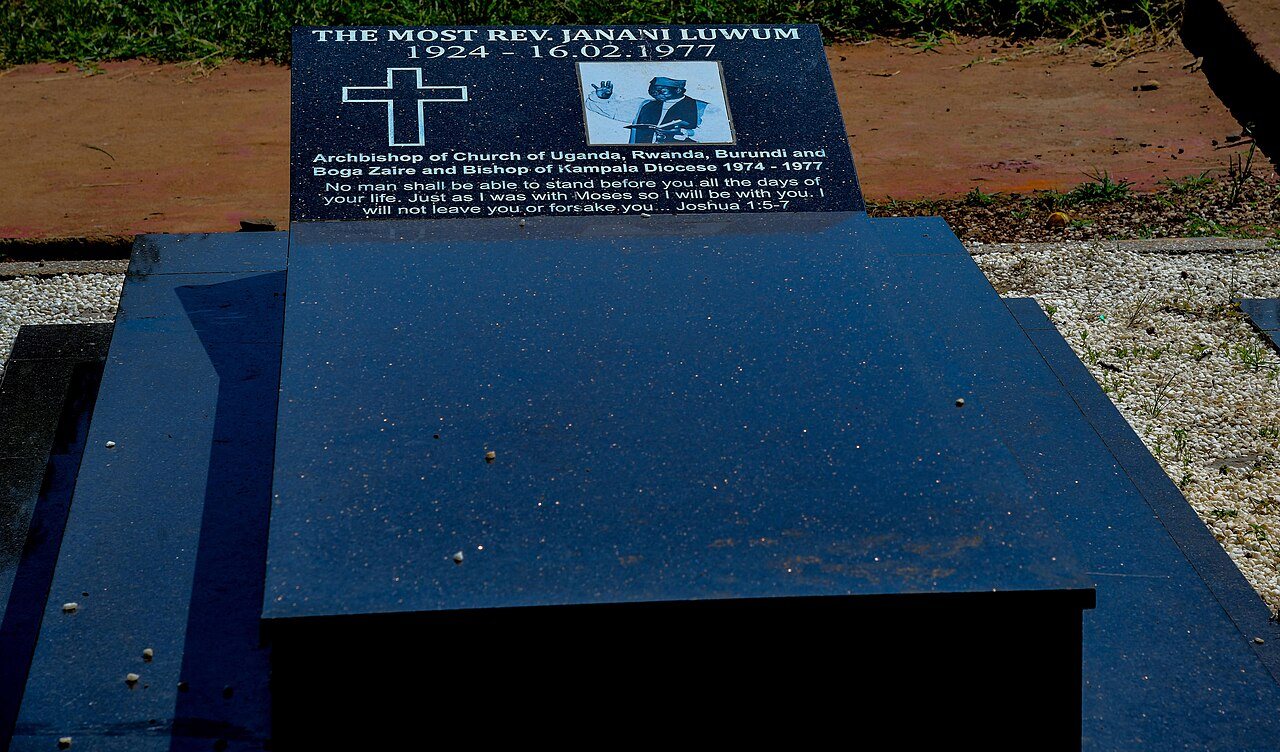
The Anglican Communion recognizes him as a martyr. His likeness is featured on the Twentieth Century Martyrs sculpture at Westminster Abbey. Various Anglican provinces include him in their liturgical calendars, with his feast day observed on February 17 in several nations. He is buried in his home village of Mucwini.