factograf
EN
Sign in

species of baleen whale known for breaching and song

Humpback whale

Humpback whale

Humpback whale (Megaptera novaeangliae) is a species of baleen whale and a rorqual, the only species in its genus. Adults can reach 14 to 17 metres in length and weigh up to 40 metric tons. The species is recognisable by its long pectoral fins and bumps called tubercles on its head. It is known for breaching and other surface displays, and males produce complex songs that can last from 4 to 33 minutes. Humpbacks live in oceans around the world.

Behaviour and diet

Humpback whale breaching off Cabo San Lucas
Young whale with blowholes visible
Humpback whale jumping and splashing, photo by Giles Laurent
Humpback whale lobtailing, photo by Giles Laurent
Humpback whale blowing in Eyjafjordur
Humpback whale diving in Eyjafjordur, frame 3 of 27
Humpback whale diving in Eyjafjordur, frame 7 of 27
Humpback whale diving in Eyjafjordur, frame 11 of 27
Humpback whale diving in Eyjafjordur, frame 15 of 27
Humpback whale diving in Eyjafjordur, frame 20 of 27
Whales performing bubble net feeding
11 images

Humpback whales usually migrate between feeding grounds near the poles and breeding areas near the equator. They feed mostly on krill and small fish, often using bubbles to catch their prey. Both sexes take multiple partners, and males follow females and fight off rivals. Mothers give birth in shallower water. Orcas are the main natural predators, and the whales often carry barnacles and whale lice on their bodies.

Whaling and recovery

Humpback whale with calf off Moorea
Humpback whale calf off Moorea
Spectrogram of humpback whale vocalisations, showing the first 24 seconds of the 37-second recording "Singing Humpbacks"
Coronula diadema barnacles on a humpback whale
Barnacles living on humpback whales are a commensalistic form of symbiosis that does no harm to the host
A humpback whale breaching off Alaska, United States
Humpback whales in the Hawaiian Islands Humpback Whale National Marine Sanctuary
Humpback whales in Antarctica
Humpback whales killed by whalers off Vancouver Island, early 20th century
Whale watching off Massachusetts
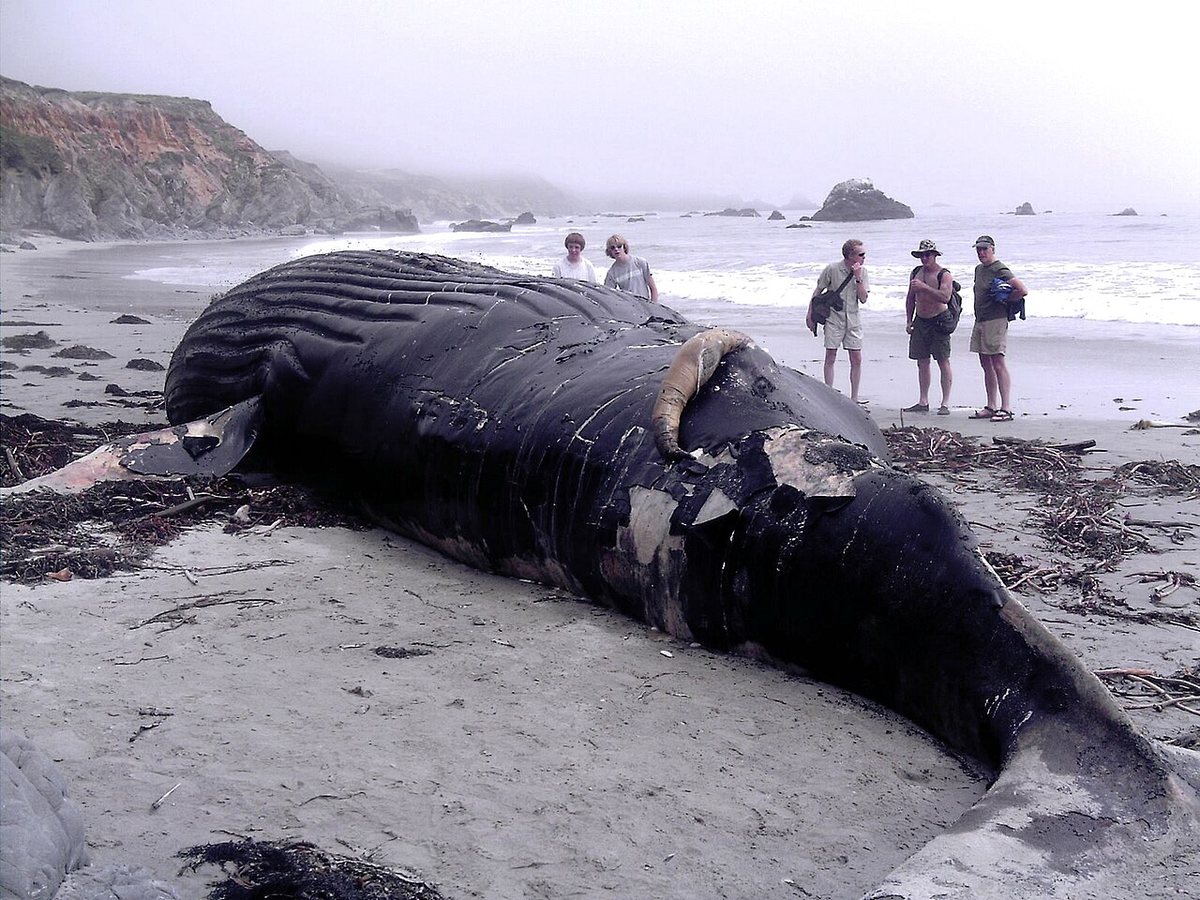
A dead humpback whale washed up near Big Sur, California
11 images

Like other large whales, humpbacks were hunted by the whaling industry, which drove the population down to about 5,000 by the 1960s. Numbers have partly recovered to around 135,000 animals worldwide. Entanglement in fishing gear, collisions with ships and noise pollution still affect the species.

In 80 languages

Редакція Factograf · Published October 14, 2026 · Partly based on Wikipedia, CC BY-SA 4.0 · Source article