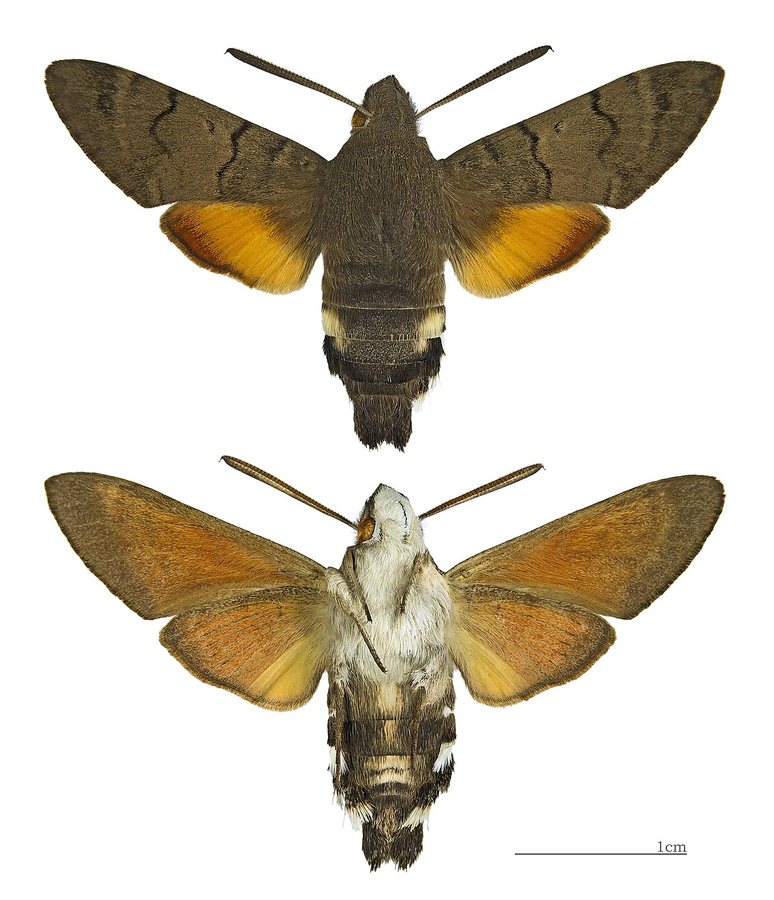
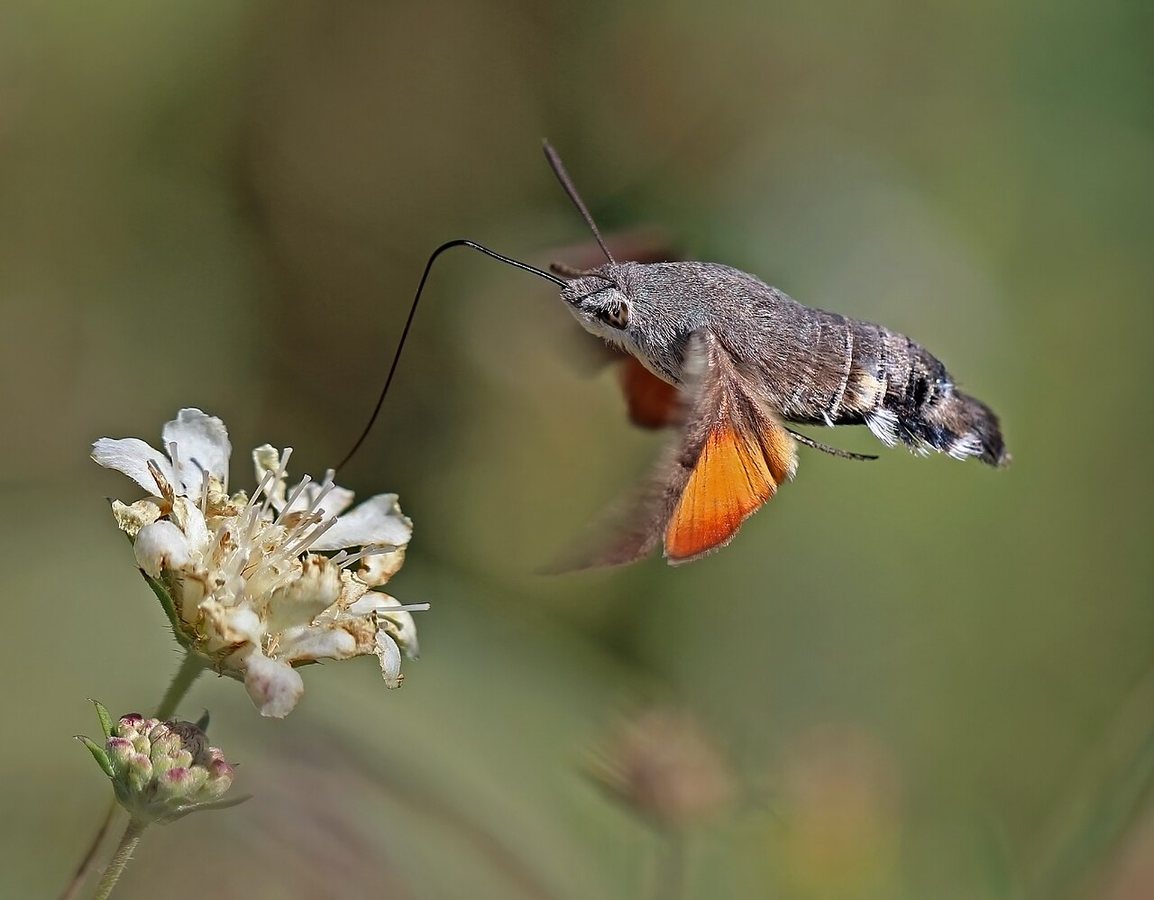
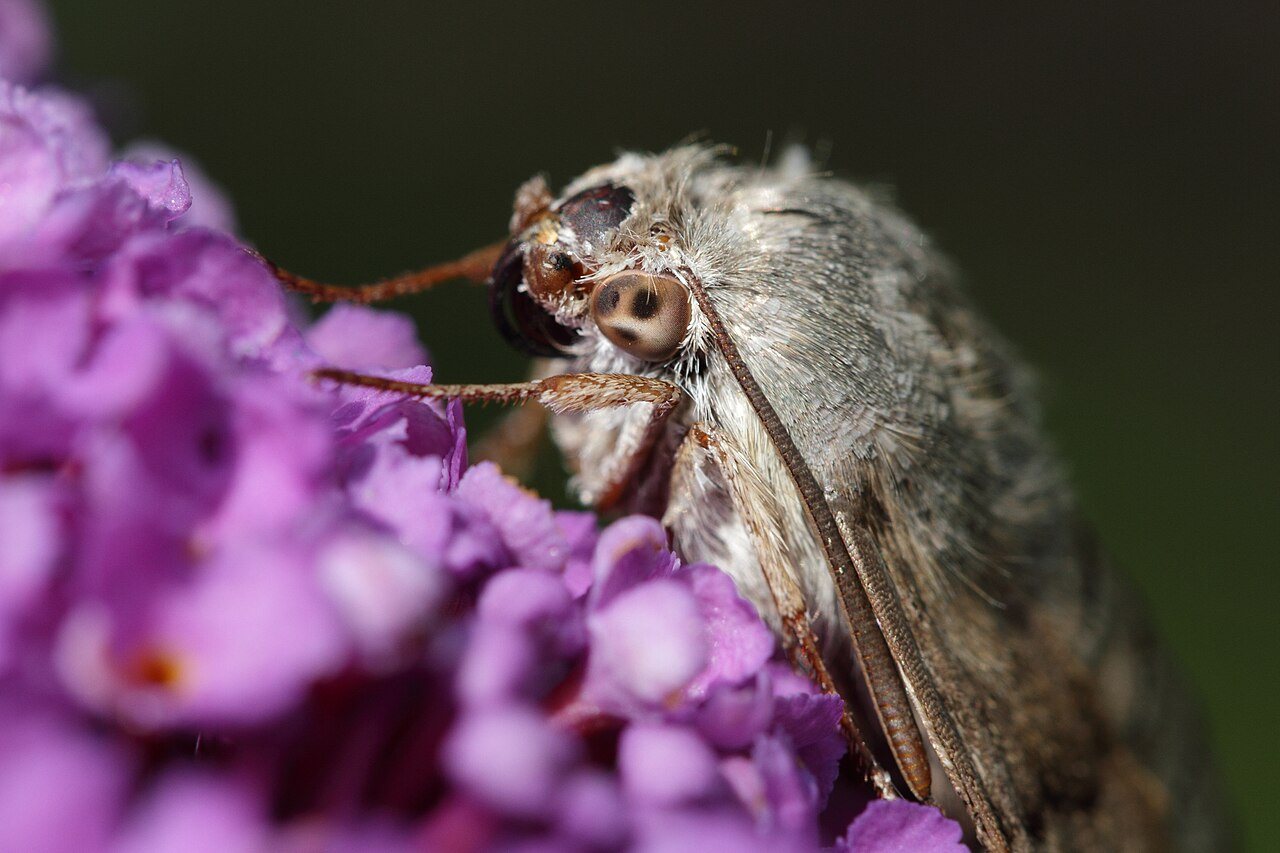
Hummingbird hawk-moth (Macroglossum stellatarum) is a species of hawk moth found across temperate regions of Eurasia. It is named for its resemblance to hummingbirds, since it feeds on the nectar of tube-shaped flowers with its long proboscis while hovering in the air. This resemblance is an example of convergent evolution. The species was first described by Carl Linnaeus in 1758, and its mitogenome was sequenced by 2018.
Distribution and migration


The species occurs across the northern Old World, from Portugal to Japan, but it breeds mainly in warmer areas such as southern Europe and North Africa. It is a strong flier that disperses widely in summer, though it rarely survives winters in northern latitudes. Populations in Britain and Ireland have been expanding and increasing in number. Warmer temperatures linked to climate change may be allowing some individuals to overwinter there, so the population may be becoming resident rather than migratory.
Life cycle and appearance
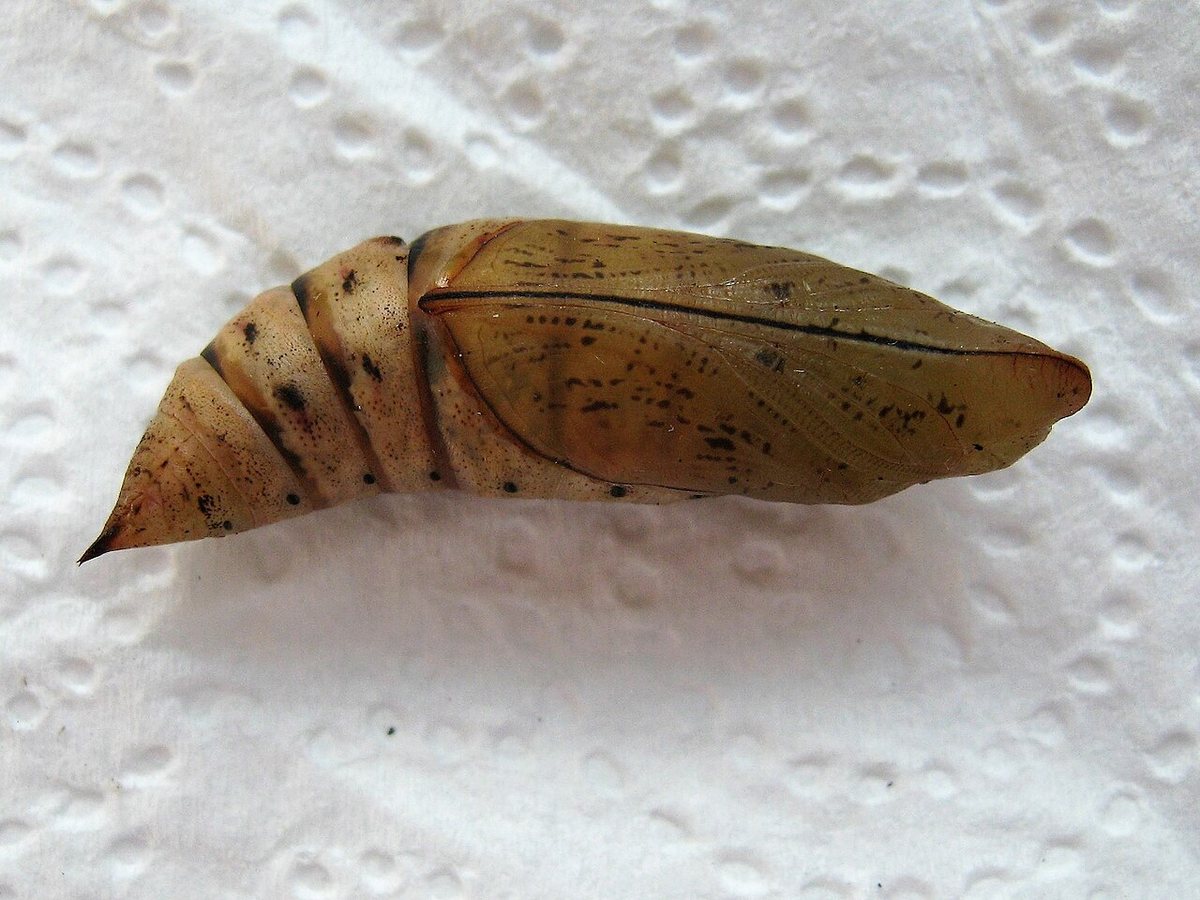
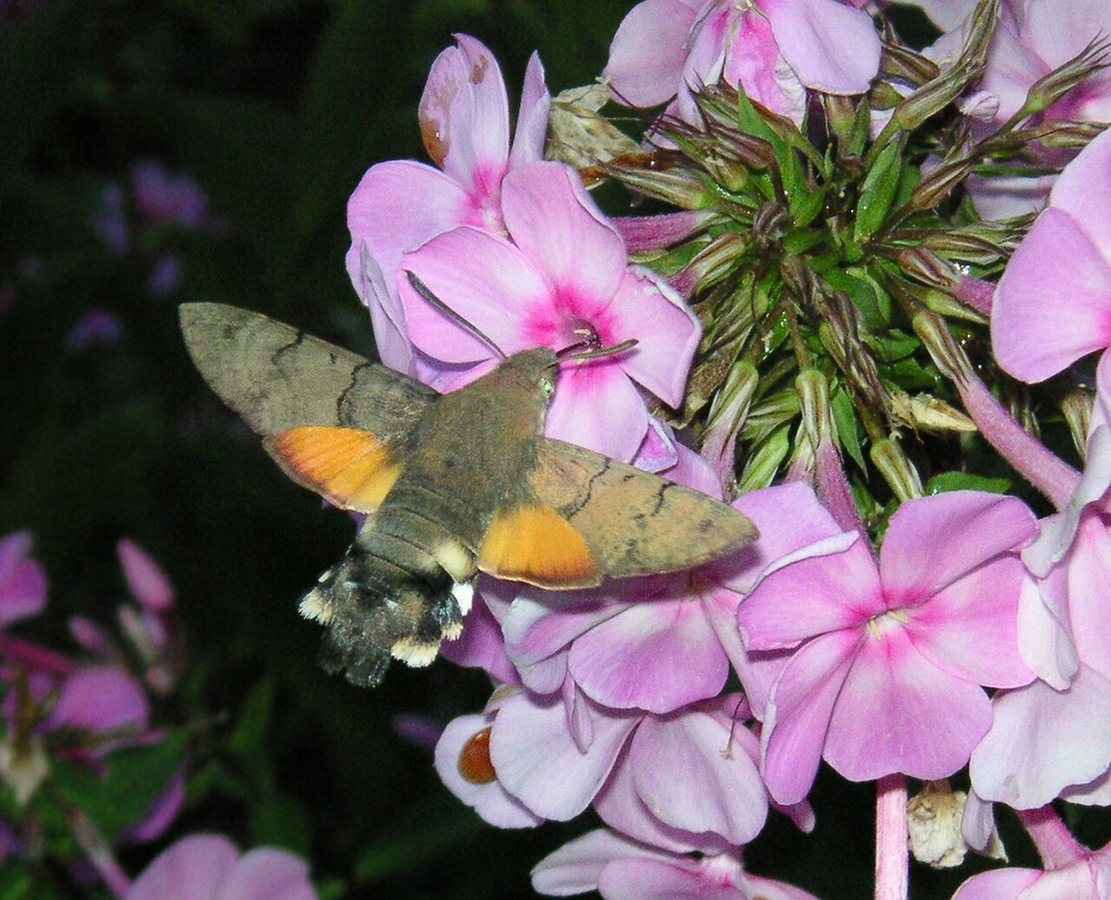
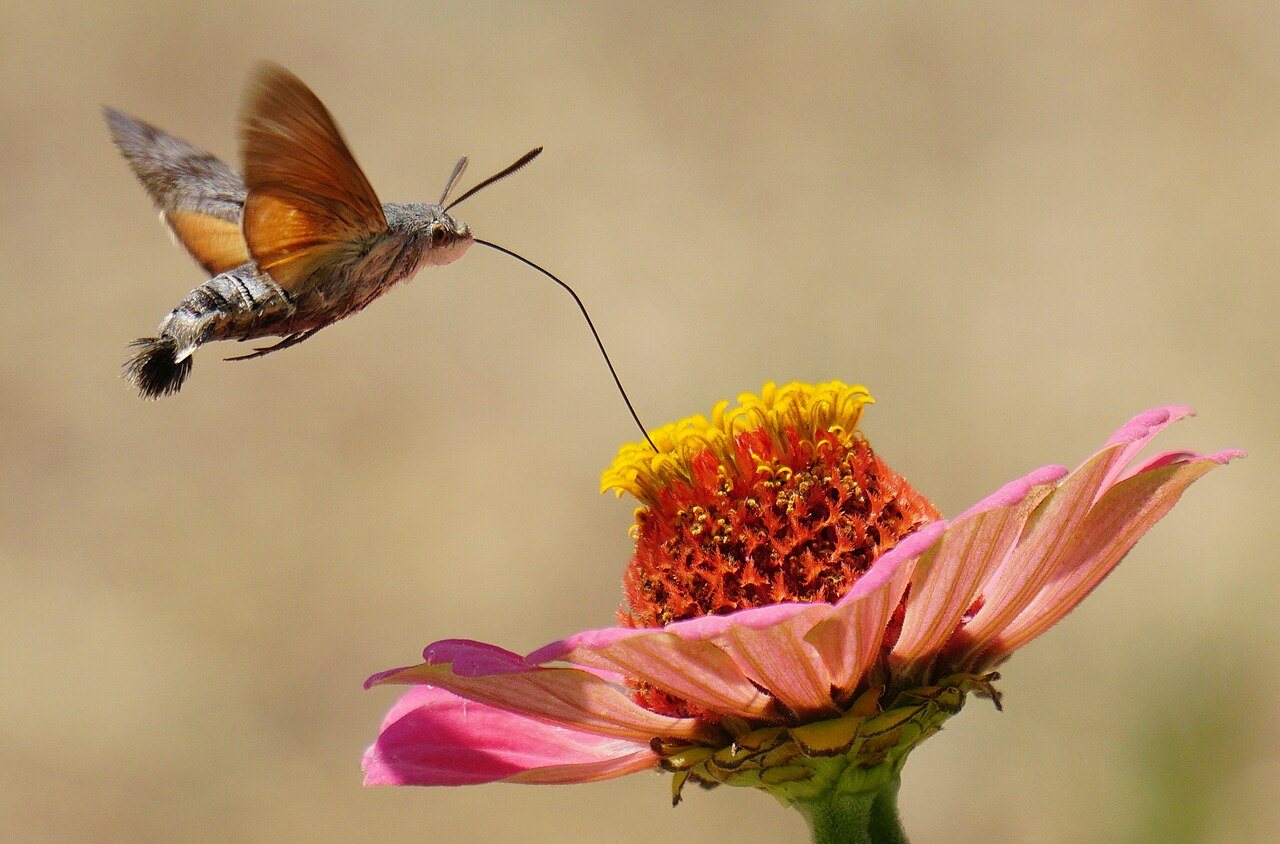
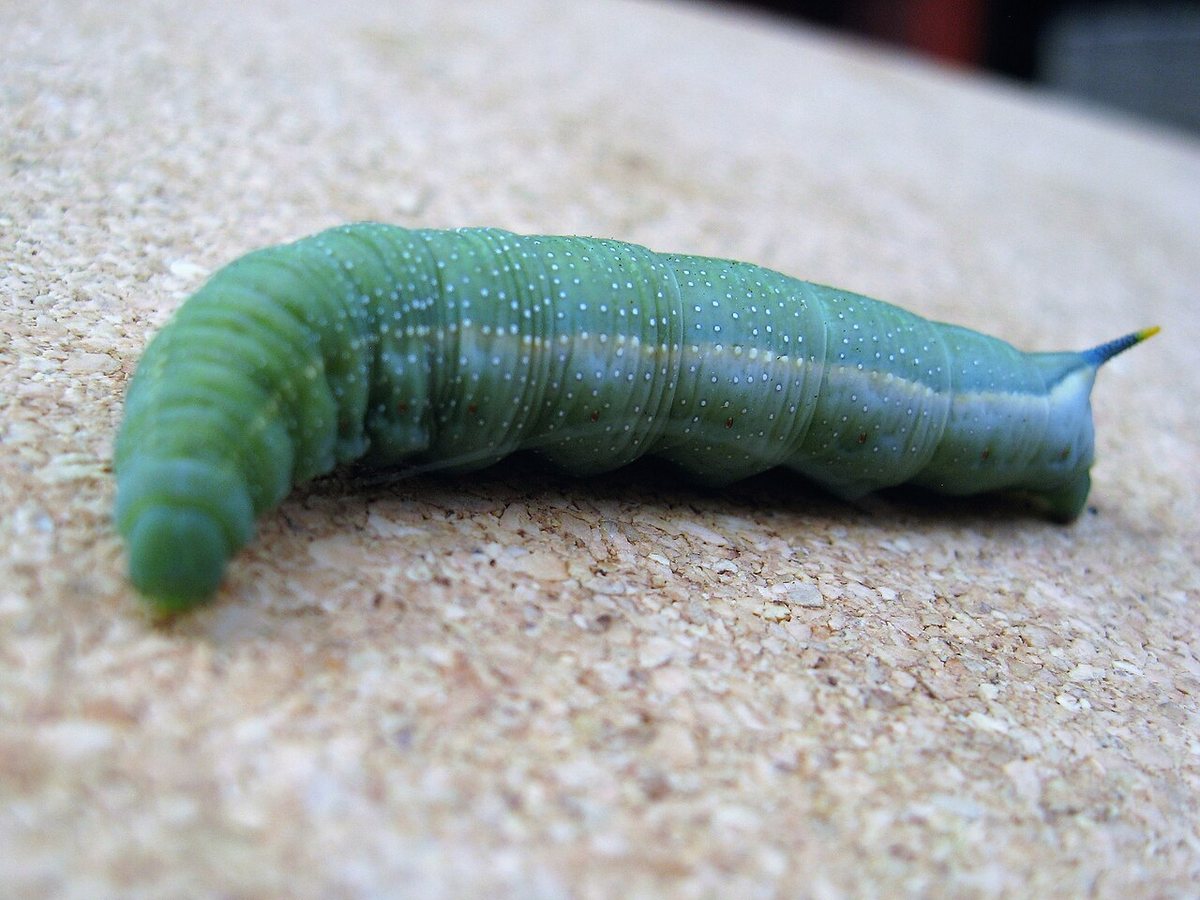
Two or more broods are produced each year, and up to four in the south of the range. Adults overwinter in crevices among rocks, trees, and buildings. The larvae feed openly on host plants such as bedstraws, and the pupae are enclosed in loose silken cocoons. Adults have brown forewings with black wavy lines and orange hindwings with a black edge, and a wingspan of 40 to 45 millimetres.
Behaviour and culture
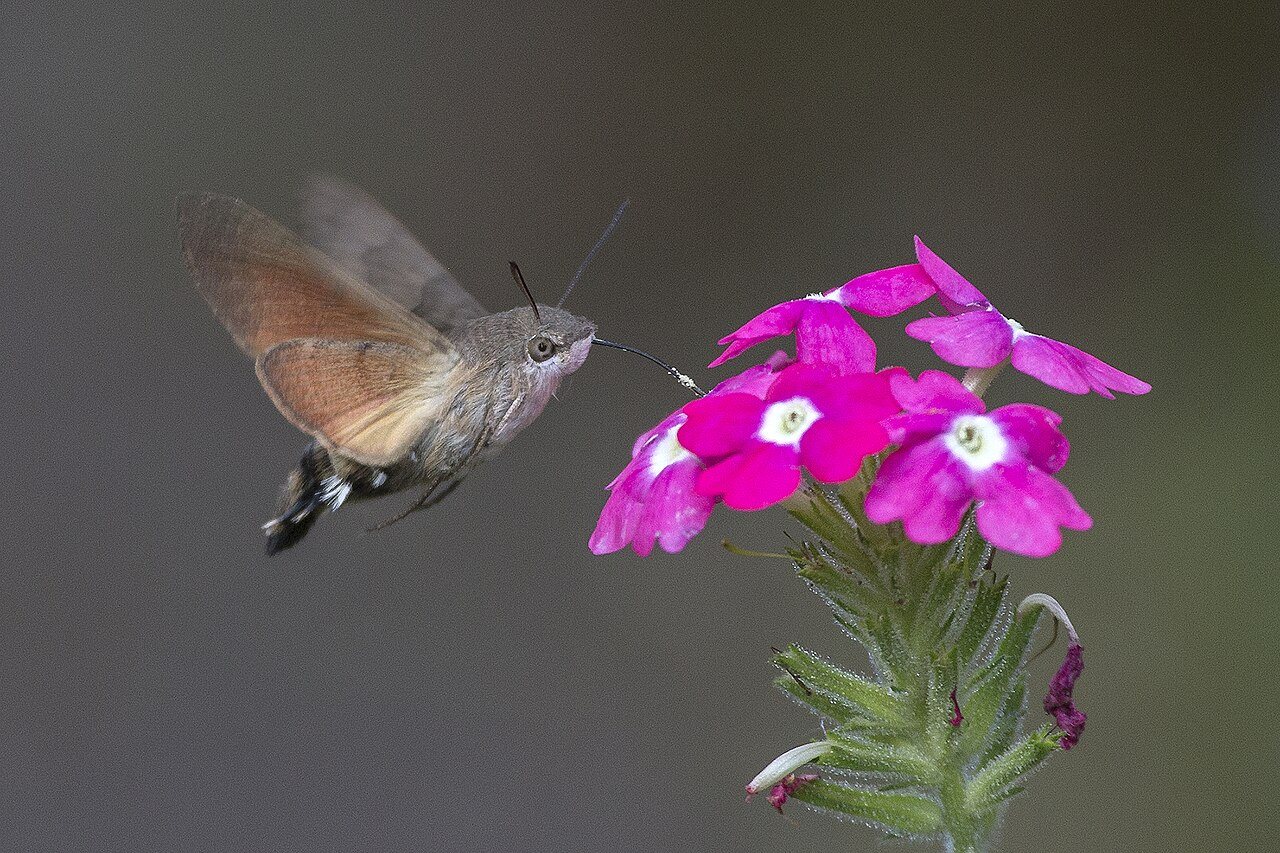


The moth flies by day, often in bright sunshine, and feeds on tube-shaped flowers while producing an audible humming noise. Hummingbird hawk-moths have been considered a lucky omen, and a swarm was reported crossing the English Channel on D-Day during the Second World War. The name hummingbird moth is also used in North America for the genus Hemaris, which can cause confusion.


