factograf
EN
Sign in

narrative of humanity's past

Human history

Human history

Human history, or world history, is the record of humankind from prehistory to the present. Modern humans evolved in Africa around 300,000 years ago and initially lived as hunter-gatherers, later migrating across the globe during the Last Ice Age. The Neolithic Revolution introduced farming and permanent settlements, and early civilizations followed. Scholars study this long past using history, archaeology, anthropology, linguistics, and genetics, and divide it into periods to make it easier to understand.

Prehistory and origins
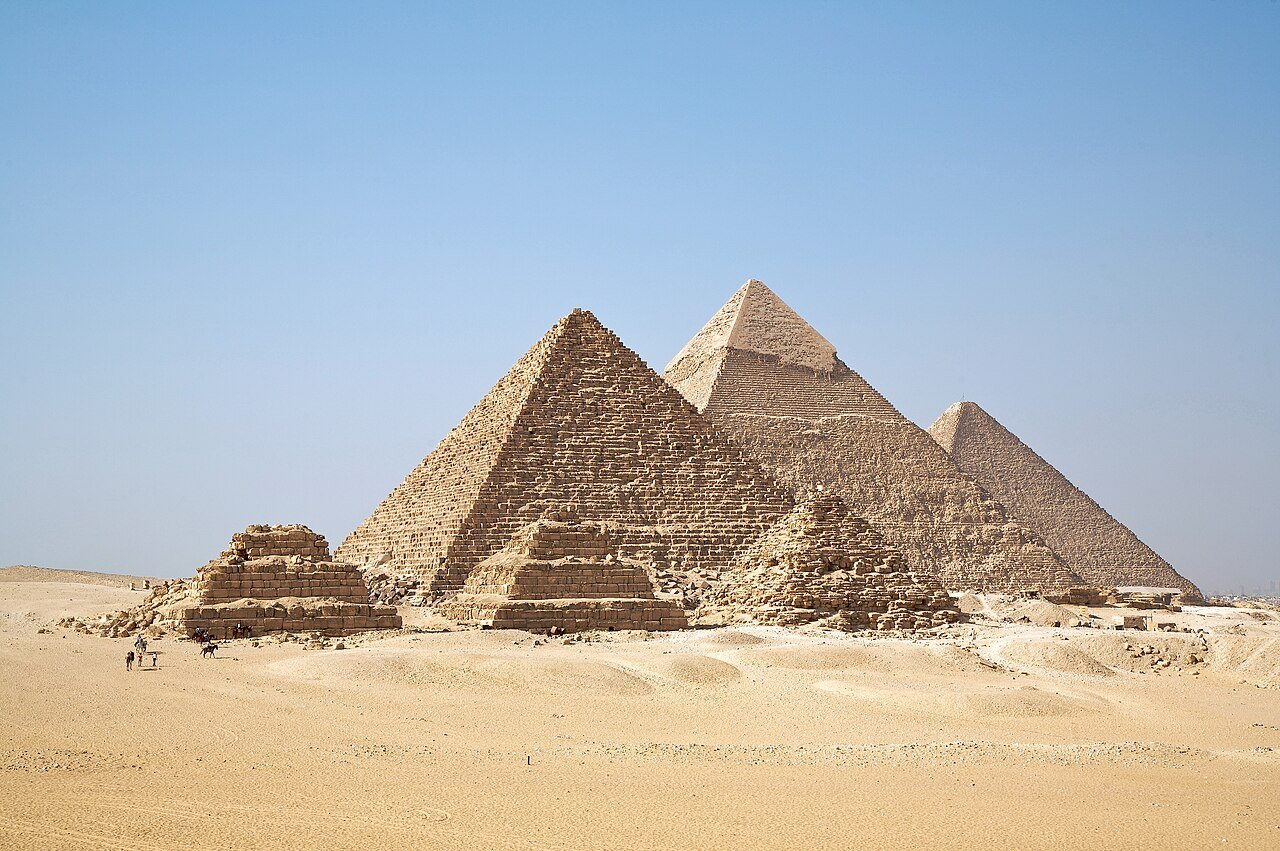
Great Pyramids of Giza, Egypt
Cuneiform inscription in eastern Turkey
Olmec colossal head, now at the Museo de Antropología de Xalapa
Standing Buddha from Gandhara, 2nd century CE
Carving of Persian and Median soldiers at Persepolis, Achaemenid Empire, 5th century BCE
The Colosseum in Rome
Pillar erected by Ashoka, a Mauryan emperor in India
Obelisk of Axum, Ethiopia
European migrations by mostly Germanic peoples, 2nd to 6th centuries
Portrait of Alfraganus in the Compilatio astronomica, 1493. Islamic astronomers began collecting and translating Indian, Persian, and Greek astronomical texts, enabling later European astronomy.
Umayyad Mosque in Damascus
11 images

Hominins branched from other primates around 7 to 5 million years ago and developed bipedalism. The genus Homo appeared later, and several species followed, some of which interbred. Homo sapiens emerged in Africa around 300,000 years ago, became anatomically modern by 125,000 years ago, and spread to every continent except Antarctica by about 12,000 years ago. Early people left traces of burial, art, and music.

Agriculture and early civilizations

Notre-Dame de Paris, France
13th-century French historiated initial showing the three classes of medieval society: those who prayed, those who fought, and those who worked
One of the 11 rock-hewn churches of Lalibela, built during the Zagwe dynasty in Ethiopia
Benin Bronze head from Nigeria, 16th century AD
Chennakesava Temple, Belur, India
Battle during the 1281 Mongol invasion of Japan
Angkor Wat temple complex, Cambodia, early 12th century
Moai on Easter Island
Maya observatory at Chichen Itza, Mexico
Machu Picchu, Inca Empire, Peru
10 images

Around 10,000 BCE, the Neolithic Revolution began the development of agriculture in several separate regions, shifting many communities from nomadic lives to settled farming. Growing societies needed systems of accounting and writing. Civilizations then emerged in Mesopotamia, Egypt, Peru, the Indus Valley, and China, beginning the ancient period in the 4th millennium BCE and enabling regional empires and new religious and philosophical ideas.

Later periods

Japanese depiction of a Portuguese carrack, a result of globalizing maritime trade
Florence, birthplace of the Italian Renaissance
Wittenberg, birthplace of Protestantism
Taj Mahal, Mughal Empire, India
Ming dynasty section of the Great Wall of China
James Watt's steam engine powered the Industrial Revolution.
The first airplane, the Wright Flyer, flew on 17 December 1903.
Atomic bombing of Nagasaki, 1945
Last Moon landing: Apollo 17, 1972
COVID-19 pandemic, 2020
10 images

The post-classical period, roughly 500 to 1500 CE, saw the rise of Islam and expanding trade between societies. The early modern period, about 1500 to 1800 CE, brought European exploration and colonization along with the Renaissance and Scientific Revolution. The Industrial Revolution around the 18th century launched the modern period, accelerating population growth, technology, and globalization over the last 250 years.

In 101 languages

Редакція Factograf · Published October 14, 2026 · Partly based on Wikipedia, CC BY-SA 4.0 · Source article