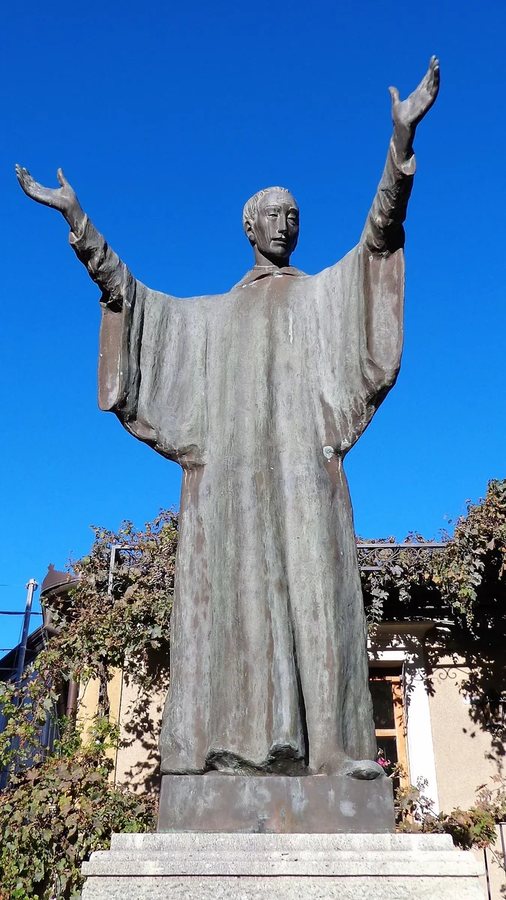
Hugh of Noara was a French Cistercian monk and a follower of Bernard of Clairvaux. He played a significant role in establishing the Cistercian Order in Sicily, serving as the inaugural abbot of the Abbey of Novara (also known as Santa Maria di Novara). After moving from initial settlements in Calabria, he helped oversee the development of the monastery in the fertile valley of San Basilio. He remained in Novara di Sicilia, where he died in 1170.
Life and work

As a member of the retinue following Bernard of Clairvaux, Hugh arrived in southern Italy to fulfill the requests of King Roger II. He helped transition the Cistercian presence from Calabria to the Novara region. During his leadership, he managed the monastery's growth and introduced various holy relics to the community. His administration helped the Cistercian teachings spread across several Sicilian locations.
Veneration and legacy

Recognized as a saint, he is honored in the Roman Martyrology on November 17. The people of Novara di Sicilia, where he was named patron in 1666, invoke him during times of drought. His remains are kept in a reliquary altar, and his liturgical feast involves the public procession of relics. Historical ivory and wooden caskets, potentially his own possessions, are preserved in a local cathedral museum.