
Helen of Troy is a figure in Greek mythology said to have been the most beautiful woman in the world. Believed to be the daughter of Zeus and Leda, she was first married to Menelaus of Sparta. Her later departure with Paris of Troy was the most immediate cause of the Trojan War. Her story has been retold for centuries and has made her a symbol of ideal beauty in art and literature.
Sources and legends


Much of what is known of Helen comes from ancient authors such as Homer, Hesiod, Euripides, Virgil and Ovid. Her suitors swore an oath to defend whichever suitor won her hand, and that oath led to the war. Homer usually presents her as having chosen Paris willingly, but other accounts describe her abduction or a stay in Egypt while the war was fought. Her fate after Troy also varies, with some versions reuniting her with Menelaus and others describing her ascent to Olympus.
Cult and artistic legacy


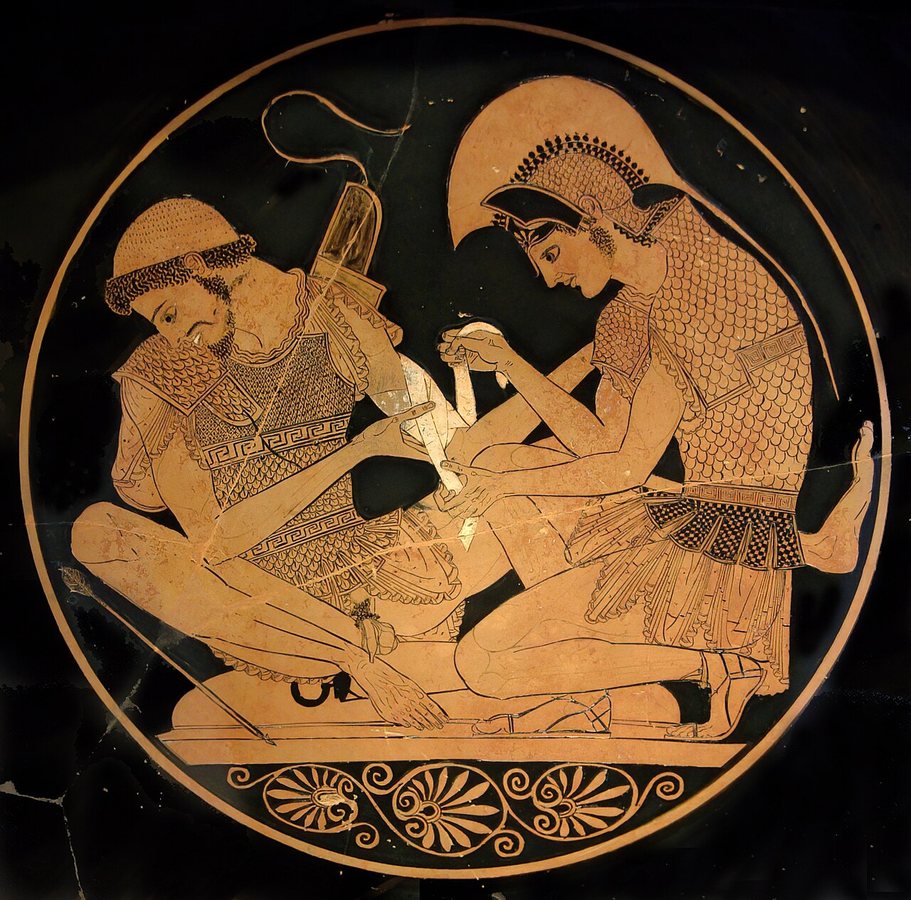
Helen was worshipped in Hellenistic Laconia, where she shared a shrine with Menelaus at Therapne, and also in Attica and on Rhodes. Artists began depicting her in the seventh century BC, and her elopement became a popular subject in Classical Greece. Medieval and Renaissance artists portrayed the event differently, sometimes as a seduction and sometimes as a forced abduction. Christopher Marlowe's line about the face that launched a thousand ships is among the most often quoted references to her.