
Hedwig of Silesia was a 13th-century duchess of Silesia and Greater Poland, born into the Bavarian House of Andechs. Married to Henry I the Bearded, she played a significant role in supporting his political rule within the Piast dynasty. Following her husband's death, she entered a Cistercian monastery at Trzebnica, where she lived as a lay sister. Known for her deep piety and devotion to the poor, she dedicated her wealth to the Church and established various charitable institutions, including hospitals for the sick and lepers.
Life and service


After her husband died in 1238, Hedwig embraced a religious life at the abbey she and Henry had founded. She focused on charitable works, assisting widows, orphans, and the impoverished. She was noted for her extreme asceticism, including a legend that she walked barefoot even in freezing temperatures. Beyond her personal piety, she encouraged the settlement of new towns and the development of agriculture in the Silesian region.
Veneration and legacy

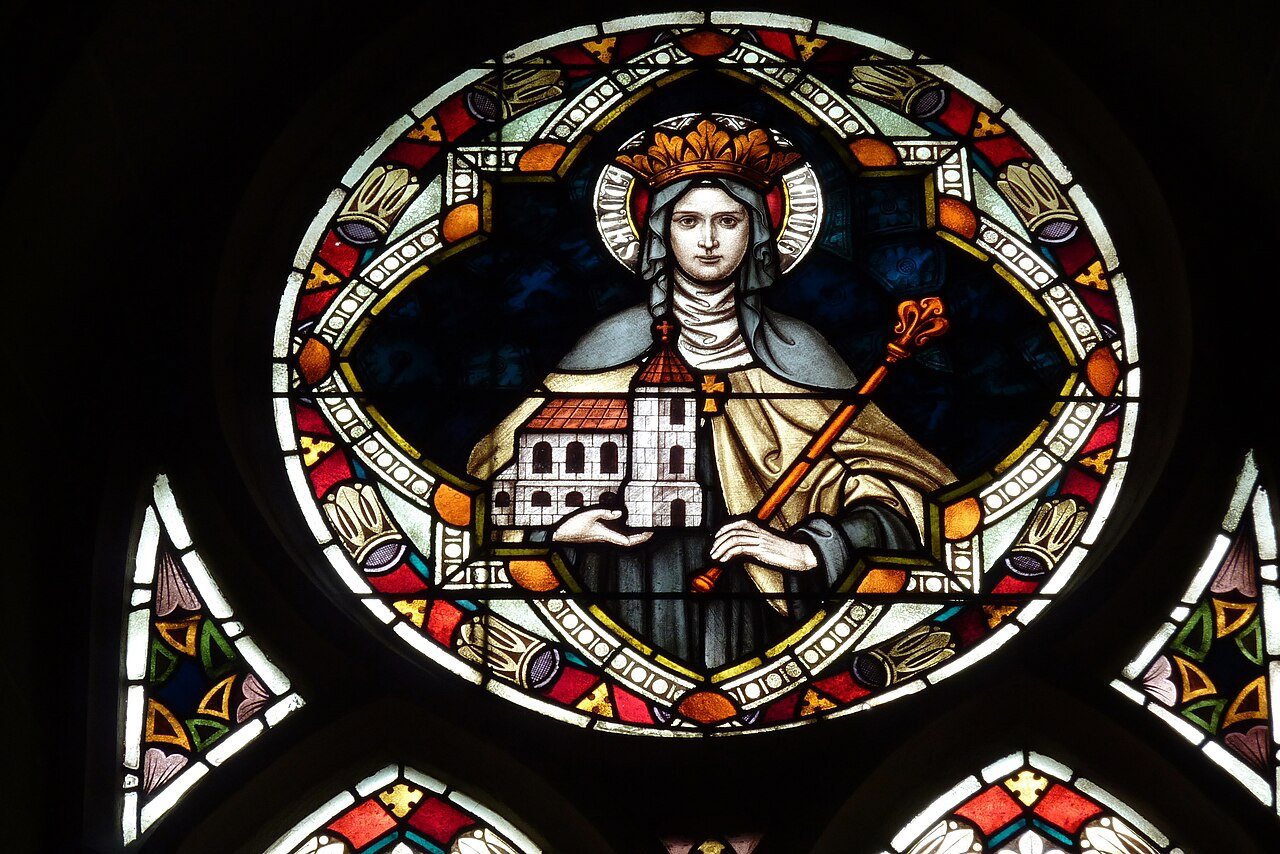
The Catholic Church canonized her in 1267. She serves as a patroness for Silesia, Andechs, and several dioceses. Her feast day is observed on 16 October. In 2020, her remains were rediscovered in a silver casket at Trzebnica Abbey. Her influence persists through various religious traditions, and her name is associated with specific types of eyeglasses.