factograf
EN
Sign in

change in the statistical distribution of weather patterns for an extended period

Global warming

Global warming

Global warming is the ongoing increase in Earth's average surface temperature, driven mainly by human activities such as burning fossil fuels since the Industrial Revolution. Greenhouse gases trap heat that the planet radiates after absorbing sunlight, warming the lower atmosphere. Scientifically, the term refers only to the rise in average surface temperature, while the broader term climate change also covers the effects on weather, precipitation and the wider climate system.

Temperature history

Bleached colony of Acropora coral
California drought dry lakebed, 2009
Sea ice reflects 50% to 70% of incoming sunlight, while the darker ocean reflects only 6%. As sea ice melts, more heat is absorbed, melting still more ice. This is a positive feedback process.
Different levels of global warming may cause different parts of Earth's climate system to reach tipping points that cause transitions to different states.
Bleached coral
Bleached coral
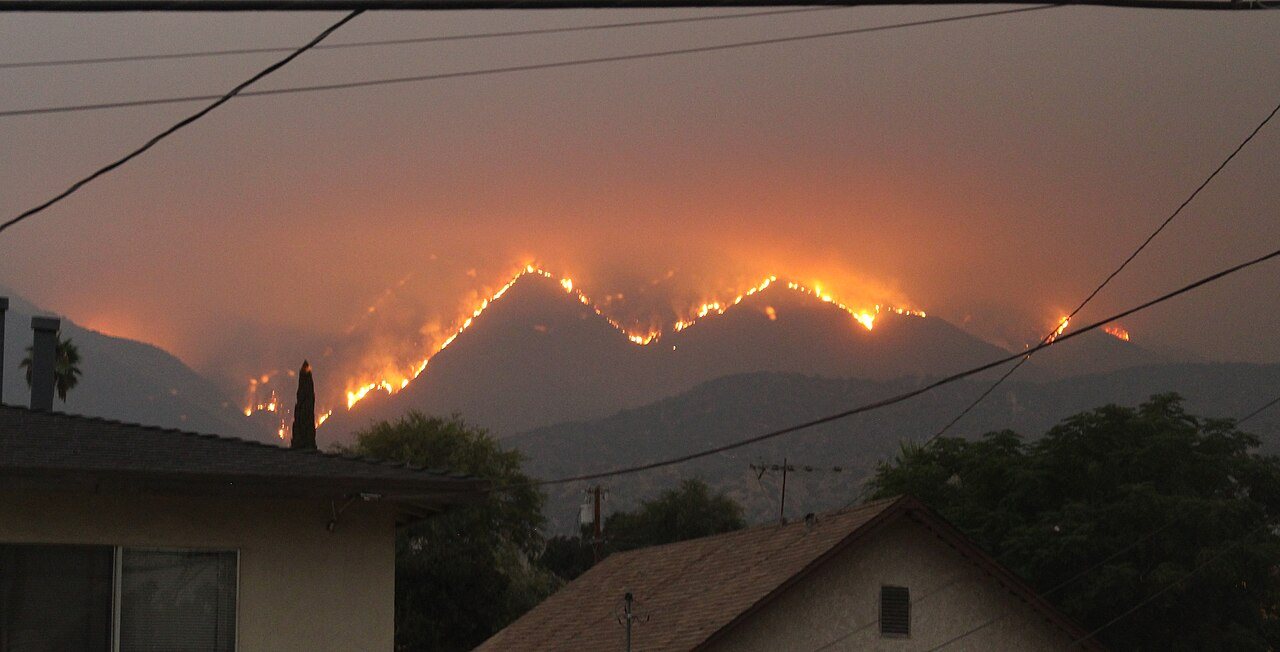
Orroral Valley Fire viewed from Tuggeranong, January 2020
National Park Service thawing permafrost
Endangered Arctic: a starving polar bear
Mountain pine beetle damage in the Fraser Experimental Forest, 2007
Village Telly in Mali
Corn shows the effect of drought
11 images

Earth's climate has cycled through ice ages over the last few million years, with past warm periods such as the Last Interglacial about 125,000 years ago. Since regular thermometer records began around 1850, the planet has warmed markedly, especially after 1970, when rising greenhouse gas levels and controls on sulfur pollution took effect. The 2016–2025 decade averaged about 1.26 °C above the pre-industrial baseline, and 2024 was the warmest year on record.

Effects and responses

Acqua alta in Piazza San Marco
Aerial view over southern Bangladesh showing extensive flooding caused by Cyclone Sidr
Argentina, satellite image, 2022
Wind and solar power, Germany
Winning entry in the 2011 EGAT Environment Photo Contest
Seawall at Ventnor
Seawall at Ventnor
Green roof on Chicago City Hall, 2008
Pearl millet breeding and selfing at ICRISAT, Patancheru, Hyderabad, Andhra Pradesh, India, 2013
Eunice Newton Foote showed carbon dioxide's heat-capturing effect in 1856, foreseeing its implications for the planet. (Carbon dioxide was called "carbonic acid gas".)
This 1912 article succinctly describes the greenhouse effect and how burning coal creates carbon dioxide that causes global warming and climate change.
10 images

Warming is linked to more heat waves, wildfires, intense storms, droughts, melting ice and rising seas. Many impacts threaten human health, food and water supplies, and ecosystems. Countries under the 2015 Paris Agreement aim to keep warming well under 2 °C, mainly by phasing out fossil fuels and shifting to energy sources such as wind, solar, hydro and nuclear power.

In 134 languages

Редакція Factograf · Published October 14, 2026 · Partly based on Wikipedia, CC BY-SA 4.0 · Source article