factograf
EN
Sign in

city with powiat rights of Poland in Upper Silesia

Gliwice

Gliwice

Gliwice is a city in Upper Silesia, in southern Poland, located in the Silesian Highlands on the Kłodnica river, a tributary of the Oder. It is the westernmost city of the Metropolis GZM conurbation and the third-largest city in that area, with 175,102 permanent residents as of 2021. The city is an important industrial centre and a college town, home to the Silesian University of Technology. Its historic Old Town core and medieval buildings make it one of the oldest cities in the region.

Early history

Polish Bank building 01
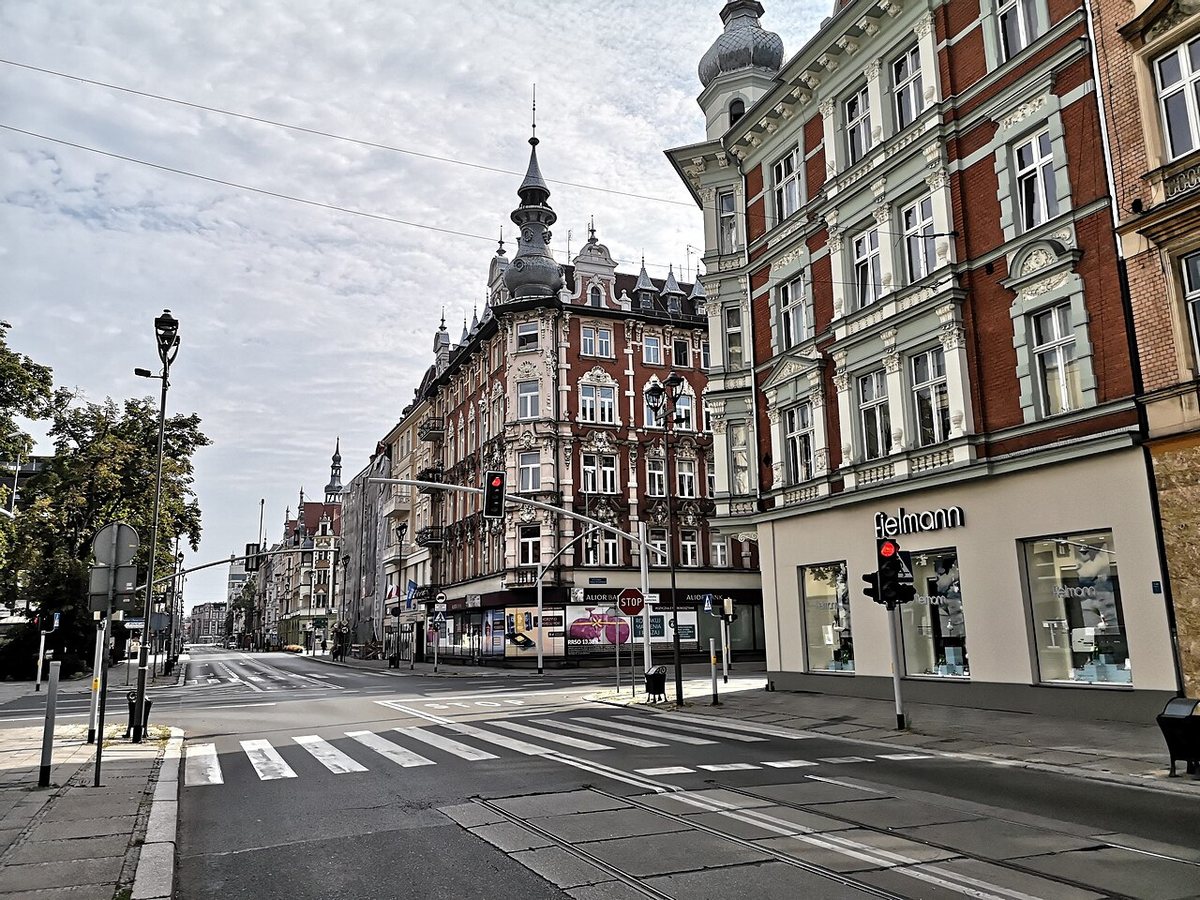
Gliwice, Victory Street
Radio station, panoramio photo 3
Gliwice railway station V
Medieval fortified Old Saint Bartholomew church, one of the oldest structures in Gliwice
An 1863 Polish plaque at the Town Hall commemorating King John III Sobieski on the 200th anniversary of the Battle of Vienna
Iron foundry around 1900
Main railway station around 1908
The Administrative Court building in the 1920s
Gliwice Radio Tower
Gliwice Radio Tower
Parade of the Polish Border Protection Forces in 1978
Gliwice Cathedral of Saints Peter and Paul, drone view 1
12 images

Gliwice was first mentioned as a town in 1276, though it had received town rights earlier from Duke Władysław Opolski of the Piast dynasty. Located on a trade route between Kraków and Wrocław, it passed among various Piast-ruled duchies and later came under the Bohemian Crown and the Habsburgs. Its medieval economy relied mainly on trade and crafts, especially brewing. In the mid-18th century, during the Silesian Wars, the city was taken by the Kingdom of Prussia along with most of Silesia.

Industrial growth

Gliwice city centre, panoramio photo 14
Gliwice old town
Gliwice old town
Gliwice Castle 01
Gliwice Castle 01
Monument to Józef Piłsudski in Gliwice
Surroundings of Piłsudski Square, panoramio photo
Gliwice municipal palm house, JKRUK 2018
Gliwice, AB 117
Gliwice, AB 117
Gliwice, panoramio photo 61
Gliwice Wrocławska Faculty of Architecture, Silesian University of Technology, 2011
Faculty of Chemistry, Gliwice 3
Faculty of Electrical Engineering, Gliwice 1
Silesian University of Technology, Gliwice 1
12 images

In 1796 the first coke-fired blast furnace on the European continent was built in Gleiwitz under the direction of John Baildon, and the city grew into a major industrial centre during the 19th century. Its ironworks encouraged other industries in the area, and a tram system and a theatre followed in the 1890s. After World War II the city's economy moved away from steelworks and coal mining, and in the 1990s it shifted towards the automotive and machine industries.

In 76 languages

Редакція Factograf · Published October 14, 2026 · Partly based on Wikipedia, CC BY-SA 4.0 · Source article