
Genevieve of Paris was a 5th-century consecrated virgin who lived in Nanterre and Paris. Recognized for her deep piety from childhood, she was encouraged by Germanus of Auxerre to dedicate her life to God. She is most famous for her spiritual role in protecting Paris from the Huns in 451 through organized prayer. As a symbol of both religious devotion and civic identity, she became the patron saint of Paris and is honored in both the Catholic and Eastern Orthodox traditions.
Life and miracles

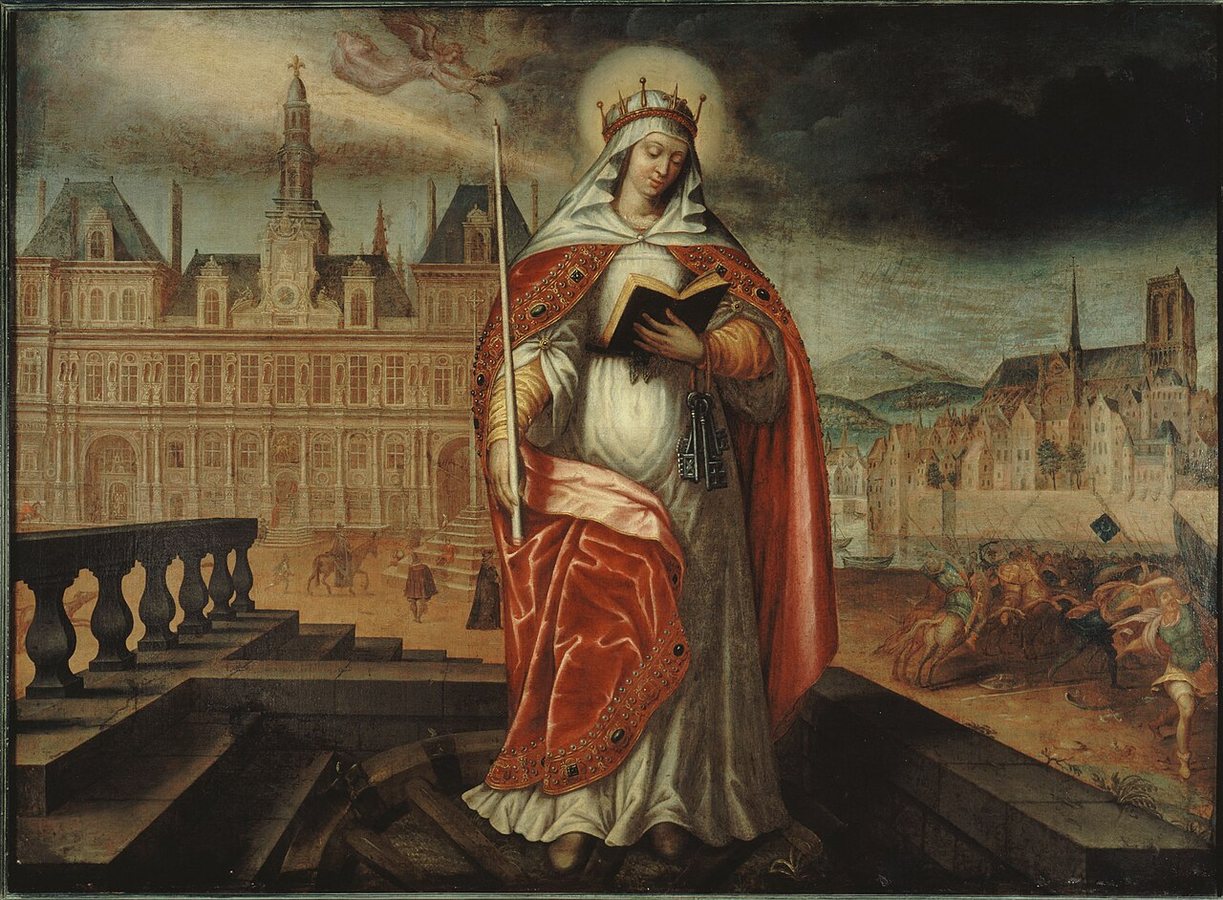
Born in Nanterre to a family of likely Gallo-Roman descent, Genevieve dedicated herself to a life of virginity. Her life was marked by various miracles, including the healing of her mother's blindness. She resided in Paris, where she oversaw significant building projects, including a basilica for Saint Denis and a church dedicated to the Holy Apostles. Despite initial local resentment, her spiritual leadership became essential to the city's survival during wartime.
Veneration and legacy


Throughout history, Genevieve served as a powerful cultural symbol for Parisians of all social classes. Her reliquary was frequently used in public processions and invoked during various city emergencies. For centuries, her connection to a well in Nanterre made it a major pilgrimage site. She is celebrated on 3 January and 26 November, maintaining a lasting presence in Christian liturgical life.