factograf
EN
Sign in

city in Pomeranian Voivodeship, Poland

Gdynia

Gdynia

Gdynia is a city in northern Poland and a seaport on the Baltic Sea coast. With about 239,000 inhabitants, it is the 12th-largest city in Poland and the second-largest in the Pomeranian Voivodeship after Gdańsk. It forms part of the Tricity metropolitan area together with Sopot and Gdańsk, which has around one million inhabitants. Gdynia is the largest Polish city that is not a voivodeship capital.

Early history

Gdynia, Świętojańska 41
Gdynia Główna railway station, cropped
Municipal market halls in Gdynia, Łukowa hall seen from Jana z Kolna Street
Container terminals in Gdynia
Medieval St. Michael the Archangel Church, the oldest building in Gdynia
Gdynia Seaport in 1935
Museum of the Navy in Gdynia
MS Piłsudski in Gdynia, 1935
District court, concrete building 06
Gdynia military command building 2
Gdynia city hall
Gdynia city hall
Monument to Antoni Abraham in Kashubian Square
12 images

Historically part of Kashubia and Eastern Pomerania, Gdynia remained a small fishing village for centuries. It passed between Polish, Teutonic and Prussian rule, and in 1772 it was annexed by Prussia. By the early 20th century it had become a seaside resort with guest houses and a small harbour. Poland regained the area in 1920, and Gdynia was granted city rights in 1926.

Development of the port

Solidarity election rally in Gdynia, 1989
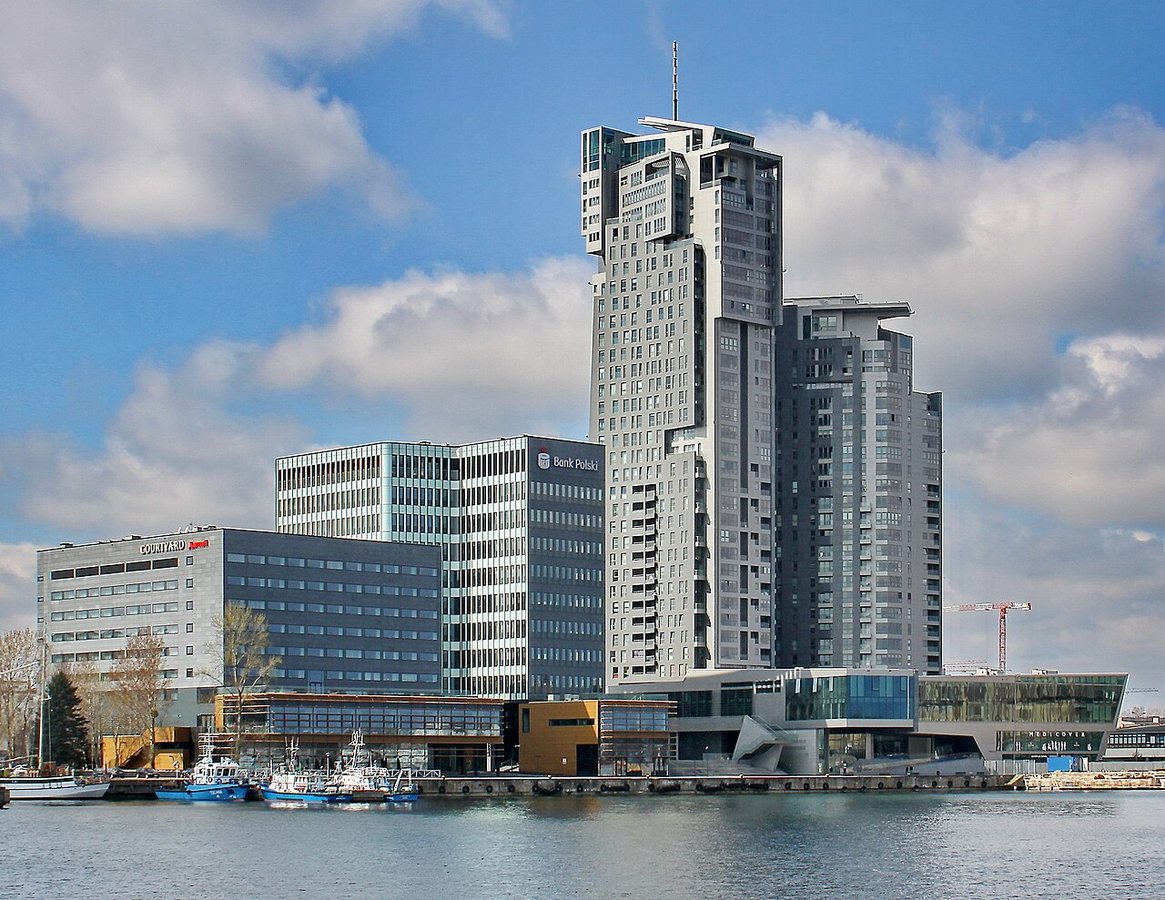
Dar Pomorza moored in Gdynia, with the Sea Towers and Marina Yacht Park behind
Gdynia's main boardwalk in Orłowo
View down 3 Maja Street in Gdynia
Tenement house on Świętojańska Street in Gdynia
Gdynia's Musical Theatre, a venue for the annual Polish Film Festival
Open'er Festival in 2019
National Rugby Stadium
ORP Iskra in front of the Gdynia shipyard
Gdynia BCT 29
Gdynia BCT 29
Gdynia Główna, the city's main railway station
Pesa Atribo SA133 of the Tricity Fast Urban Railways (SKM) departing from Gdynia
12 images

The Polish government decided in 1920 to build a major seaport at Gdynia, partly because of the economic dependence on the Free City of Danzig. Construction began in 1921 and proceeded slowly until it was accelerated in the mid-1920s. By 1930 docks, piers, breakwaters and industrial installations had been built, and the city grew into a major Polish seaport with a modernist cityscape. Its downtown is now a UNESCO World Heritage site.

In 92 languages

Редакція Factograf · Published October 14, 2026 · Partly based on Wikipedia, CC BY-SA 4.0 · Source article