
The Eiffel Tower is a lattice tower on the Champ de Mars in Paris, France, named after the engineer Gustave Eiffel, whose company designed and built it between 1887 and 1889. Built as the centrepiece of the 1889 World's Fair, it was initially criticised by some leading French artists and intellectuals but has since become a global cultural icon of France. It stands 330 metres tall and is one of the most recognisable structures in the world, receiving 5,889,000 visitors in 2022.
Origin and construction
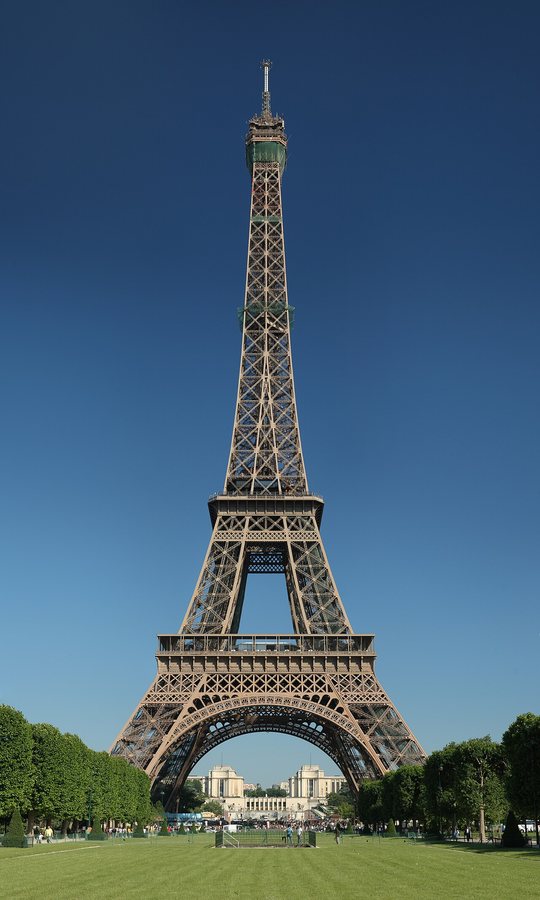


The design was attributed to two senior engineers, Maurice Koechlin and Émile Nouguier, working for Eiffel's company, and was developed as a centrepiece for the 1889 Exposition Universelle, which marked the centennial of the French Revolution. A contract was signed in January 1887, with Eiffel financing part of the costs and receiving income from the tower's commercial use for twenty years. A French bank, the Crédit Industriel et Commercial, also helped finance the construction.
Early reception


The proposed tower drew controversy from people who doubted it was feasible, since no structure had previously reached 300 metres, and from those who objected on artistic grounds. Despite these objections, the tower was completed and became the tallest human-made structure in the world until the Chrysler Building was finished in New York in 1930.
Present significance


The tower has three visitor levels, with restaurants on the first and second levels, and its upper platform is the highest public observation deck in the European Union. It was designated a monument historique in 1964 and became part of a UNESCO World Heritage Site in 1991. It is the most visited monument with an entrance fee in the world.