
Driving licences in Russia are documents issued by the State Automobile Inspectorate that authorise their holders to operate motor vehicles on highways and other public roads across the Russian Federation. Licences issued since 2011 resemble European driving licences in design and layout, and the current card meets the requirements of the Vienna Convention on Road Traffic.
Historical development


The Russian Empire was among the first countries to introduce driving licences, with the first ones issued in 1900 by Saint Petersburg authorities, and Russia joined the 1909 Paris Convention. Because few cars existed, attempts at a standardised licence remained sporadic and confined to major cities. A comprehensive national system only emerged in 1936, when the Soviet government standardised traffic and driving rules under specialised traffic police authorities. The Soviet Union joined the Geneva Convention on Road Traffic in 1963, which introduced international driving permits in the country.
Categories and requirements


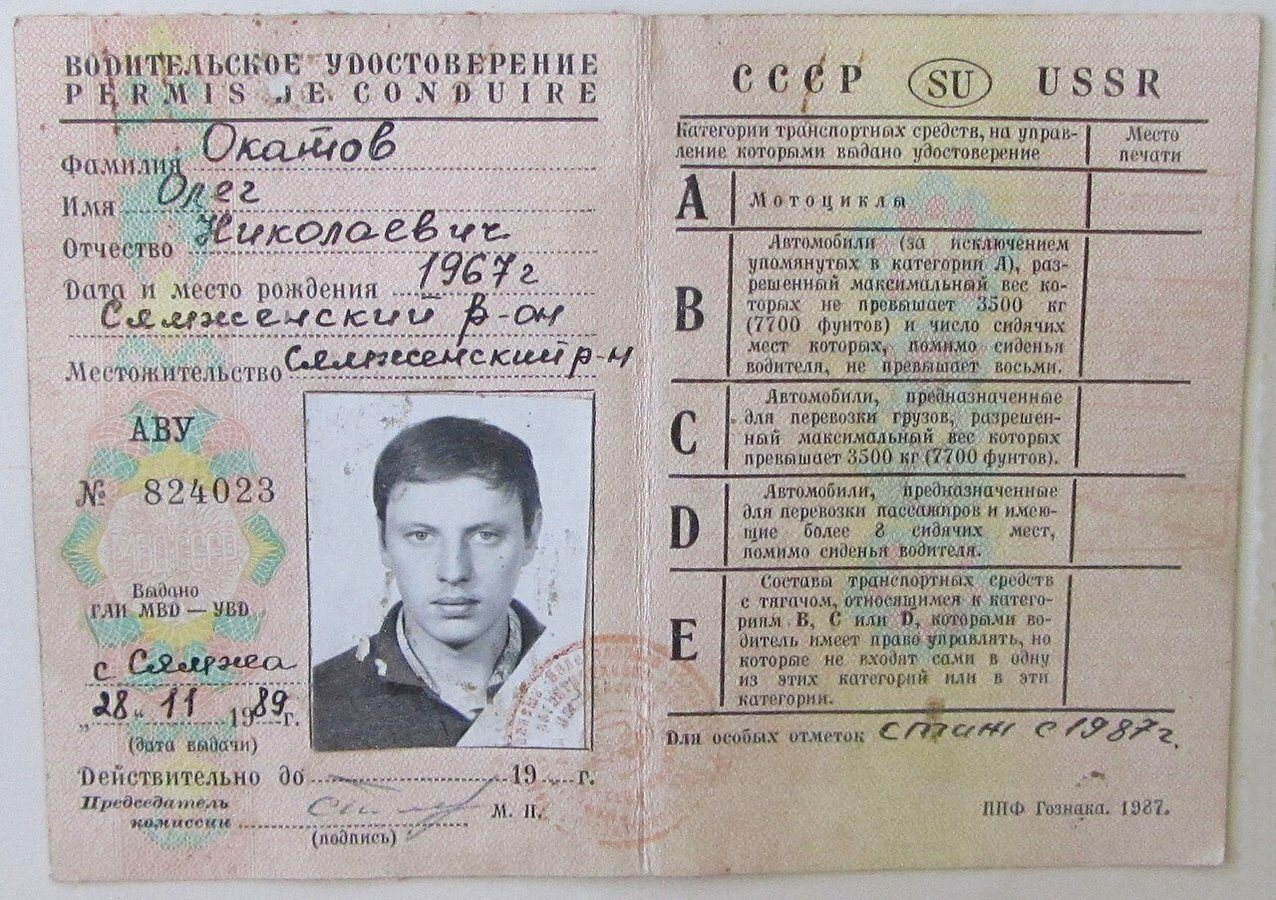

Since March 2011, licence categories are labelled A, A1, B, B1, C, C1, D, D1, the combined E categories, M, and the tram and trolleybus categories Tm and Tb. The legal driving age is 18, with 16 for motorcycles and 20 for buses. Applicants must be physically fit, hold valid mental health certificates and have no record of substance abuse, then pass a theory test and a practical test that includes a basic skills course and a road test on public roads.