
Dosifeya of Kyiv was an 18th-century Eastern Orthodox monastic who lived as a hermit near Kyiv. Born Daria Tyapkina to a noble family in 1721, she fled her secular life at sixteen to seek religious devotion. Disguised as a man named Dosifey, she initially lived in the Trinity Lavra of St. Sergius before moving to the Kiev-Pechersk Lavra region. She lived as a recluse in a cave, eventually receiving monastic tonsure through the intervention of Empress Elizabeth. She is venerated as a saint in the Orthodox tradition.
Life and asceticism


After leaving her family to avoid marriage, the ascetic lived as a hermit in a cave near Kitaevo. She practiced extreme austerity, subsisting on minimal food and water without using fire in her cell. As a spiritual elder, she guided several disciples, including the future saint Seraphim of Sarov. She died in 1776, leaving a note requesting that her body not be handled according to usual burial customs.
Discovery and veneration
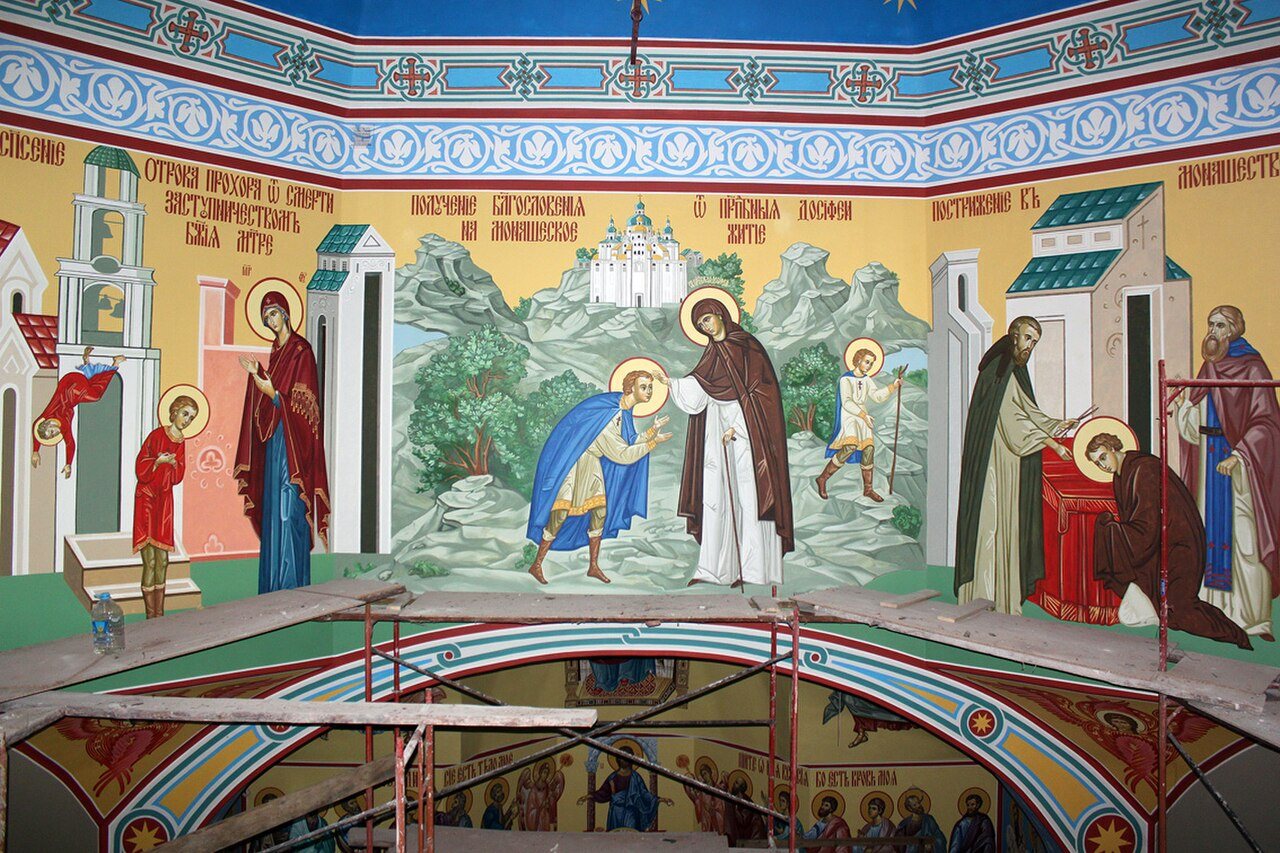
The true identity of the monk was revealed when a relative recognized her likeness on a tombstone. This discovery clarified many aspects of her previous life. She was canonized as a venerable saint, and her relics are kept at the Holy Trinity Church within the Kitaevo Hermitage. Devotees visit her cell in the Cathedral of the Most Holy Theotokos to honor her memory.