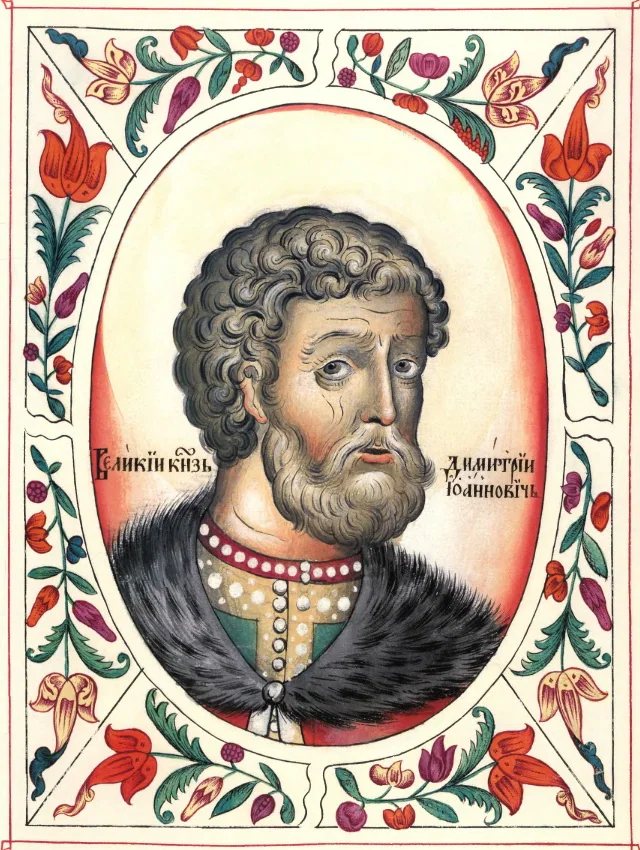
Dmitry Donskoy was a 14th-century Grand Prince of Moscow and Vladimir who reigned from 1359 until his death in 1389. Born in Moscow, he ascended to power as a child following his father's death and was initially guided by Metropolitan Alexius. He is most famous for being the first Russian ruler to directly confront Mongol authority, achieving a significant military triumph against the forces of Mamai at the Battle of Kulikovo in 1380. This victory, which earned him his nickname, helped consolidate the prestige and authority of the Moscow principality.
Political life


During his rule, Dmitry navigated complex rivalries with other Russian princes and the Golden Horde. He secured his position by marrying Eudoxia, the daughter of Dmitry of Suzdal, which helped stabilize his claim to the Grand Principality of Vladimir. Through strategic military campaigns and diplomatic efforts, he successfully asserted Muscovite dominance over competing principalities like Tver and strengthened the political unity of the Russian lands.
Veneration and legacy


Recognized as a national hero, Dmitry played a pivotal role in the rise of Moscow. The Russian Orthodox Church canonized him as a saint, designating him as Right-Believing. He is commemorated in both Orthodox and Catholic traditions, with his feast day observed on 19 May. His leadership during the struggle against Mongol rule remains a central element of Russian historical identity.