
Deocar was a ninth-century monk, priest, and abbot who played a significant role in the early ecclesiastical history of Bavaria. Educated at the monastery of Fulda under Alcuin of Tours, he served as a chaplain in the court of Charlemagne. He was appointed abbot of the Abbey of Herrieden around 782 or 783, serving as its leader and a missionary. Additionally, he acted as a royal messenger for the Frankish king, traveling to locations such as Regensburg and Passau.
Life and service


Following his studies at the Carolingian court academy, Deocar became a monk and priest in Fulda. He later managed the monastery at Herrieden, which was established during a period of territorial shifts in Bavaria. His influence extended through missionary work in the Ostmark and through his duties as a royal envoy for Charlemagne. He also participated in the 819 ceremony to transfer the relics of Saint Boniface to a new tomb in Fulda.
Veneration and legacy

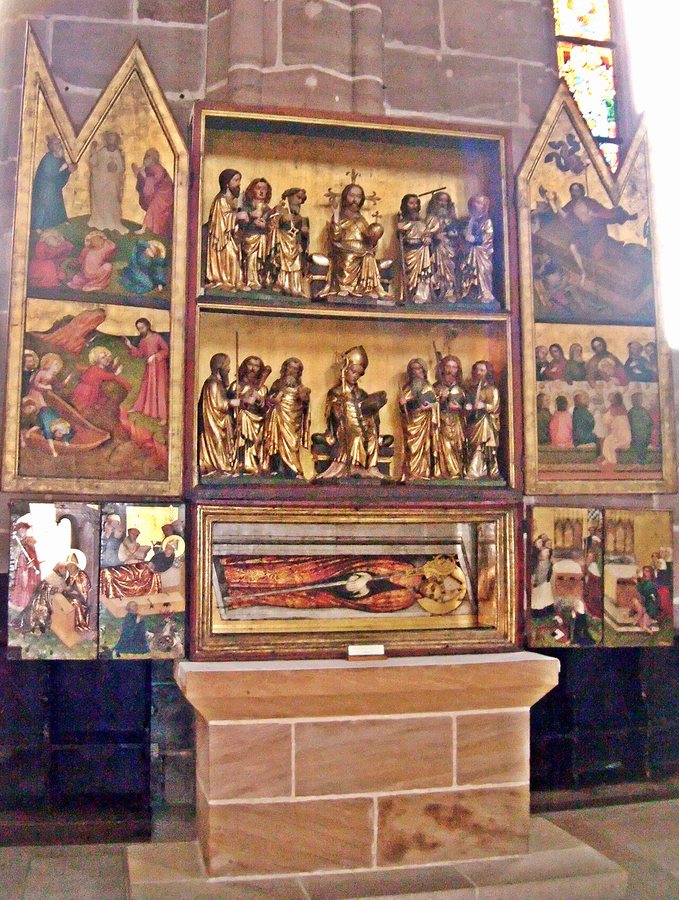
As the founder and patron of Herrieden, Deocar has been honored for centuries. His relics were once kept in Nuremberg, where he became a city patron and inspired significant pilgrimages. Although many of his relics were lost or destroyed over time, including those in the Munich Residenz, others were preserved in Eichstätt and Herrieden. He is commemorated on June 7.