factograf
EN
Sign in

republic of Russia in the North Caucasus

Dagestan

Dagestan

Dagestan, officially the Republic of Dagestan, is a republic of Russia in the North Caucasus along the Caspian Sea, at the southernmost tip of Russia. Its capital and largest city is Makhachkala. With a population of over 3.1 million across more than 30 ethnic groups and 81 nationalities, and 14 official languages, it is among the most linguistically and ethnically diverse administrative divisions in the world. Russian serves as the primary language and lingua franca, and the republic is known internationally for its strong combat sambo culture.

Name and origins

Sulak Canyon
Sulak Canyon
Kakhib, one of many abandoned auls in Dagestan
Abandoned Lezgin village of Grar
Rutulian village Luchek
Inside the Persian fortress of Derbent, a World Heritage Site
Mongol horserider with "cloud collar", House of Ahmad and Ibrahim, Kubachi in the Caucasus, second half 14th century CE
Silver coin of Nader Shah, minted in Dagestan, dated 1741–42 (left = obverse; right = reverse)
Imam Shamil, national hero and freedom fighter
Dagestani man, photographed by Sergey Prokudin-Gorsky, between 1907 and 1915
The Government Building of the Republic of Dagestan
Sergey Melikov, the Head of Dagestan, with Azerbaijan's President Ilham Aliyev on 6 December 2022
11 images

The name Dagestan comes from Turkic and Persian roots meaning roughly "land of the mountains". Between 1860 and 1920 the territory was called Dagestan Oblast, covering the southeastern part of today's republic. Its current borders were set in 1921, when the Dagestan Autonomous Soviet Socialist Republic was established with the addition of the eastern part of Terek Oblast, including a littoral area at the southern end of the Caspian Depression.

Geography and climate

Life expectancy in Russian subject Dagestan
Life expectancy in Russian subject Dagestan, difference
Life expectancy in Russia, North Caucasus
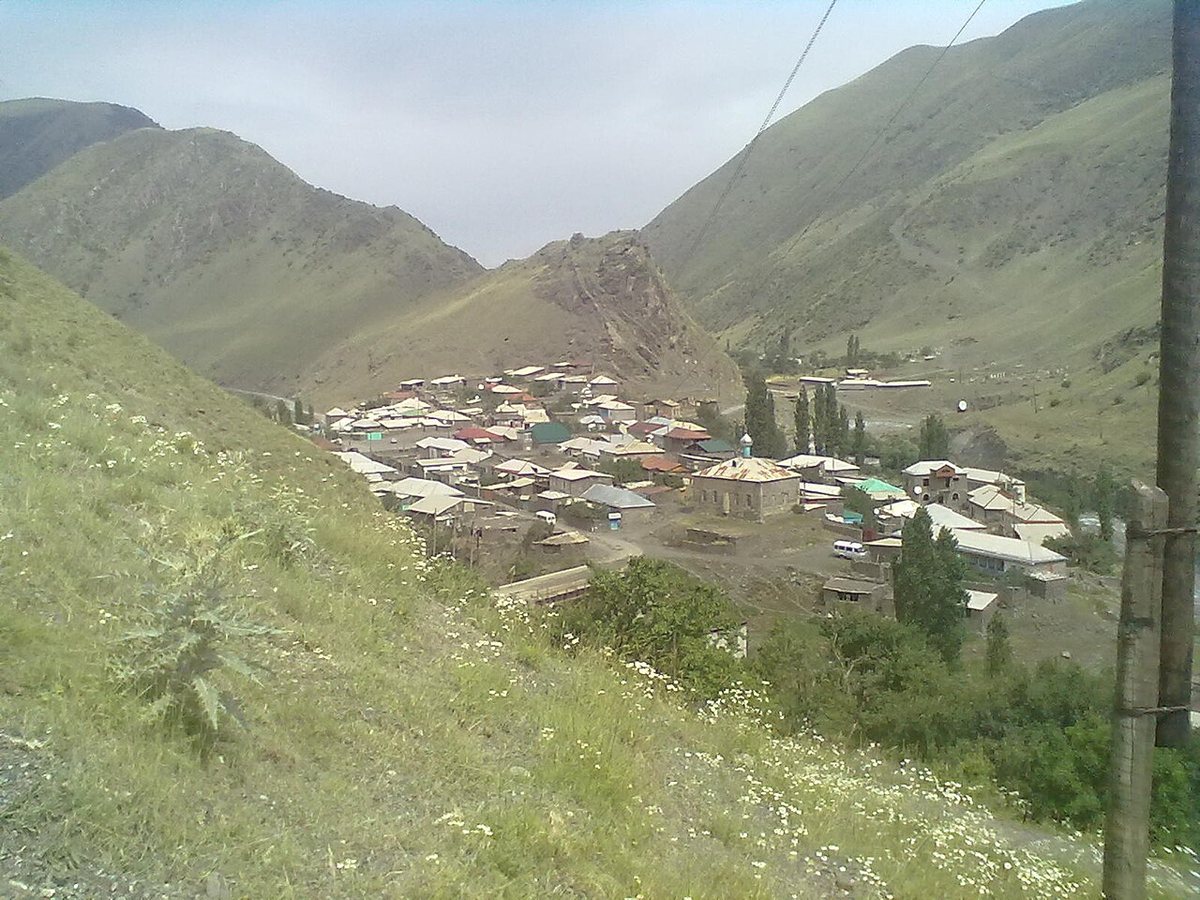
A mountain village
A mountain village
A couple in Dagestan, as photographed by Sergey Prokudin-Gorsky between 1907 and 1915
Makhachkala mosque 5
Church of the Holy Sign of the Mother of God, Khasavyurt
Church of the Holy All-Saviour, Derbent
Kele-Numaz
Kele-Numaz
Inside the Juma Mosque of Derbent
10 images

Most of the republic is mountainous, with the Greater Caucasus covering the south. Its highest point is Mount Bazardüzü, about 4,450 metres high, on the border with Azerbaijan. The republic has over 1,800 rivers and borders Azerbaijan, Georgia, Chechnya, Stavropol Krai and Kalmykia. Its climate is largely continental with little precipitation, and the region is rich in oil, natural gas and coal.

In 143 languages

Редакція Factograf · Published October 14, 2026 · Partly based on Wikipedia, CC BY-SA 4.0 · Source article