factograf
EN
Sign in

erectile organ with internal and external anatomy, part of the vulva

Clitoris

Clitoris

The clitoris is a female sex organ found in amniotes. In humans it is the most erogenous area of the vulva and generally the primary anatomical source of female sexual pleasure. Its size and sensitivity vary between individuals. The visible part, the glans, is typically about the size and shape of a pea and is estimated to have more than 10,000 nerve endings. Most of the organ lies internally, and it is homologous to the majority of the penis in males.

Name and terminology

Clitoris glans, detailed view
The internal anatomy of the clitoris, with the clitoral hood and labia minora indicated by lines.
Glans clitoris
Glans clitoris
External clitoris
External clitoris
Clitoral diagram
Clitoral diagram
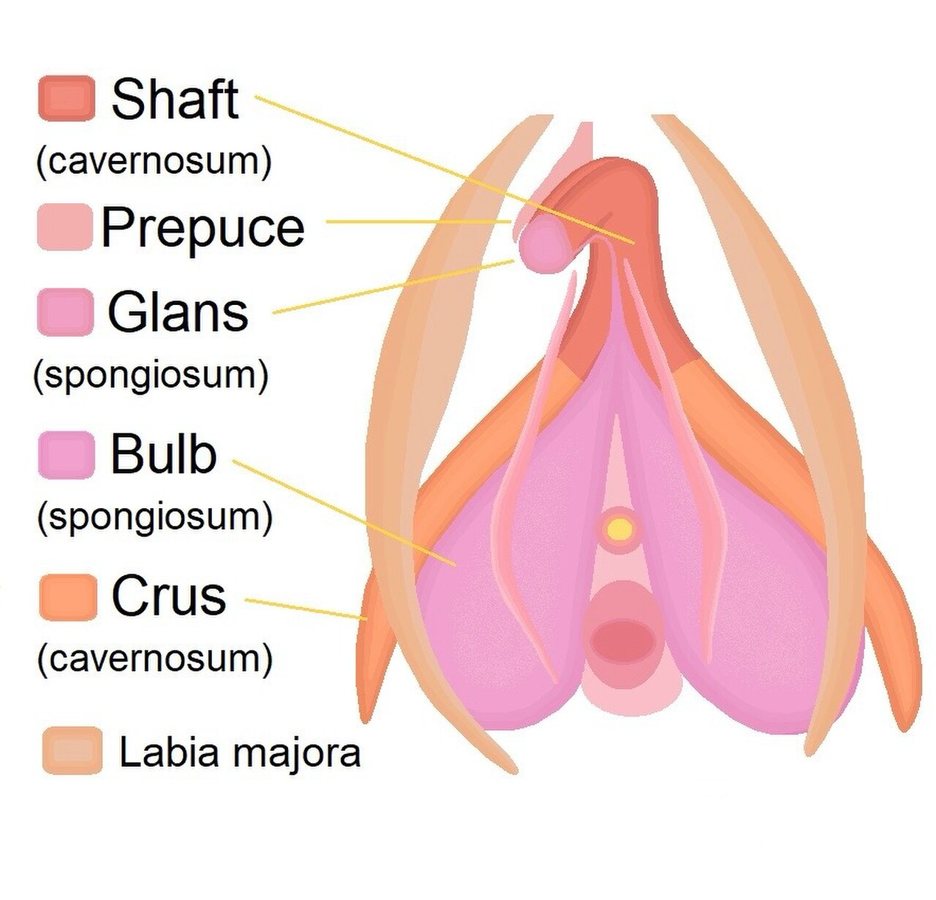
Root of the clitoris: 1, crus; 2, crus; 3, bulb
6 images

The word is thought to derive from an Ancient Greek term meaning little hill, possibly linked to a verb meaning to shut or sheathe. Colloquial forms such as clit appeared in print in the United States in 1958. In common speech the word often refers only to the glans. Recent anatomical works sometimes call it the bulbo-clitoral organ.

Structure

Normal variation in the clitoral hood: in some women it is fully covered by the labia majora when standing with legs closed (top row), while in others it is pronounced and visible (bottom row).
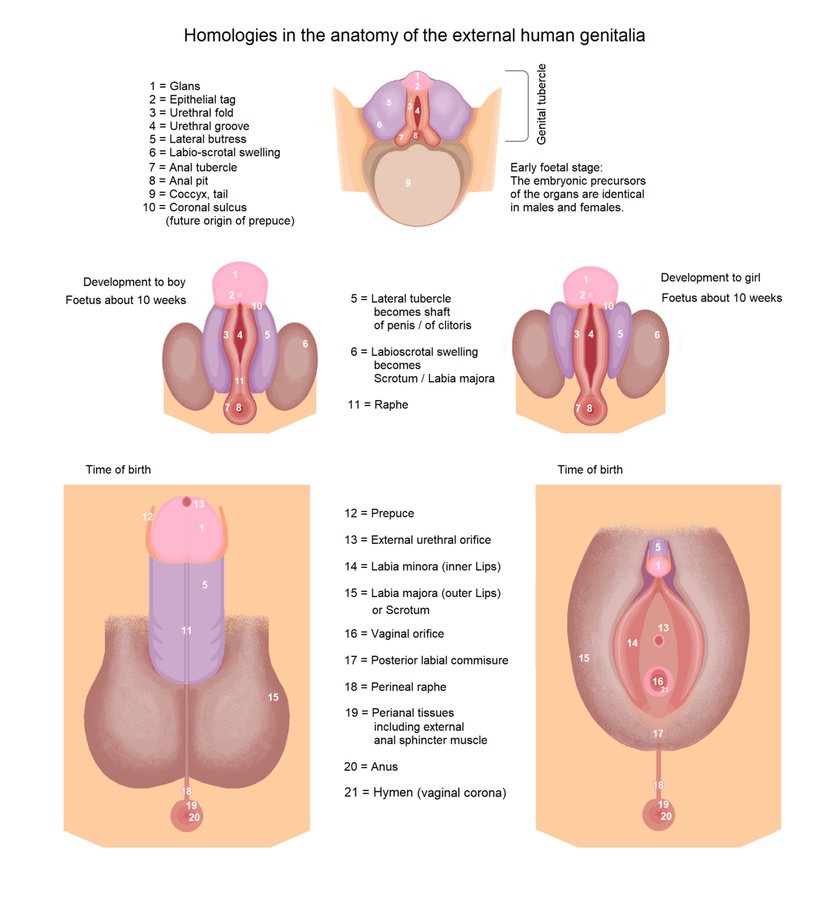
Development of the external genitals showing homologues from an indifferent stage in both sexes, female on the right
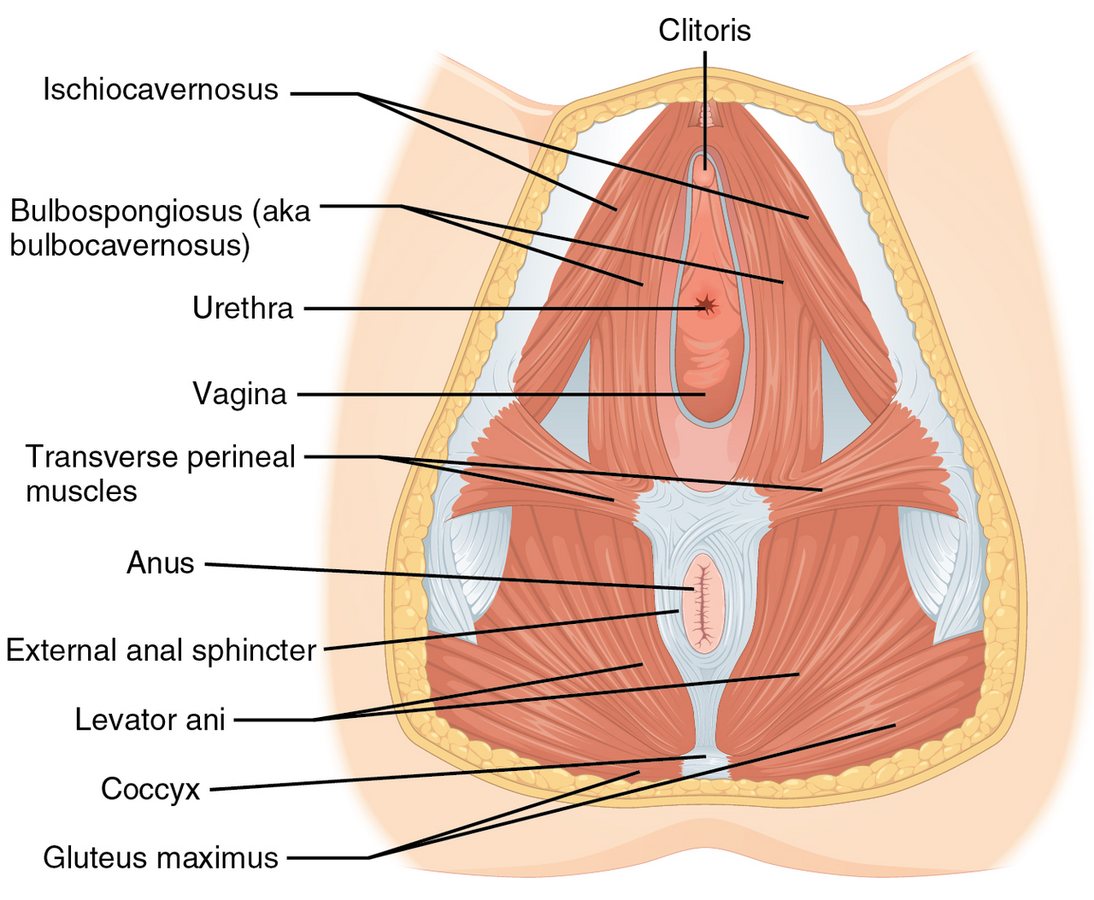
Muscles underlying the clitoris and perineum
A flaccid clitoris (left) and an erect clitoris (right)
Glans clitoridis piercing
Illustration of the anatomy of the clitoris by Georg Ludwig Kobelt (1844)
6 images

Most of the clitoris is internal. It consists of the glans, the body formed by two erectile structures called the corpora cavernosa, the prepuce, and the root. Research suggests that clitoral tissue extends into the anterior vaginal wall. The glans is separated from the body by a ridge of tissue, and a band called the frenulum helps keep the clitoris in its natural position.

Significance and knowledge

Protester promoting clitoris awareness at a women's rights rally in Paris, France (2019)
1901 illustration of the female reproductive system of a mare, with the clitoris labeled 17
The hemiclitorises, labeled HC, of several snakes shown under dissection
Spotted hyena in Kenya
Illustration from Anatomischer Anzeiger, 1922
5 images

The only known purpose of the human clitoris is to provide sexual pleasure. Studies suggest that knowledge of its anatomy is limited compared with that of other sexual organs, and that more education could help reduce stigmas about the appearance of the vulva and about female masturbation.

In 12 languages

Редакція Factograf · Published October 14, 2026 · Partly based on Wikipedia, CC BY-SA 4.0 · Source article