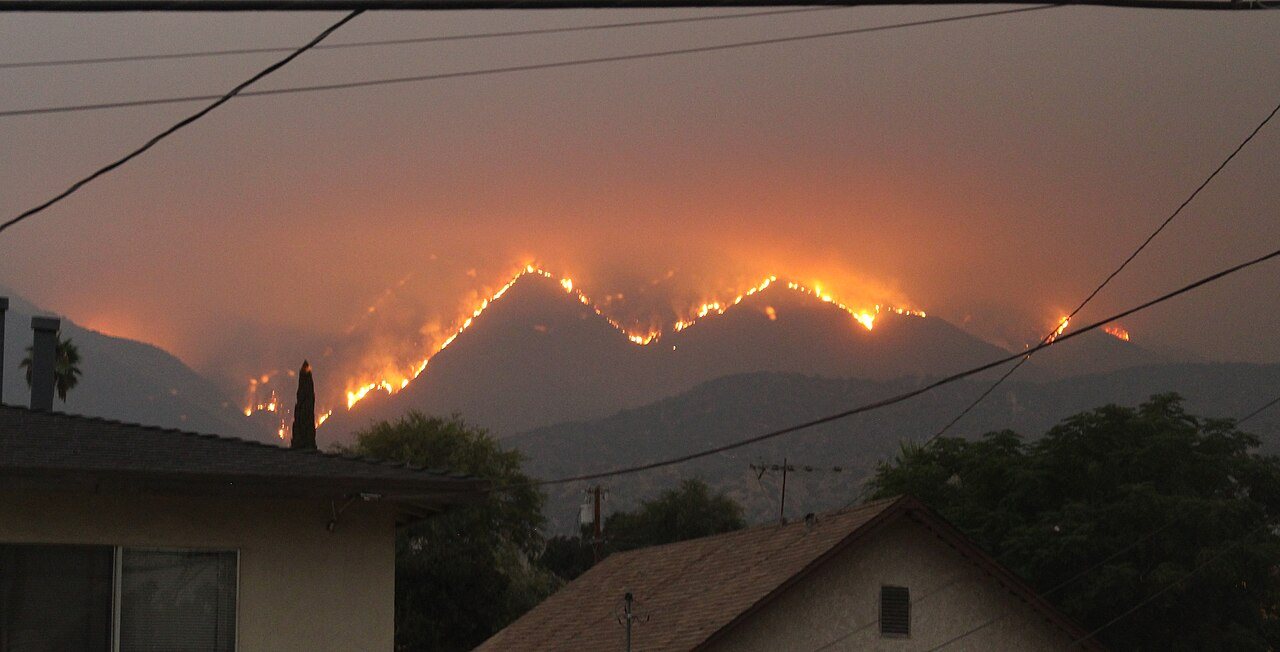
Climate change includes global warming, the ongoing rise in average global temperature, along with its wider effects on Earth's climate system. The modern rise is driven mainly by human activity, especially burning coal, oil and natural gas since the Industrial Revolution, which releases greenhouse gases that trap heat in the lower atmosphere. Atmospheric carbon dioxide is now roughly 50% higher than at the end of the pre-industrial era. Its effects include heat waves, wildfires, melting ice, rising seas and more intense storms, threatening health, food and water supplies.
Historical temperature changes


Earth has gone through long cycles of ice ages and warmer periods over millions of years. The Last Interglacial, around 125,000 years ago, was somewhat warmer than the period before global warming began, with sea levels several metres higher than today. Temperatures stabilized in the current interglacial, which began about 11,700 years ago. Since the Industrial Revolution, global temperatures have risen sharply, and the 2016–2025 decade averaged about 1.26 °C above the 1850–1900 baseline.
Responses and adaptation


Many countries aim to stop emitting carbon dioxide and to phase out fossil fuels by ending subsidies, saving energy and shifting to sources such as wind, solar, hydro and nuclear power. Adaptation measures, including flood control and drought-resistant crops, can reduce some risks, although limits to adaptation have already been reached. Poorer communities contribute the least to global emissions yet are the most vulnerable to its effects.