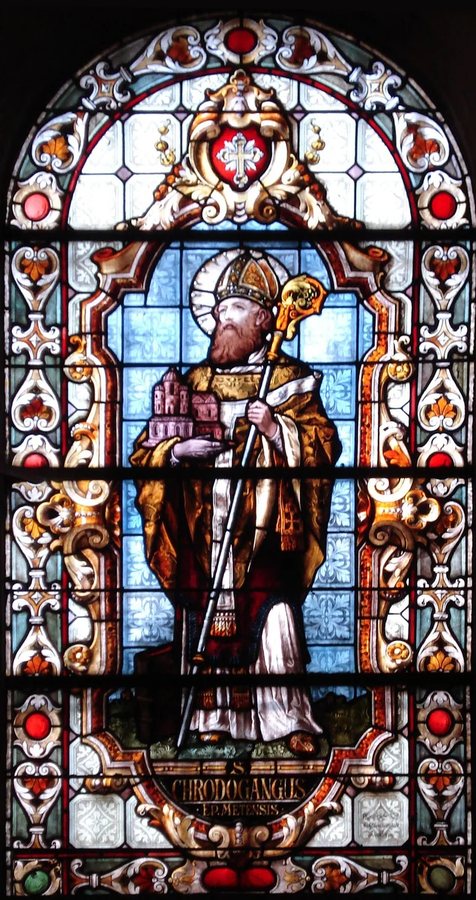
Chrodegang was an eighth-century Frankish bishop and statesman who served as the chancellor and prime minister for Charles Martel. Born in the early 700s near Tongeren to a noble family, he was educated at the monastery of Saint-Trond and the cathedral school of Metz. His influential career included acting as an apostolic delegate for Pope Stephen II and assisting in the coronation of Pepin. He is remembered as a significant reformer who sought to organize the clergy through communal living and liturgical standardization.
Ecclesiastical reforms
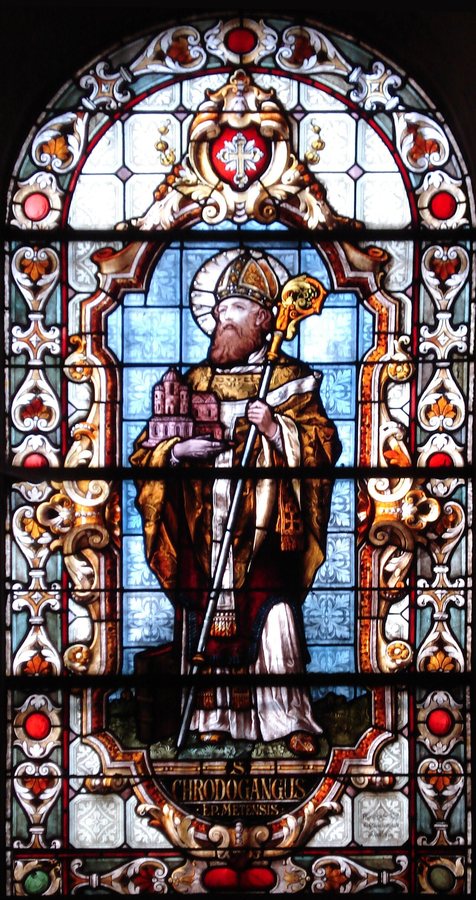
To improve the spiritual lives of his clergy, Chrodegang authored the Regula Canonicorum. This rule adapted Benedictine principles to support the pastoral duties of cathedral canons, emphasizing mutual community support. He also introduced the Roman Liturgy and musical chant to his diocese. His efforts to establish communal life among the secular clergy influenced later religious structures, including potentially impacting monastic traditions in Ireland.
Life and legacy
Beyond his administrative roles, Chrodegang founded several religious houses, including Gorze Abbey and Saint Peter's Abbey. He was recognized as an archbishop after receiving the pallium from the Pope. Following his death in Metz in 766, he was interred at Gorze Abbey. He is venerated as a saint in both the Catholic and Orthodox traditions, with his feast day observed on 6 March.

