
Buenos Aires, officially the Autonomous City of Buenos Aires, is the capital and largest city of Argentina, situated on the southwest shore of the Río de la Plata. It is classified as an Alpha− global city and has a city proper population of 3.1 million. Known for its preserved eclectic European architecture and rich cultural life, it is a multicultural city shaped by waves of immigration since the 19th century, and it is considered one of the most diverse cities of the Americas.
Political status
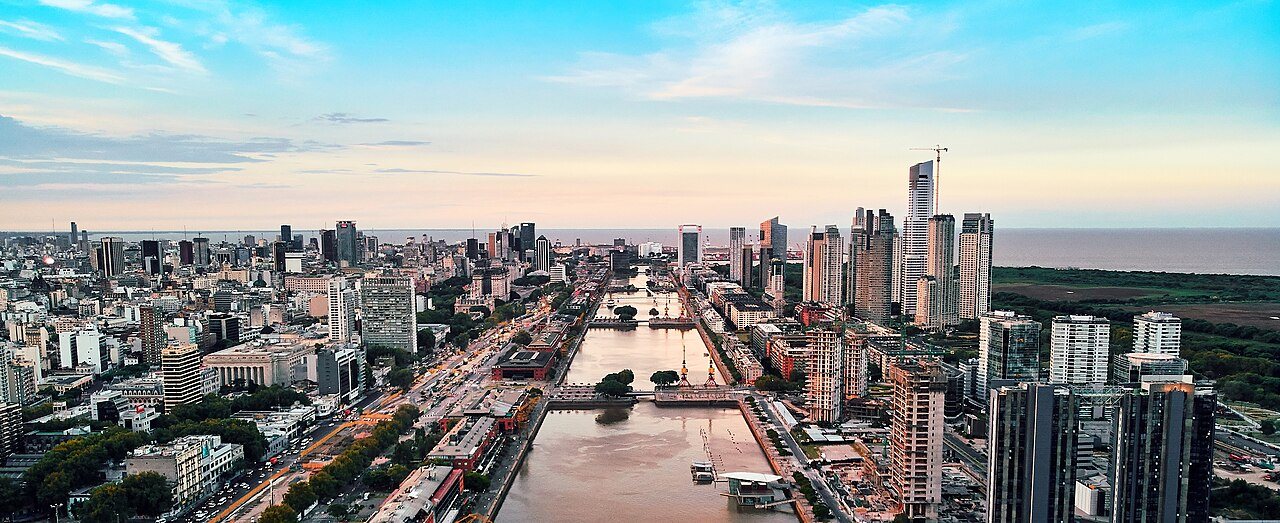


The city is an autonomous district and is not part of Buenos Aires Province, which surrounds it. After the Argentine Civil War in 1880, Buenos Aires was federalized and separated from the province, and its limits were enlarged to include the towns of Belgrano and Flores. A 1994 constitutional amendment granted the city autonomy, and citizens elected their first chief of government in 1996, whereas the mayor had previously been appointed by the president of Argentina.
Early settlement





The Río de la Plata was first reached by Juan Díaz de Solís in 1516, whose expedition ended when he was killed in an attack by the Charrúa people. Pedro de Mendoza founded the city in 1536, but the settlement was abandoned in 1542 after repeated attacks. Juan de Garay established a permanent settlement in 1580, arriving by sailing down the Paraná River from Asunción. From its early days the city depended mainly on trade, and resentment grew among its residents toward Spanish trade restrictions.