
Brasília is the capital city of Brazil and the seat of the Federal District. Located in the Brazilian Highlands, it was founded on 21 April 1960 by President Juscelino Kubitschek to replace Rio de Janeiro as the national capital. It is the country's third most populous city, and among major Latin American cities it has the highest GDP per capita. All three branches of the federal government are based there.
Background and planning


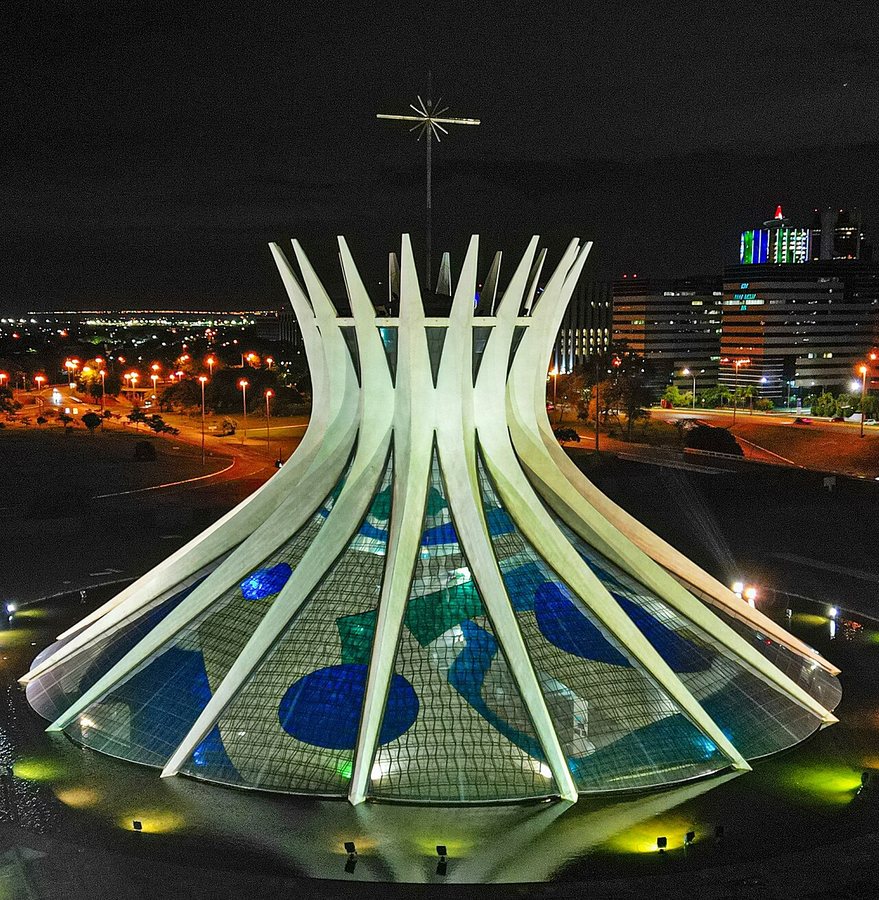


Brazil's capital was Rio de Janeiro from 1763 until 1960, a period in which resources and population concentrated along the southeastern Atlantic coast. The idea of a more central capital dates back to José Bonifácio in 1827, and the 1891 Constitution formally called for the move. The government then commissioned surveys of a designated land area, but the project remained a low priority until Kubitschek took office in 1956 and launched construction.
Design and features


The city was designed by Lúcio Costa, with buildings by Oscar Niemeyer and landscaping by Roberto Burle Marx. Its layout is often described as an airplane, with a Monumental Axis forming the fuselage and the Praça dos Três Poderes at the cockpit. Brasília was inscribed as a UNESCO World Heritage Site in 1987 for its modernist architecture and urban planning, and it was named a UNESCO City of Design in 2017.