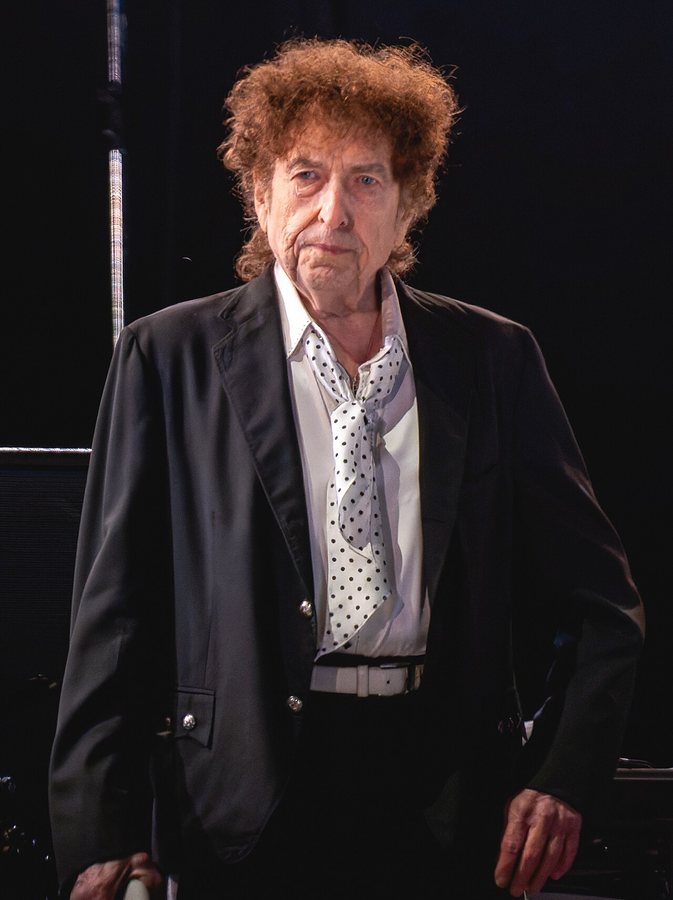
Bob Dylan (born Robert Allen Zimmerman, 1941) is an American singer-songwriter often described as one of the greatest songwriters of all time. Over a career spanning more than six decades, he has been a major figure in popular culture. He brought increasingly sophisticated lyrics to early 1960s folk music, drawing on political, social and philosophical ideas that appealed to the counterculture and helped reshape popular music.
Early life and rise


Dylan was born in Minnesota and grew up in Hibbing, where he formed several high school bands and was drawn first to rock and roll and then to folk music. In 1961 he moved to New York City to pursue a music career and visited his idol Woody Guthrie. His songs "Blowin' in the Wind" and "The Times They Are a-Changin'" became anthems for the civil rights and antiwar movements.
Electric turn and later work


Dylan provoked controversy by using electrically amplified rock instrumentation on albums such as Highway 61 Revisited and Blonde on Blonde, and his single "Like a Rolling Stone" stretched the commercial and creative limits of popular music. After a motorcycle crash in 1966 he stopped touring for seven years. He later explored country and rural themes, and Blood on the Tracks and Time Out of Mind earned him wide acclaim.
Legacy and recognition


With an estimated 125 million records sold worldwide, Dylan is among the best-selling musicians of all time. His honors include an Academy Award, ten Grammy Awards, the Presidential Medal of Freedom and the 2016 Nobel Prize in Literature, awarded for creating new poetic expressions within the great American song tradition. He has also published books of paintings and drawings and continues to tour.