factograf
EN
Sign in

founder of Christian monasticism, founder of the Benedictine order (480–547)

Benedict of Nursia

Benedict of Nursia

Benedict of Nursia (c. 480 – 547), often known as Saint Benedict, was an Italian monk who founded the Order of Saint Benedict. He is honoured by the Catholic, Eastern Orthodox, Lutheran, Anglican and Old Catholic churches, and in 1964 Pope Paul VI named him a patron saint of Europe. His main achievement was the Rule of Saint Benedict, a set of guidelines for monastic life that stressed balance, moderation and reasonableness. The rule was adopted by many religious communities across the Middle Ages and became one of the most influential in Western Christianity.

Early life and solitude

Memling, Portinari Triptych, Saint Benedict
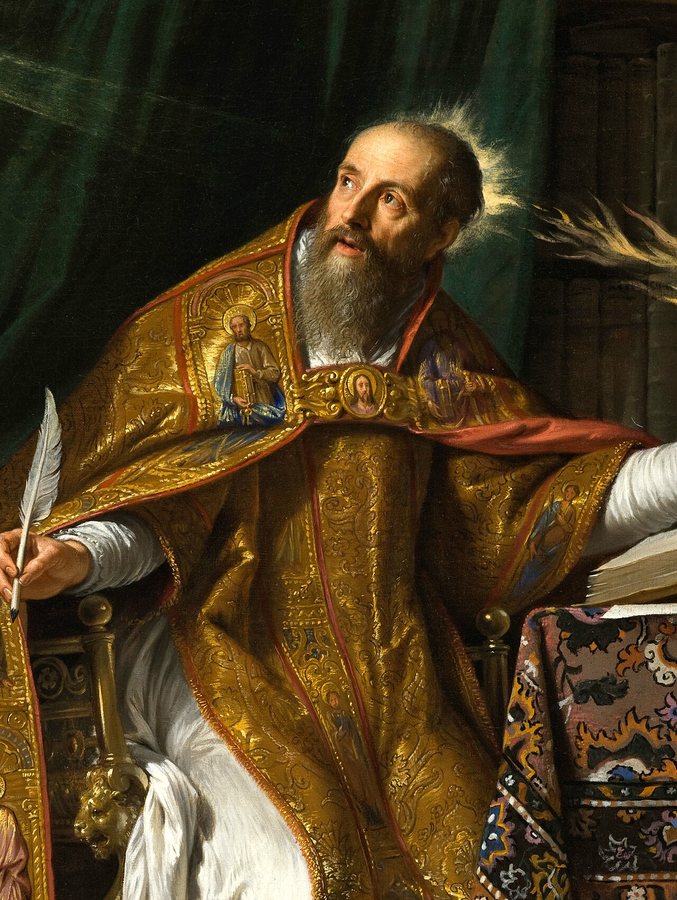
Saint Augustine by Philippe de Champaigne, cropped to 3 by 4
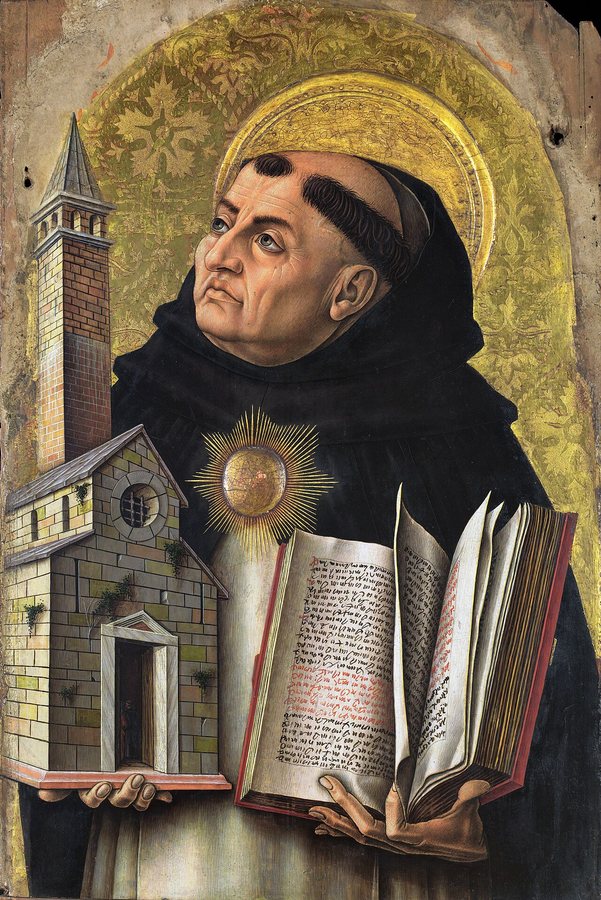
Saint Thomas Aquinas, painting
Duns Scotus, painting, cropped
Saint Benedict orders Saint Maurus to the rescue of Saint Placidus, by Fra Filippo Lippi, 1445
Totila and Saint Benedict, painted by Spinello Aretino; according to Pope Gregory, Totila sent a general in his royal robes to test Benedict, who saw through the disguise and Totila then paid him respect
Benedict depicted on a Jubilee Saint Benedict Medal for the 1,400th anniversary of his birth in 1880
Image of Saint Benedict with a cross inscribed with the words 'May the holy cross be my light, may the dragon never be my guide' and a scroll reading 'Begone Satan, never tempt me with your vanities, the drink you offer is evil, drink that poison yourself'
8 images

Benedict was born into a noble Roman family in Nursia, present-day Norcia in Umbria. He was sent to Rome to study but was disappointed by the academic life there and withdrew to the mountains near Subiaco. For three years he lived as a hermit in a cave above a lake, supported by a monk named Romanus. His reputation for holiness drew followers, and he later founded a number of monastic communities in the area before establishing the great monastery of Monte Cassino on a hilltop between Rome and Naples.

Legacy and veneration

Melk, Austria, monastery
Gold-coloured small Saint Benedict crucifix
Saint Benedict Medal
Heiligenkreuz Abbey, Saint Benedict
Benedict episode, cure
Einsiedeln, Saint Benedict statue, 2013
Saint Benedict statue, Warsaw, 2011
Saint Andrew and Saint Benedict with the Archangel Gabriel, left panel
8 images

The main account of Benedict's life comes from the Dialogues of Pope Gregory I, written around 593. Gregory presented his work as a collection of spiritual lessons rather than a modern biography. Benedict died at Monte Cassino shortly after his sister Scholastica and was buried in the same tomb. Tradition gives the date of his death as 21 March 547. His rule later shaped monastic life throughout Western Christendom.

In 76 languages

Редакція Factograf · Published October 14, 2026 · Partly based on Wikipedia, CC BY-SA 4.0 · Source article